



Three card solitaire waste pile mistakes usually happen before the player feels stuck. You flip three cards, see the top one, decide it is useless, and move on. A few turns later, the card you needed is gone again, buried under the next little packet.
It feels unlucky.
Sometimes it is. Solitaire has plenty of rude deals.
But in draw-three Klondike, the waste pile is not just a discard area. It is a rhythm. Cards appear in a pattern, and if you watch that pattern for even a minute, you can stop wasting some of the good cards before they become unreachable again.
That is the small trick in this article: when you flip through the three card solitaire waste pile, remember the card behind the card.
Not every card. Not the whole deck.
Just the card behind the card you are about to play.
If you want to test this with a quick deal, open solitaire games on Easy Daily Puzzle and choose a draw-three style game. Play the first pass slowly enough to notice what keeps hiding behind the top card.
Why the three card solitaire waste pile matters
Bicycle Cards explains Solitaire with four main pile types: tableau, foundations, stock, and waste. The waste pile is where stock cards go when they cannot immediately move to the tableau or foundation.
In draw-one solitaire, that waste card is simple. You see one card at a time.
Draw-three solitaire is less forgiving. You turn over three cards, but only the top card is usually available. The two cards under it may matter soon, but they are not free yet.
That is why the three card solitaire waste pile changes the game. You are not only asking, "Can I use this card?" You are also asking, "What card becomes visible if I use it?"
That second question saves deals.
Imagine the waste pile shows a red 7 on top. Under it, you noticed a black 6. If your tableau has a red 7 that can move elsewhere, playing the top red 7 from the waste might open the black 6. If that black 6 can land on a red 7 in the tableau, one move creates another.
If you miss that hidden card, the waste pile feels random.
If you remember it, the waste pile starts talking.
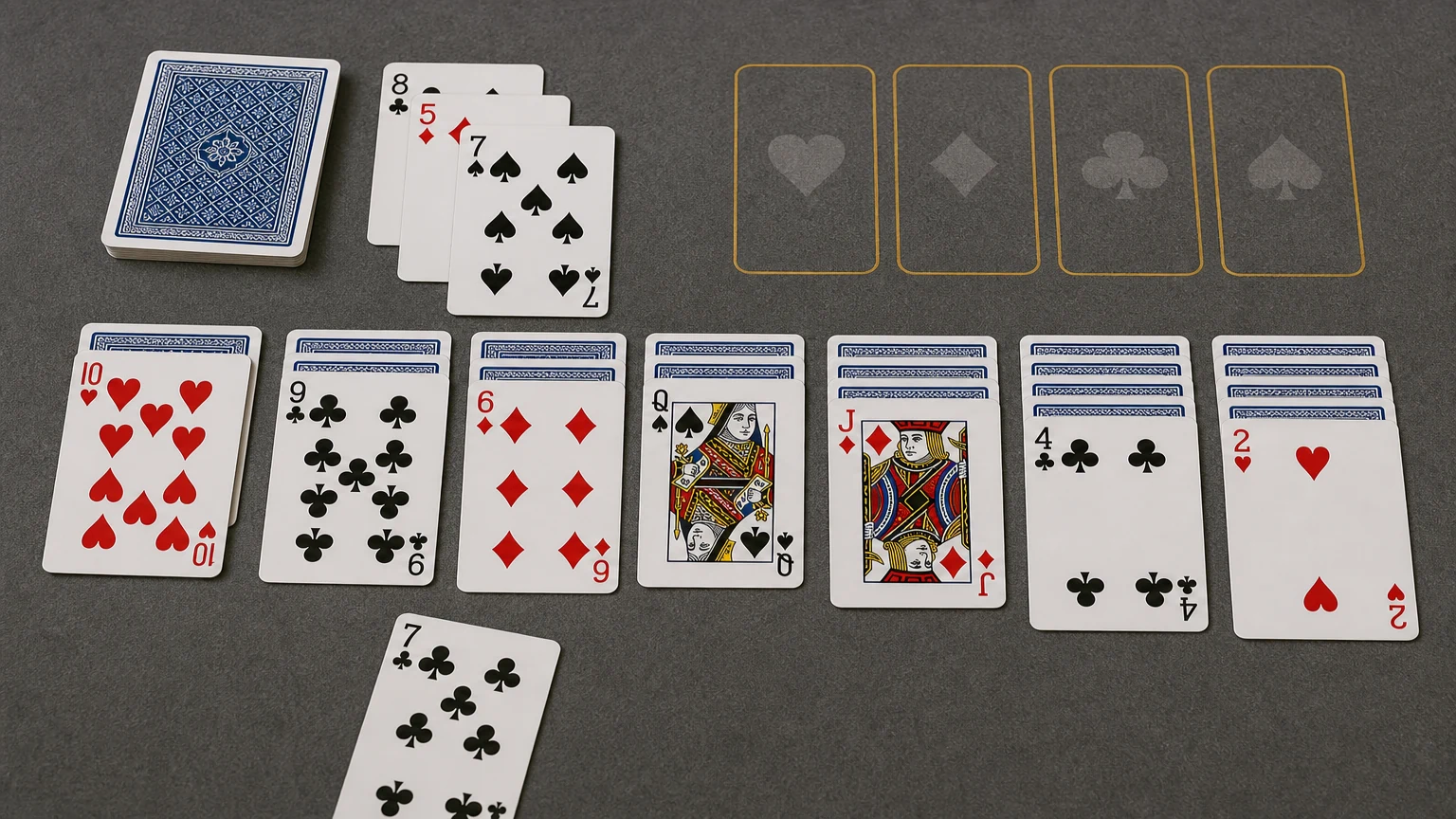
The card behind the card
The trick is simple enough to use without turning Solitaire into homework.
Whenever the three card solitaire waste pile gives you a playable top card, pause for one breath and remember what sits behind it.
Ask:
- If I play this card, what appears next?
- Can that next card move anywhere?
- Does it help uncover a hidden tableau card?
- Does it open a foundation move that is actually useful?
- Should I wait until the next pass?
You are not trying to memorize the whole stock. That can make a casual game feel like an exam, and honestly, most players will stop doing it after two minutes.
One card is enough.
The card behind the card gives you a tiny preview of the next move. Sometimes it tells you to play now. Sometimes it tells you to wait because the card underneath has nowhere to go.
This is especially useful when the waste pile offers a foundation move.
Moving an ace or two up is usually safe. Moving middle cards to the foundation can be trickier. If playing a card to the foundation reveals nothing useful, it may be harmless. If leaving it in the waste keeps a better sequence available later, waiting may be smarter.
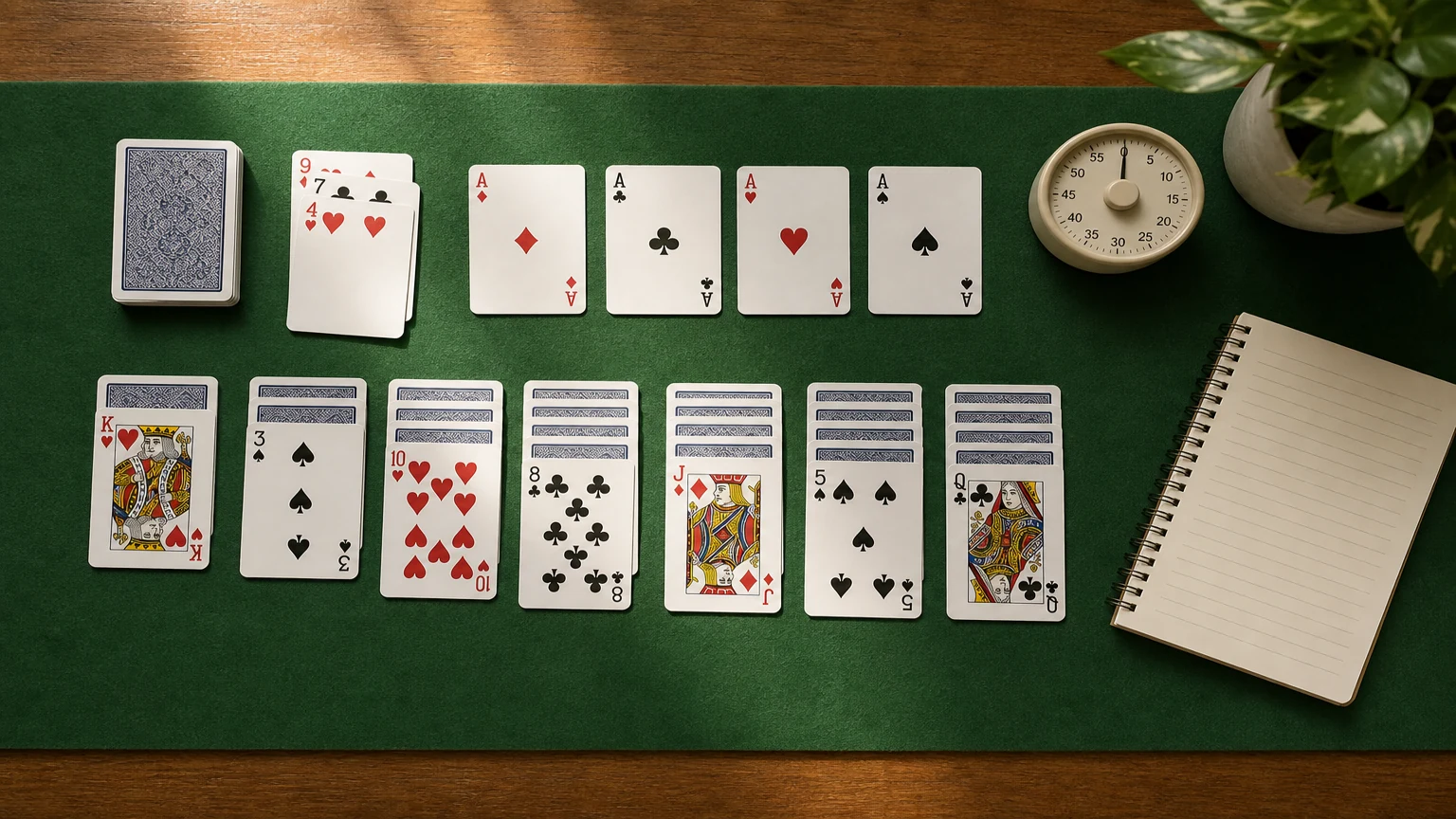
A small example
Picture a tableau with a black 9 open and a face-down card under a red 8. Your waste pile shows a red 8 on top. Under that red 8 is a black 7.
The red 8 can move onto the black 9. That is good.
But the better news is underneath. Once the red 8 moves, the black 7 appears. If the tableau has a red 8 space, the black 7 can move too. That second move may uncover the face-down card that changes the deal.
The top card was useful.
The card behind it was the reason.
Now change the example. The red 8 can move, but the card behind it is a queen with nowhere to go. If moving the red 8 does not reveal a hidden tableau card or build toward a needed sequence, you may not need to hurry.
This is where players get better. Not by becoming slower forever, but by knowing which pauses are worth taking.
The three card solitaire waste pile rewards small attention. It does not ask you to be a computer.
Do not play every foundation card too fast
David Parlett's history of patience games is a useful reminder that Solitaire belongs to a larger family of one-player card games built around order, access, and patience. That last word matters here.
In Klondike, the foundation is the goal. Still, not every foundation move helps right away.
If a card leaves the waste pile too early, it may change the order of what you can access on the next pass. If a card leaves the tableau too early, it may remove a useful bridge for another card. This is why foundation timing and waste pile memory are connected.
The lazy rule is "always move to the foundation."
The better rule is "move to the foundation when it does not reduce useful choices."
In draw-three games, check the waste pile before making automatic foundation moves. If the card behind your playable card is important, go ahead. If the move only makes the top right corner look tidy, wait a second.
Solitaire is full of tidy moves that do not help.
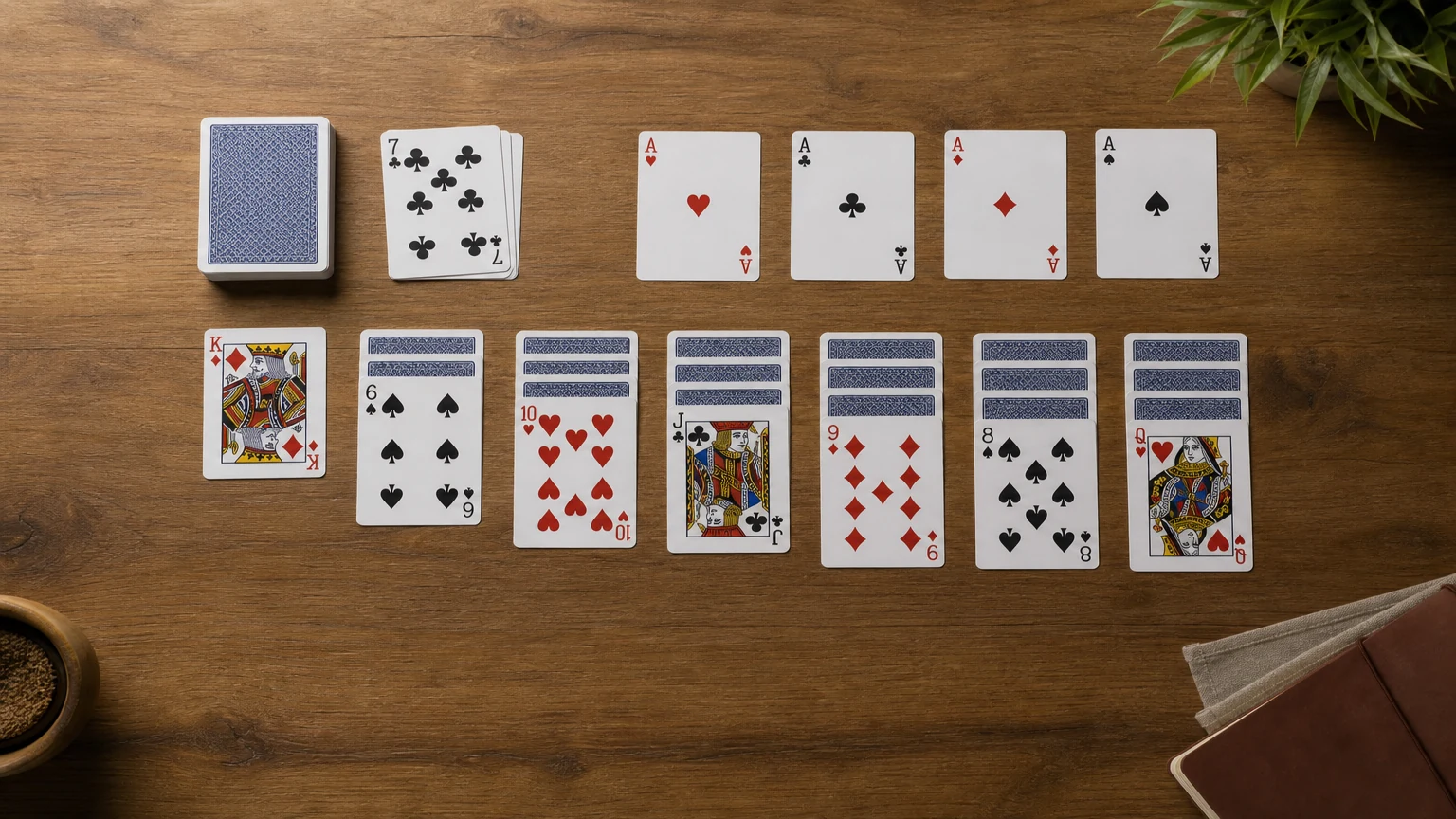
A first-pass drill for draw-three solitaire
Try one deal from Easy Daily Puzzle with this restriction:
During the first pass through the stock, do not rush to play every waste card.
Instead, keep a tiny running note in your head:
Top card. Card behind it. Useful or not useful.
That is all.
If the top card can move and the next card can also move, play it. If the top card can move but the next card is dead, ask whether the move opens anything in the tableau. If it does, fine. If it does not, consider waiting for the next pass.
You will not get every choice right. That is okay. The point is to see the waste pile as a sequence instead of a slot machine.
After the first pass, you will know more than you usually do. You may remember that a black jack is hiding behind a useless 3. You may remember that a red 5 appears only if you move a queen first. That kind of small memory can shape the second pass.
What to do when the waste order changes
Some draw-three versions allow multiple passes through the stock. Some are stricter. Rules can vary by site or mode, so check the version you are playing before building a whole plan around unlimited recycling.
Still, the habit works either way.
If the order changes after a move, do not try to rebuild the whole deck in your head. Just restart the tiny memory loop.
Top card. Card behind it.
That is enough.
The mistake is trying to be perfect. Perfect memory is not required for better solitaire. Better attention is.
If you notice one hidden card that creates one extra tableau reveal, the habit has already paid for itself.
When the trick starts to feel natural
After a few games, the three card solitaire waste pile stops feeling like a pile of missed chances. You begin to see little chains.
Move this card, reveal that card.
Wait on this foundation move, keep that tableau option alive.
Use this pass to set up the next one.
The game still has luck. A bad deal is a bad deal. But fewer games will feel mysterious, and that matters. Losing a solitaire deal is less frustrating when you can name the moment where the board tightened.
Start with one tiny habit. Watch the card behind the card.
It will not turn every draw-three game into a win. It will make the next loss more understandable and the next win feel less accidental.
For a casual card game, that is a pretty good trade.