



Sudoku newspaper syndication sounds like a dry publishing term, but the idea is easy to recognize. A puzzle appears in a familiar place, at roughly the same time, with a small promise: spend a few quiet minutes and see how far the grid takes you. The page does not need a long explanation. The shape of the puzzle does most of the work.
That is why Sudoku fits a daily newspaper so neatly. The 9x9 grid is compact, recognizable, and independent of language once the basic rules are known. A reader can meet the puzzle over breakfast, on a train, or during a short break, then return to the same page later without needing a special setup.
Sudoku newspaper syndication begins with a portable format
Newspapers have always needed material that can be understood quickly and repeated reliably. A daily puzzle has to occupy a predictable amount of space, work in black and white, and give readers a reason to return tomorrow. Sudoku meets those conditions unusually well.
The grid can sit beside a crossword, a comic, or a short feature without demanding a full page. Its instructions are stable from one edition to the next. The clue set changes, but the visual language does not. Once a reader understands that each row, column, and box must contain the digits one through nine without repeats, the next puzzle is ready to enter.
This is also where print has a quiet advantage. A pencil lets a solver place a tentative number, erase it, and leave a small trail of thought. The page records uncertainty without requiring a menu or a hint button. A newspaper reader can fold the page, carry it to another room, or finish the last box later.
The [Sudoku games and guides on Easy Daily Puzzle](https://easydailypuzzle.com/?s=sudoku) keep the same basic promise in a browser: a clear grid, a short entry point, and a puzzle that can fit inside a small break.
From Number Place to a name readers could remember
The history matters because the puzzle did not arrive in newspapers as a completely new invention. Nikoli's own [Sudoku history page](https://www.nikoli.co.jp/en/puzzles/sudoku/) explains that the company encountered an American puzzle magazine version called Number Place and introduced it to Japanese readers in 1984. Nikoli later used the shorter name Sudoku, while other publishers continued to use names such as Number Place.
That naming history reveals something important about distribution. A puzzle can travel even when its label changes. The rules remain recognizable, but each publishing market can choose the name, typography, difficulty scale, and editorial voice that make sense for its readers.
The Japanese magazine version also helped establish a publishing style built around carefully constructed grids rather than a pile of random number placements. Symmetry, clean presentation, and a dependable rule set made the puzzle feel like a designed feature. When the puzzle later reached wider newspaper audiences, it already had a strong visual identity.
The [Mathematical Association of America overview of Sudoku](https://old.maa.org/sites/default/files/pdf/pubs/jan06web.pdf) describes the puzzle's movement from Number Place through Japanese publication and into newspapers in multiple countries. The exact route varied by market, but the pattern was consistent: a self-contained puzzle moved easily through a medium that already knew how to deliver daily word and number games.
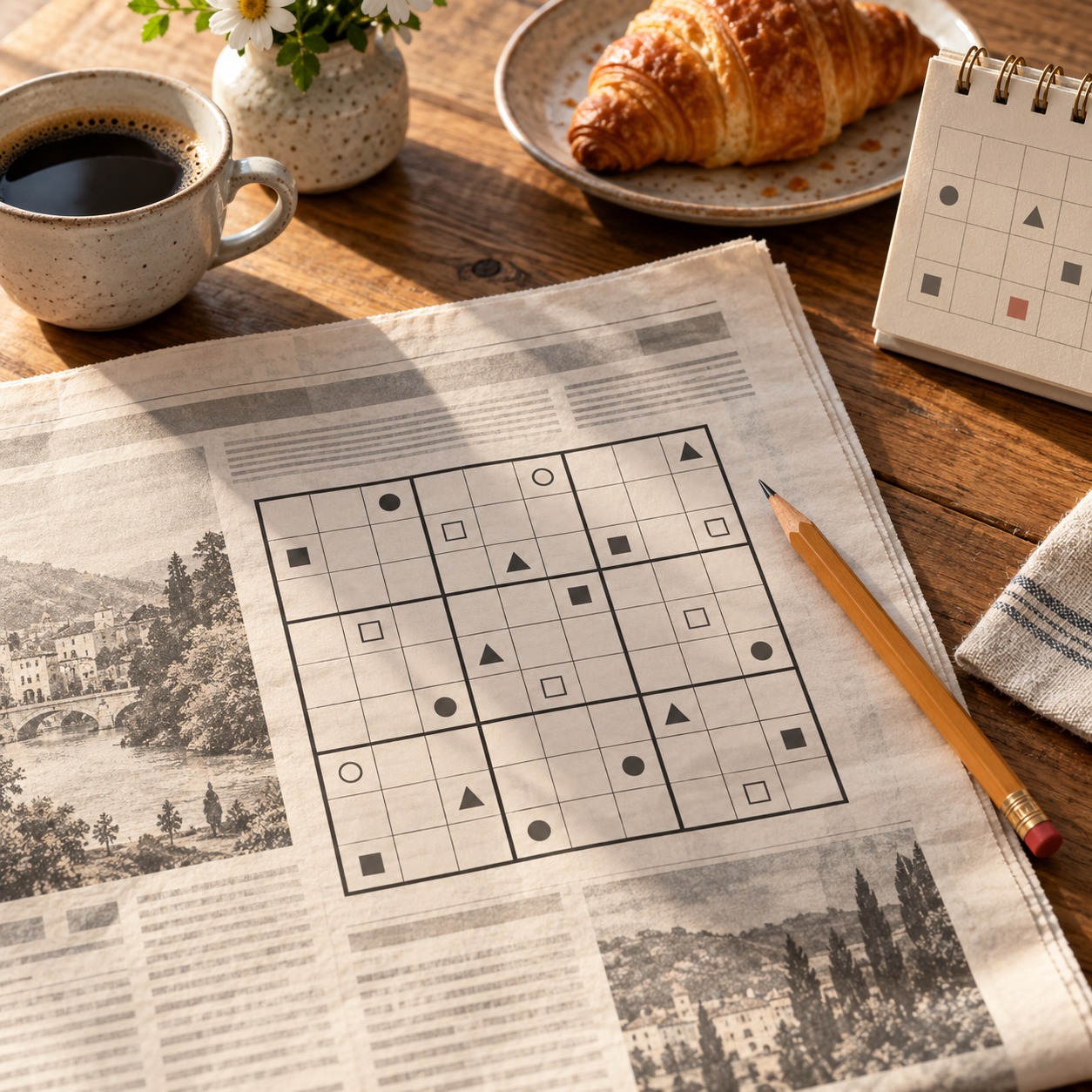
Why a newspaper reader accepts the same grid every day
A newspaper puzzle does not need to compete with a new app every minute. Its strength is the opposite. The fixed page creates a small appointment. The reader knows where the puzzle lives, how long the session might take, and what kind of attention it requires.
Sudoku also offers a natural range of difficulty. An easy grid can introduce a new player to scanning rows and boxes. A harder grid can keep an experienced solver at the same page for much longer. The publishing format stays constant while the editorial team changes the puzzle's challenge.
That flexibility is useful for a newspaper because the audience is mixed. One reader wants a five-minute start to the day. Another wants a grid to carry through lunch. The same 9x9 frame can serve both without changing the rules or adding a second instruction panel.
There is a social effect too. A puzzle printed in a newspaper is easy to discuss without revealing an entire digital interface. Readers can compare solving habits, talk about a difficult box, or share a nearly finished page. The newspaper turns a solitary activity into a small recurring part of public life.
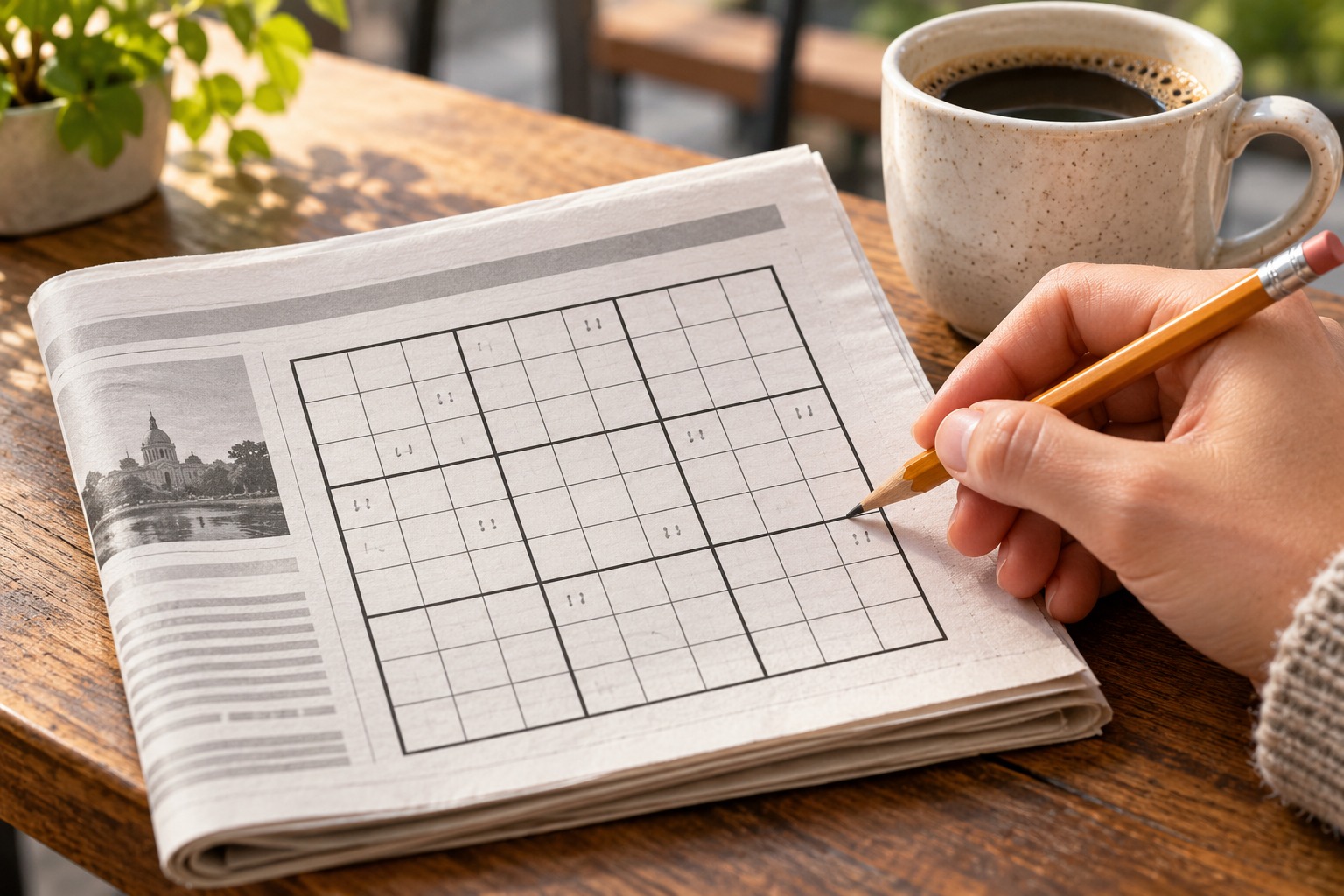
What the print format teaches a digital player
Online Sudoku is faster to start, but the best digital sessions still benefit from the discipline of the printed page. Before asking for a hint, scan the whole grid. Before committing to a number, check the row, column, and box. Leave a candidate alone when the evidence is weak instead of filling the square because it feels convenient.
The page encourages this patience because it does not instantly celebrate every move. A pencil mark can remain unresolved. A difficult box can wait. The player learns to treat the grid as a connected structure rather than nine separate mini-games.
Try that approach on the [Easy Daily Puzzle Sudoku page](https://easydailypuzzle.com/). Start with one full scan, mark only candidates that have a clear reason to exist, and return to the tightest box after a few confirmed placements. The browser changes the surface, but the newspaper habit still works.
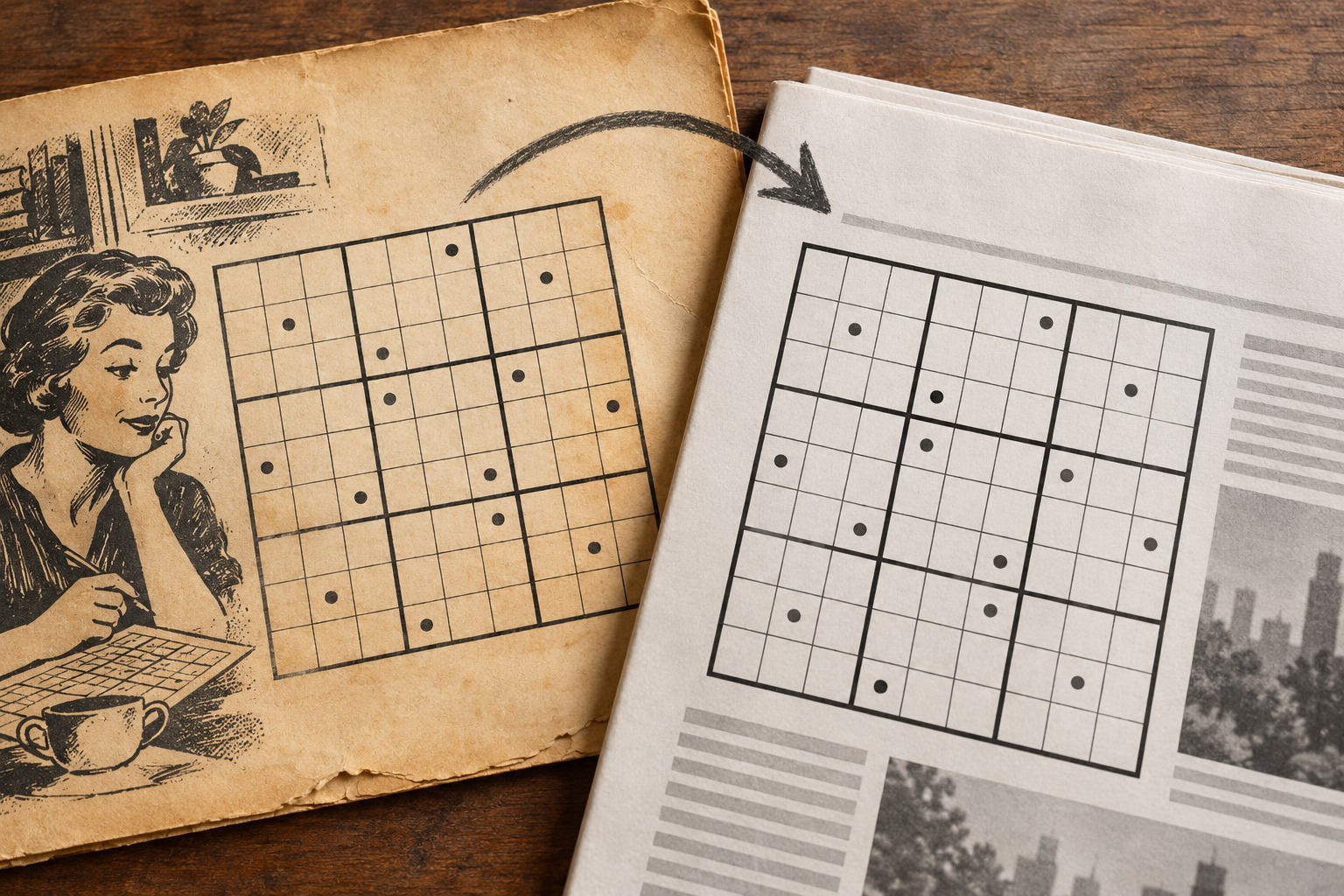
A daily slot is more than a place on the page
Sudoku newspaper syndication succeeded because it matched the rhythm of the medium. The puzzle is compact enough for a fixed column, stable enough for a broad audience, and flexible enough to offer different levels of challenge. Its history also shows that distribution is not only about moving a file from one publisher to another. It is about giving a puzzle a repeatable place in a reader's day.
That is the part worth carrying forward. Whether the grid arrives on newsprint or on a screen, the best Sudoku session still begins with the same small invitation: look carefully, make one sound deduction, and let the next move earn its place.