



Spider Solitaire run breaks are the moves that make a neat sequence look worse for a moment. You split a descending run, move only part of it, and leave the tableau less tidy than before. That can feel like a mistake. In many deals, it is the move that finally exposes the card you need.
The important question is not whether a sequence stays together. It is whether the sequence is doing useful work. A clean same-suit run can be valuable, but it can also cover a face-down card, block an empty column, or hide the one rank needed to repair another stack. Breaking it is reasonable when the board gains access, space, or a better route afterward.
You can try the idea on the [Easy Daily Puzzle game library](https://easydailypuzzle.com/), then [browse more Spider Solitaire practice](https://easydailypuzzle.com/?s=spider-solitaire) when you want another deal.
Why Spider Solitaire run breaks feel dangerous
Spider Solitaire rewards descending order, so players naturally want to preserve every long run they build. A same-suit sequence is especially attractive because the whole stack can move as one unit. It looks like progress that should never be disturbed.
But the tableau is not a museum. Cards are not meant to remain in their first useful arrangement. A run is a tool for moving cards, uncovering cards, and creating room. If it has stopped doing those jobs, its neat appearance is not enough reason to protect it.
The danger comes from breaking a sequence without knowing what the break is supposed to achieve. Moving a few cards just because a legal destination is available can create two weak stacks instead of one strong one. The break should have a target: a face-down card, an empty column, a useful exposed rank, or a same-suit repair that was impossible while the original stack stayed closed.
Spider Solitaire run breaks and hidden-card access
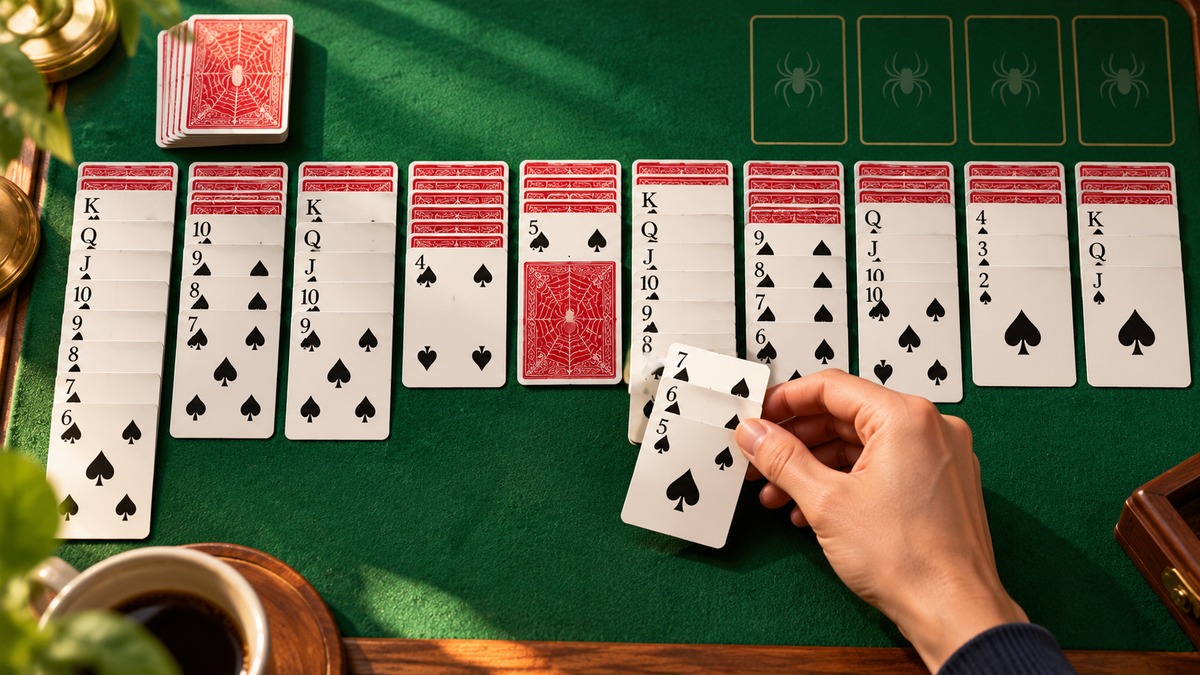
The clearest reason to split a run is to reveal a face-down card. Suppose a column contains a long descending sequence and the next hidden card sits underneath it. If the full run cannot move, look for the smallest legal section that can move elsewhere. You may only need to relocate the top few cards to uncover the bottom card.
Do not automatically move the largest possible section. A smaller transfer often gives you more choices. It may leave a useful rank exposed in the original column while creating a temporary bridge in another column. The question is how much of the run must move to reach the hidden card.
After the reveal, pause. The new card may be immediately useful, or it may need a temporary home. A reveal is valuable because it changes the information on the board, not because every newly visible card can be placed at once.
The official [Bicycle Cards Spider Solitaire rules](https://bicyclecards.com/how-to-play/spider-solitaire) are a helpful baseline for legal moves and completed-suit removal. Strategy starts where the rules stop: deciding which legal move improves access without spending every flexible space.
The three questions before you split a run
Before making Spider Solitaire run breaks, ask three quick questions.
First, what will the break uncover? If the answer is a face-down card or a rank that connects two useful stacks, the move has a clear purpose. If the answer is only "another legal place for these cards," wait and inspect the rest of the tableau.
Second, where will the moved section go? A temporary destination should be more than an empty patch of felt. It should leave the cards movable, preserve color and rank options, or help build a clean same-suit run. If the destination becomes a dead pile, the break may cost more than it gains.
Third, what happens to the original column? The remaining cards should not become impossible to use. Check whether the exposed card can accept a card later, whether the column will reveal its next layer, and whether the split creates a gap that another move can repair.
These questions take seconds once they become a habit. They also stop a common error: breaking the longest run on the board simply because it is the most visible move.
When a broken run is better than a clean run
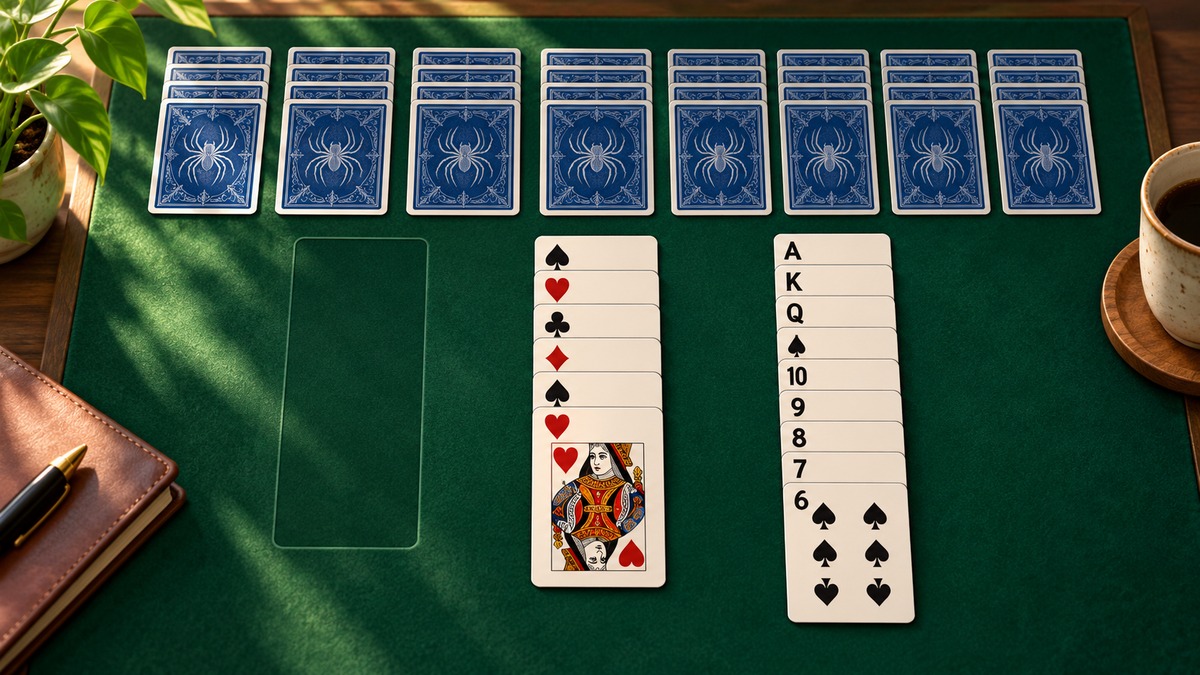
A broken run can be stronger when it creates an empty column. Empty space is one of the most flexible resources in Spider Solitaire. It can hold a king, park a mixed stack, or let you move a sequence in stages. If a run is occupying a column that could be cleared, splitting it may open the entire layout.
The timing matters. Do not break a run to create an empty column if you have no useful card to place there and no plan to use it. An empty space is powerful because it gives you choices. It is not automatically progress when it is created too early and immediately filled with a trapped stack.
A broken run can also be better when it separates a clean suit from a mixed suit. In a difficult two-suit or four-suit deal, a mixed descending stack may look impressive but be hard to move. Splitting it can expose a same-suit pair that can grow independently. The board may look less organized, yet the suit structure has improved.
David Parlett's overview of [patience games and their history](https://www.parlettgames.uk/histocs/patience.html) helps explain why these games reward controlled patience rather than constant movement. A move is useful when it changes the future arrangement, not merely when it changes the current picture.
When Spider Solitaire run breaks are a bad idea
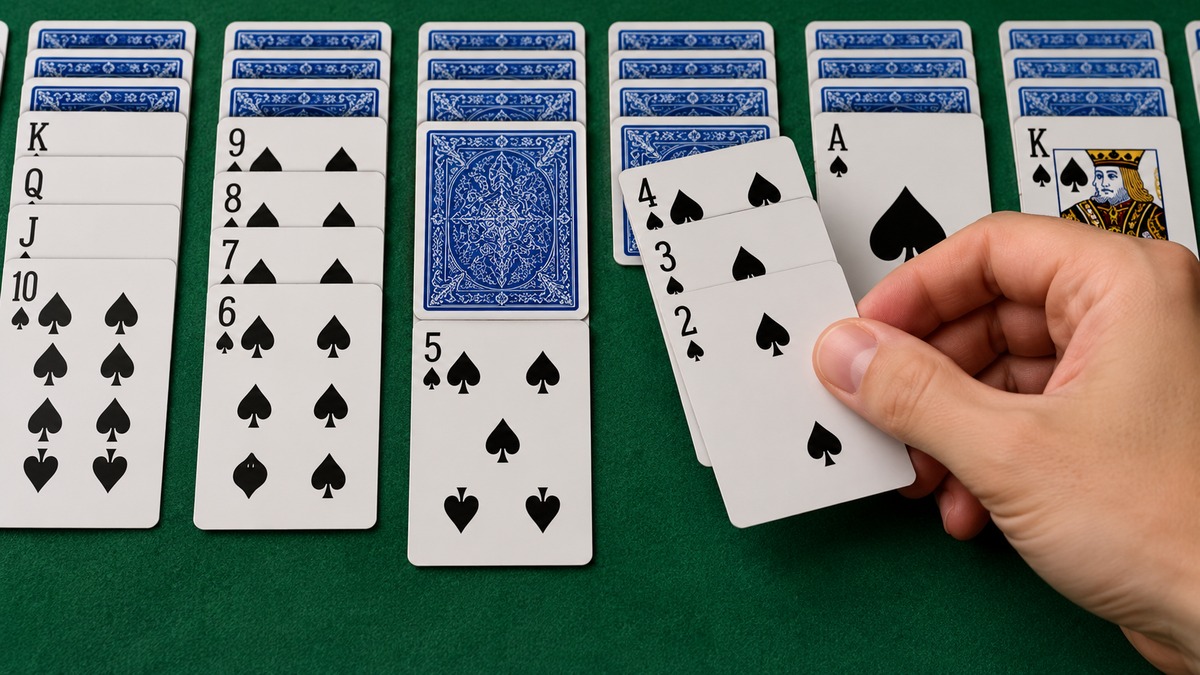
Breaking a run is usually weak when it covers the only card that can repair another column. If the sequence contains a needed red or black rank, splitting it may bury that option under two separate stacks. Look at the receiving columns before you move.
It is also weak when the break spends your only empty column for no reveal. A temporary parking move can be correct, but it should give you a clear next step. If the move only creates a new pile that cannot be moved again, you have traded flexibility for motion.
Finally, be careful near a stock deal. A break that makes the board look active may not be worth taking if the tableau still contains a clean reveal available elsewhere. Before adding a new row, use the information already on the board. A stock deal should change the puzzle, not hide the fact that the current position has not been read carefully.