



Spider Solitaire empty column parking starts with a tempting little vacancy. One tableau column is finally open. The board looks cramped. A mixed stack is in the way. Your hand wants to drag something into that empty lane just to create motion.
Sometimes that move saves the deal. Sometimes it spends the most valuable space on the table for almost nothing.
If you play casual card games on Easy Daily Puzzle, this is one of the cleanest Spider habits to practice because it does not require memorizing a complicated system. You only need to ask what the empty column will do next. You can also browse more card-game ideas through Easy Daily Puzzle Solitaire articles when you want another quick table-reading habit.
Spider Solitaire empty column parking is not storage
The easiest way to waste an empty column is to treat it like storage.
You move a card there because it is legal. You move a mixed stack there because the stack looks annoying. You park a king there because kings feel naturally heavy. For one second the board looks cleaner. Then you realize the empty column is gone, the parked stack cannot move, and the hidden card you hoped to uncover is still buried.
Spider Solitaire empty column parking works better when the column acts like a workbench.
The Bicycle Cards Spider Solitaire rules describe the basic structure: cards are arranged in tableau piles, sequences can be built down in rank, and completed suit sequences are removed. Digital versions may vary in interface, scoring, undo, and difficulty, but the central pressure stays familiar. You are trying to uncover hidden cards while building movable sequences.
An empty column helps because it gives you temporary freedom. But temporary is the key word.
Spider Solitaire empty column parking should reveal or repair
Before you park anything in an empty column, ask what the move buys.
Does it reveal a face-down card? Does it let you move a same-suit run into place? Does it separate a mixed stack so one part can be repaired? Does it protect another empty column? Does it make the next stock deal safer?
If the answer is no, the move may only be decoration.
That is the trap. Spider Solitaire rewards activity, but not all activity improves the board. A legal move can make the next minute harder. A tidy-looking stack can block the one lane you needed for a better transfer.
A good parking move has a job. It creates information, movement, or repair.
Think of the empty column as a question:
1. What can this space uncover?
2. What can this space connect?
3. What can this space separate?
4. What future move becomes possible after I use it?
5. Can the parked stack leave again?
The fifth question matters most. If the parked stack cannot leave, you did not park it. You moved it in.
The hidden card test
In Spider Solitaire, a face-down card is often more important than a neat visible stack.
That sounds obvious until a good-looking sequence appears. Suppose you can move a clean 9-8-7 run into the empty column. It looks satisfying. But if moving a different card would uncover a hidden card, the hidden-card move may be worth more.
Why? Because hidden cards are information. They can be new ranks, new suits, new connections, or new problems. You cannot solve what you cannot see.
Use a simple hidden-card test before parking:
1. Count how many face-down cards are still covered.
2. Find which movable stack is sitting above the easiest hidden card.
3. Ask whether the empty column can lift that stack temporarily.
4. If yes, reveal first unless there is a stronger same-suit completion available.
This does not mean every hidden-card reveal is automatically best. Some reveals create chaos. Some same-suit repairs are urgent. But if two moves are close, choose the one that gives you more information.
That habit keeps the game from turning into surface cleaning.
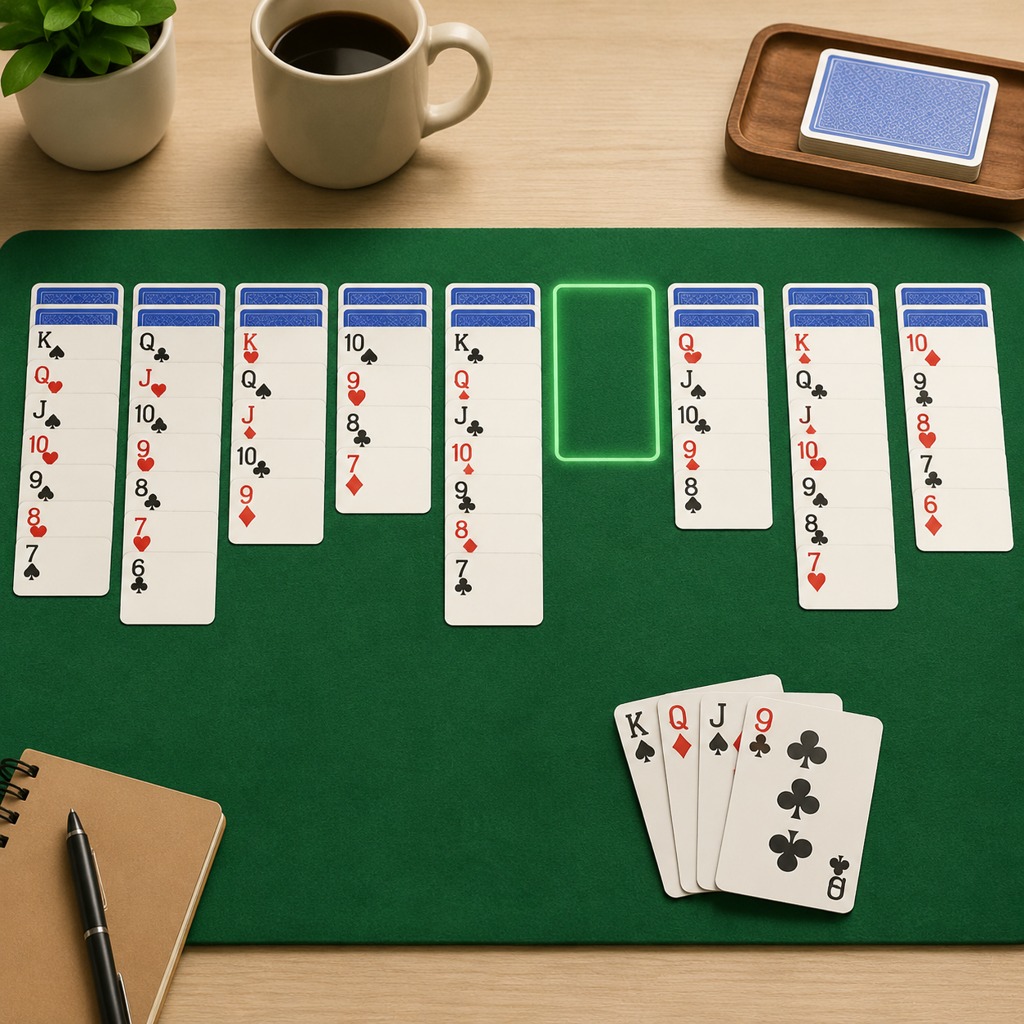
Empty columns change by suit difficulty
Spider Solitaire empty column parking feels different in one-suit, two-suit, and four-suit play.
In one-suit Spider, almost every descending sequence can eventually work together. Empty columns are still useful, but the board is forgiving. Parking a stack in the only open lane is not always fatal because repair is easier.
In two-suit Spider, empty columns become more valuable. Mixed stacks happen often enough to create friction, but not so often that the board feels hopeless. A good empty-column move can separate a temporary mix and turn it back into a same-suit run.
In four-suit Spider, the empty column becomes a rare tool. Parking the wrong stack can freeze the board. You need more proof before spending the space.
This is where old patience-game thinking helps. David Parlett's history of Patience and Solitaire treats these games as a family of arrangements, choices, and constraints rather than simple luck. Spider feels modern on a browser screen, but the old lesson still applies: a card move is not only about where a card can go. It is about what that move makes knowable.
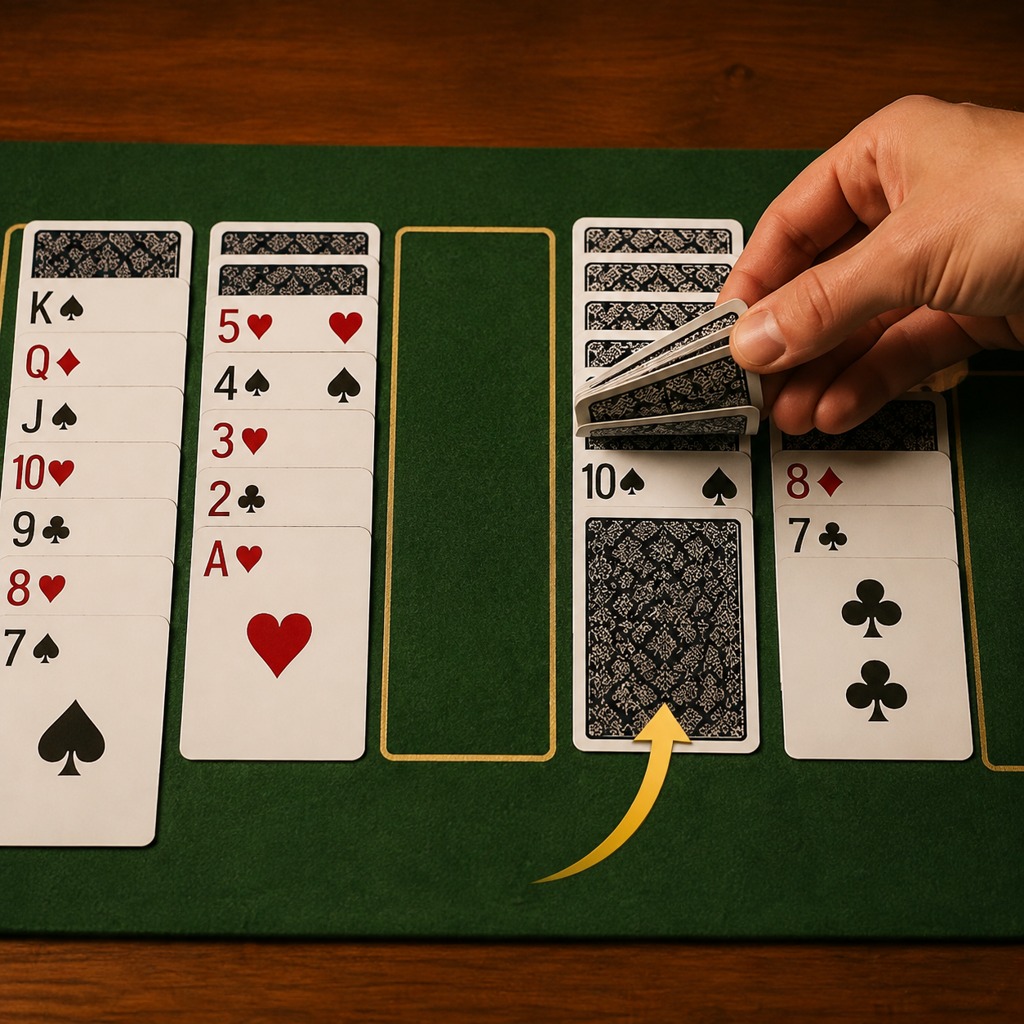
When parking a mixed stack is worth it
Mixed stacks are not always bad. They are often temporary scaffolding.
A mixed stack is worth parking when it lets you uncover a hidden card, free a same-suit run, or move a blocking card out of the way long enough to repair the column underneath. It is not worth parking just because it looks messy.
Imagine a column with a black 10 sitting on a red 9, with several face-down cards below. Moving that mixed stack into an empty lane may feel ugly, but if it uncovers a hidden card and leaves another same-suit run movable, the move may be good.
Now imagine a different board. You park a long mixed stack in the only empty column, but it does not uncover anything. It also cannot move again because no matching rank is available. The board is not cleaner. It is smaller.
That is the difference between parking and dumping.
Good parking is temporary. Dumping is permanent until luck rescues it.
The stock deal question
The stock deal adds another layer.
Before dealing a new row, an empty column often gives you one last chance to improve the tableau. You may be able to uncover a hidden card, align a suit, or move a blocker. Once the stock lands, every column gets a new card, and the board changes shape.
So ask this before stock:
1. Can the empty column reveal one more hidden card?
2. Can it repair one mixed stack?
3. Can it preserve a clean same-suit sequence?
4. Will parking a stack make the next deal safer or more crowded?
If the empty column cannot do useful work, maybe the deal is ready. But if it can still reveal or repair, do that first.
Many frustrating Spider games come from dealing too early because the visible board looks stuck. The board may not be stuck. It may only be waiting for the empty column to do one last job.
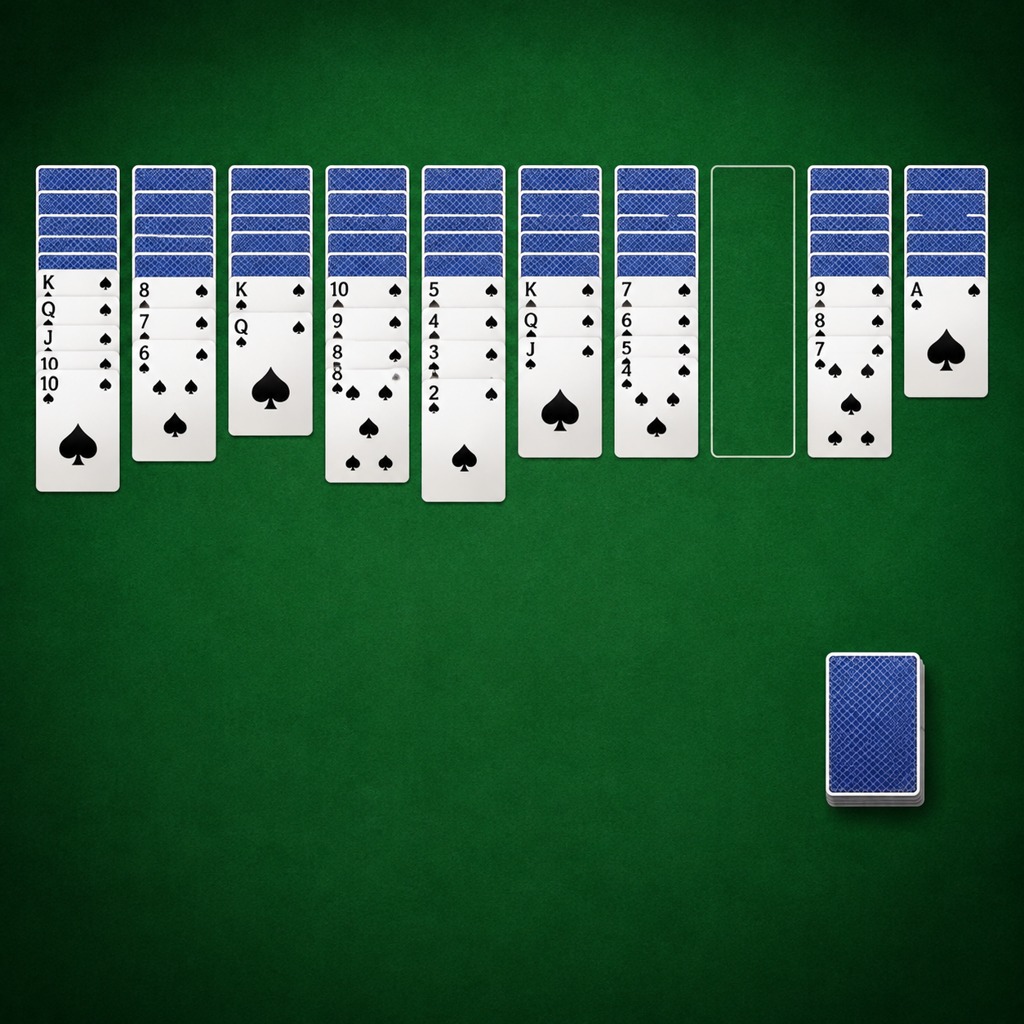
A better habit for the next Spider Solitaire deal
The next time you open a column, pause before filling it.
Do not ask, "What can I put here?" Ask, "What can this space accomplish?"
If the answer is reveal, repair, connect, or protect, use it. If the answer is only "move something out of the way," look again. The empty lane may be too valuable for that.
Spider Solitaire empty column parking is a small habit, but it changes the whole feel of the game. It turns an empty space from a relief into a tool. The board becomes less about making motion and more about making the next useful move visible.
That is when Spider starts to feel less like a pile of blocked cards and more like a patient conversation with the tableau.