



Spider solitaire 2 strategy matters because two-suit games are forgiving enough to learn from and hard enough to punish sloppy moves. One-suit Spider can hide bad habits. Four-suit Spider can feel brutal before you are ready.
Two-suit Spider sits in the useful middle. It teaches order, patience, and timing without making every deal feel impossible.
If you want to practice while reading, open Play Spider Solitaire 2 . For more related posts, use more Spider Solitaire articles on Spider Solitaire 2 .
Spider solitaire 2 strategy starts with move quality
In Spider Solitaire, a legal move is not always a good move. That is the first lesson two-suit games teach.
You can stack cards across suits. You can move a sequence that looks tidy. You can fill an empty column quickly. The game allows all of that. The question is whether the move makes the next few turns easier.
A useful spider solitaire 2 strategy asks this before almost every move: what does this open?
If the move reveals a hidden card, creates space, or builds a clean same-suit run, it probably helps. If it only makes the board look neater, be careful.
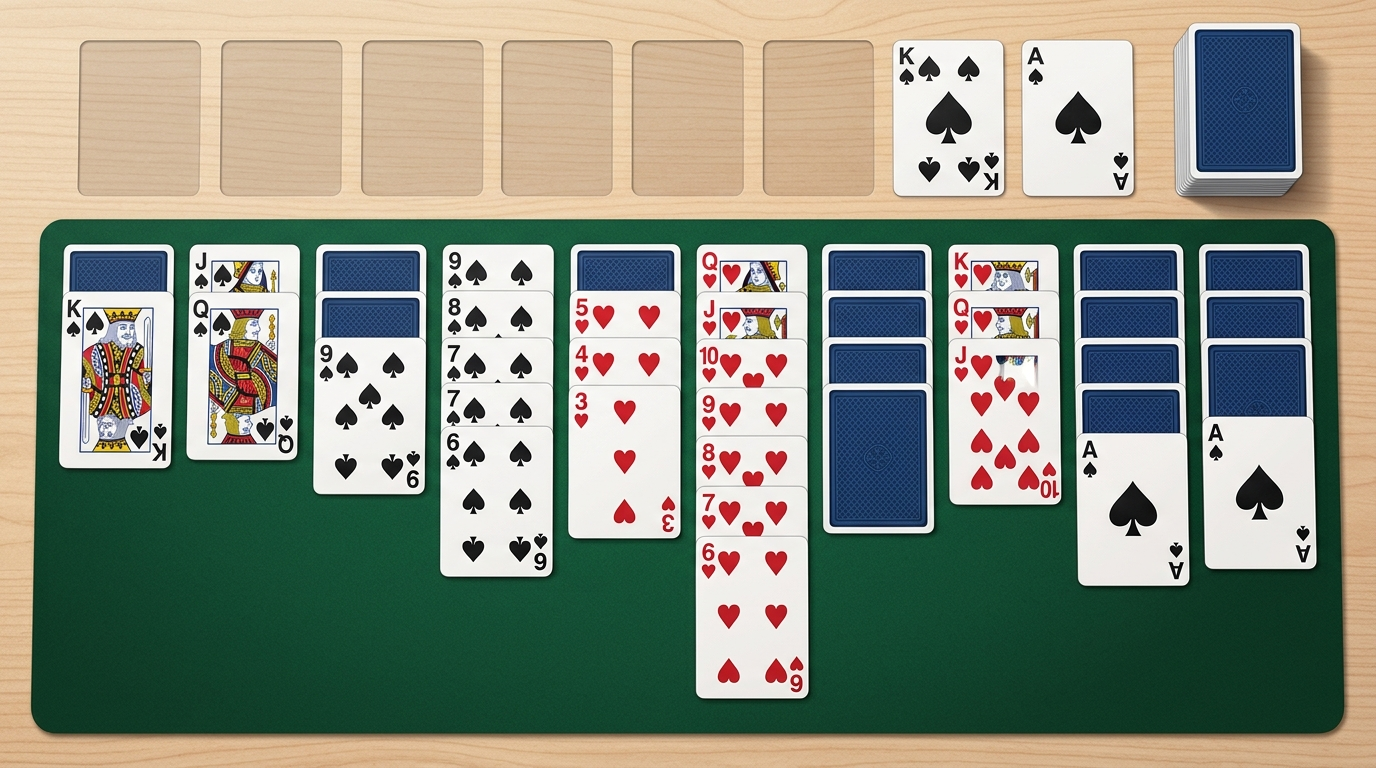
Empty columns are working space
Newer players often fill an empty column as soon as it appears. The space feels too valuable to leave blank.
That instinct causes many losses. An empty column is not a hole in the board. It is a tool.
With one empty column, you can move a stack out of the way, split a mixed run, uncover a buried card, or rebuild a cleaner sequence. Without that space, the tableau tightens fast.
Before filling an empty column, ask whether the card you place there gives you more flexibility or less. If it blocks future movement, wait.
This one habit changes a lot. Strong Spider players do not treat empty columns as decoration. They protect them until the right move appears.
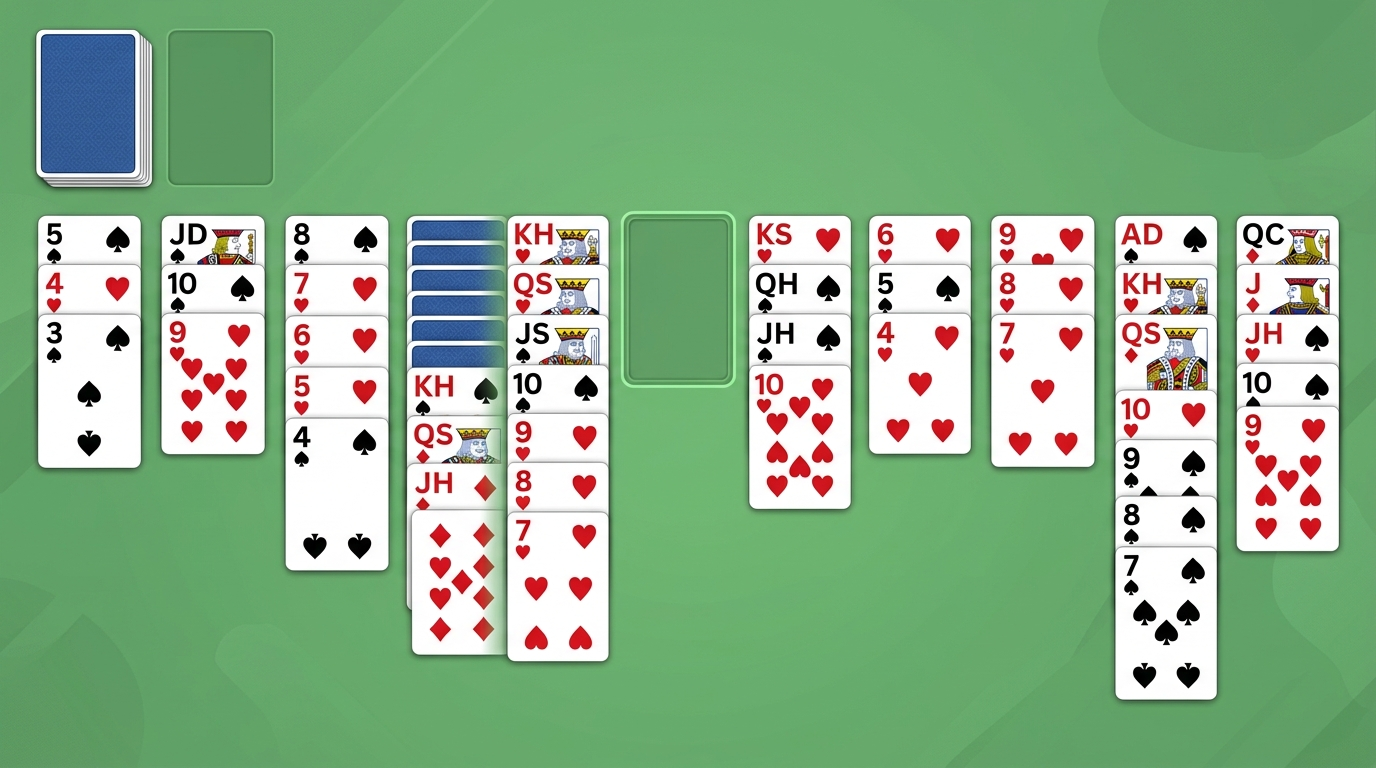
Hidden cards matter more than pretty stacks
A long descending run can feel satisfying. It looks organized. It looks like progress.
But if that run does not reveal a hidden card or help clear a full suit, it may not matter as much as it seems.
Hidden cards are information. Until they turn over, you are playing with part of the deal missing. That is why many good moves in Spider Solitaire look plain: they uncover one facedown card and give you a better read on the board.
A cleaner spider solitaire 2 strategy gives hidden cards more value than surface neatness. Pretty stacks are nice. Visible cards are better.
Mixed suits should feel temporary
Two-suit Spider would be easy if every move could stay in suit. Most deals do not work that way.
Mixed runs are sometimes necessary. The trick is to treat them like temporary scaffolding, not permanent structure.
If a mixed stack helps reveal a card, it may be worth it. If it creates a knot with no exit plan, it will probably hurt later.
When you build across suits, look for the way back out. Can an empty column separate the stack later? Can another card turn it into a cleaner run? Does it keep a same-suit sequence alive somewhere else?
If the answer is no, the move may be borrowing comfort from the future.
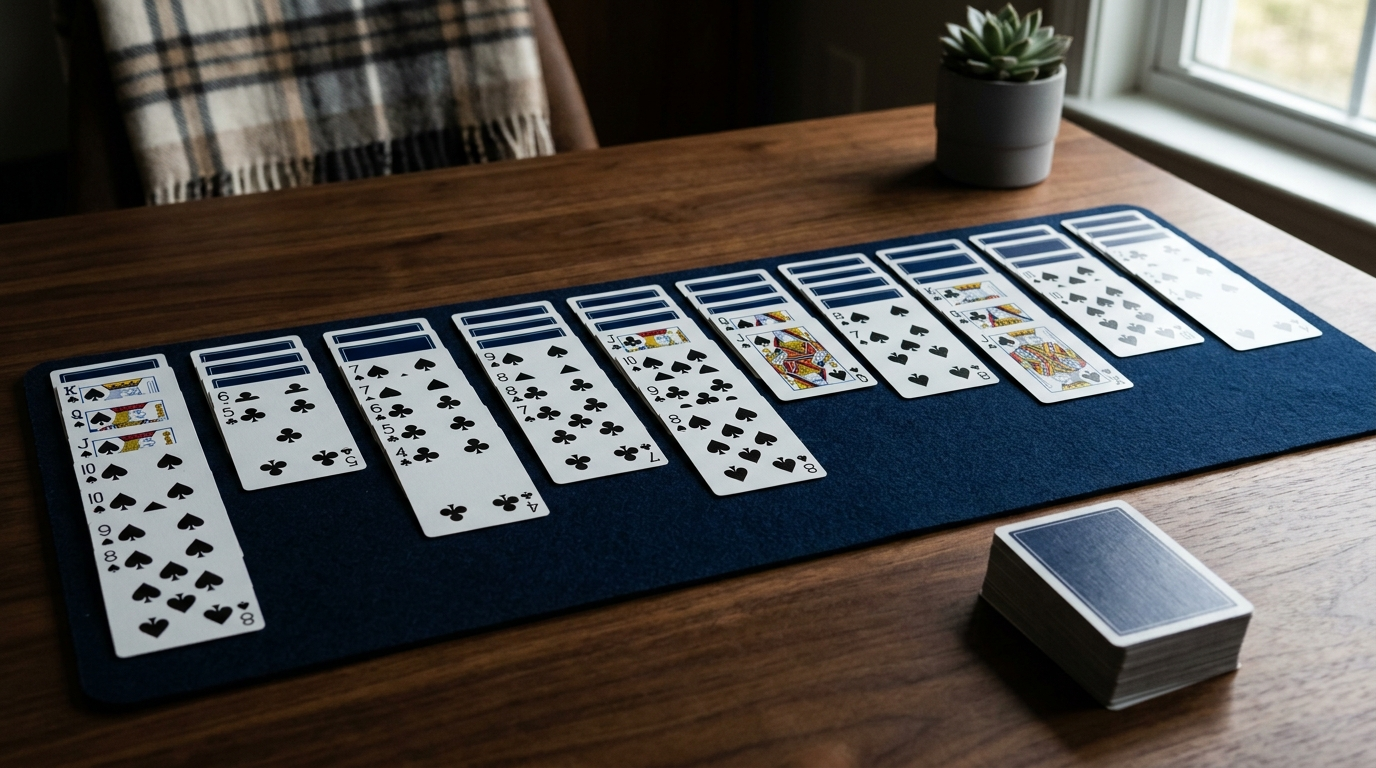
Do not use the stock as a panic button
The stock is tempting because it changes the board immediately. When you feel stuck, drawing a new row feels like action.
The problem is that the stock does not only add chances. It adds pressure. If the tableau is already crowded, a new row can bury useful moves under more cards.
Before drawing, squeeze the current board. Reveal what you can. Clean up mixed stacks if possible. Create at least one flexible column if the deal allows it.
Then draw.
That small delay is one of the best spider solitaire 2 strategy habits. It turns the stock from a panic button into a planned next step.
Learn from the losing deals
Two-suit Spider losses are often readable. After a bad game, you can usually spot where the structure broke.
Maybe an empty column was filled too cheaply. Maybe the stock came too early. Maybe three mixed stacks slowly became one ugly knot.
That feedback is useful. You do not need every deal to be winnable. You need the loss to teach you what went wrong.
For rule references, see the Bicycle Spider Solitaire guide and the Spider Palace rules guide . The rules are simple enough to learn quickly, but the board rewards players who notice structure before it collapses.
Spider Solitaire 2 gets better when you stop chasing motion and start protecting flexibility. Save space. Reveal cards. Delay the stock. Keep mixed suits temporary. Do that, and two-suit Spider starts feeling less random and much more playable.