



Solitaire tableau transfer is the moment when you move a visible stack from one column to another, not because the move looks tidy, but because it changes what the board can offer next. The difference is small. A legal transfer follows the color and rank rules. A useful transfer also reveals information, creates space, or keeps a second route open.
That distinction matters in the middle of a deal. Players often move a red card onto a black card as soon as the destination appears. Sometimes the move is correct. Sometimes it only shifts a blockage from one column to another and spends the card that could have opened a hidden layer.
You can test the idea in the [Easy Daily Puzzle game library](https://easydailypuzzle.com/), then [browse more Solitaire practice](https://easydailypuzzle.com/?s=solitaire) when you want another layout.
Why Solitaire tableau transfer is more than a legal move
In classic Solitaire, the tableau is a set of columns with face-up cards covering face-down cards. A transfer can expose the next hidden card, but it can also cover a card that was easier to use in its original position. The visible movement is only the beginning of the decision.
Think of each column as having a job. One column may be your best source of reveals. Another may be holding a flexible low card that can receive several colors. A third may be close to becoming empty. Moving a stack changes those jobs, so the right question is not simply, "Can this stack move?" It is, "Which column becomes more useful after it moves?"
The [Bicycle Cards guide to Solitaire](https://bicyclecards.com/how-to-play/solitaire) covers the basic legal structure. Once the rules are familiar, the most important improvement is learning to value access over appearance.
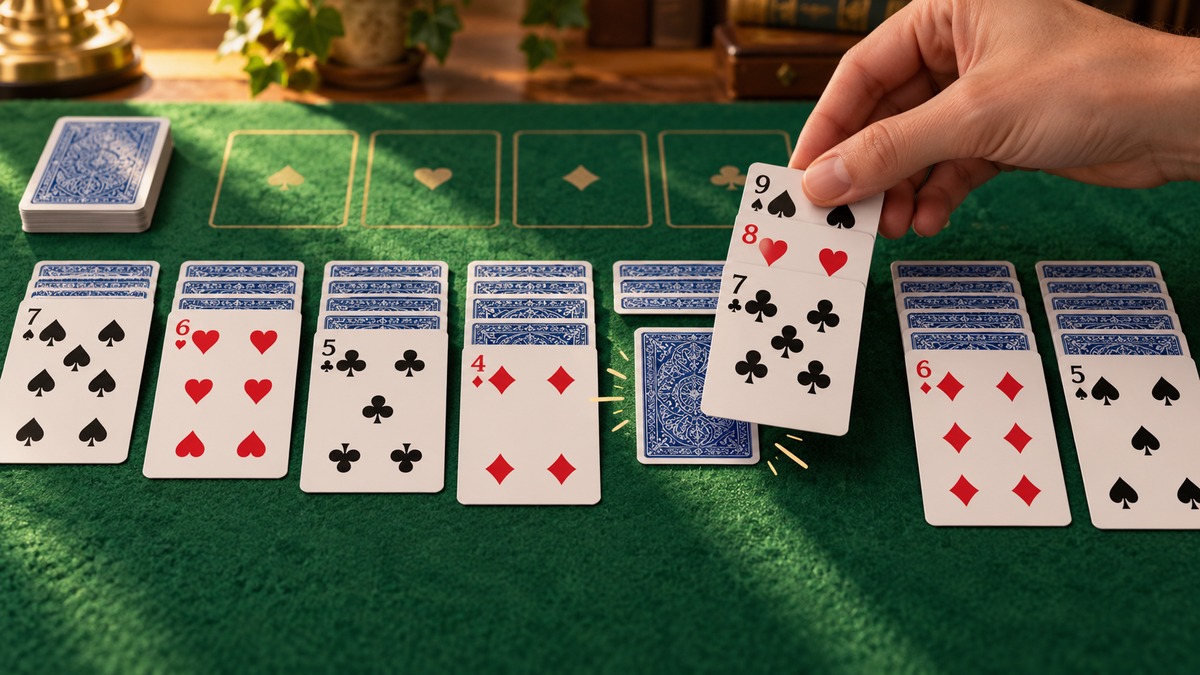
Read the destination before the source
Players usually look first at the stack they want to move. Reverse that order. Look at the destination column and ask what it will be able to do after the transfer.
If a black 8 can receive a red 7, the placement may be useful because the red 7 can later carry a red 6 or reveal a card below it. But if the transfer covers the only exposed card that could move to a foundation, the destination may be less valuable than it appears. A legal home can still be a poor home.
Then look back at the source. Does the move uncover a face-down card? Does it expose a king that can use an empty lane? Does it free a low card that can connect with another column? If none of those things happen, the move may be a rearrangement without a clear purpose.
This destination-first check is especially useful when several transfers are available. Choose the move that gives the next player decision more than one direction.
Solitaire tableau transfer and hidden-card priority
The strongest transfer usually reveals a face-down card. Hidden cards are information, and information can change the value of every visible card around it. If one transfer uncovers a new card while another only lengthens a face-up sequence, start with the reveal unless the new stack would become trapped.
Do not assume that every reveal is automatically good. A new card may be a king with no empty column, a high card with no useful destination, or a rank that blocks the same column again. The reveal still tells you something, but its value depends on whether the tableau has room to use it.
A useful way to compare two transfers is to count future access. How many face-down cards remain reachable? How many columns can accept the new stack? Does the move create a path toward a foundation without exhausting the tableau's flexible cards?
David Parlett's [history of patience games](https://www.parlettgames.uk/histocs/patience.html) is a helpful reminder that Solitaire belongs to a wider family of games built around order, patience, and incomplete information. The modern screen makes transfers easy to perform. It does not make every transfer wise.
The three transfer tests
Before a Solitaire tableau transfer, run three quick tests.
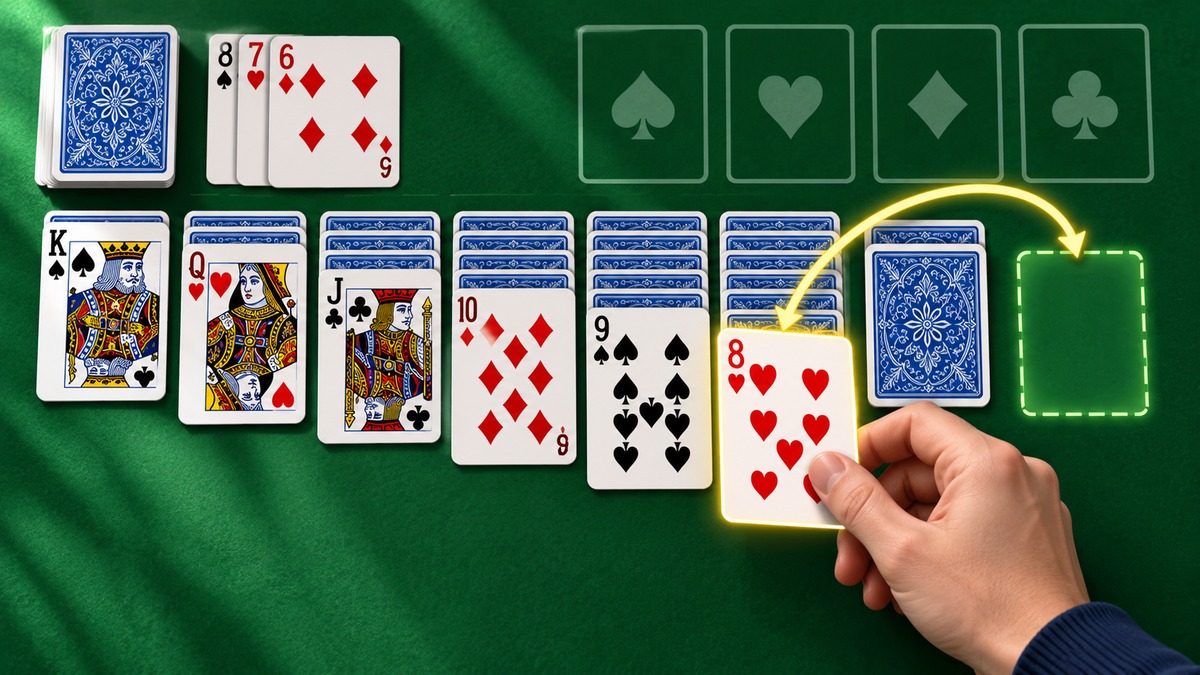
The reveal test
Will the transfer expose a face-down card? If yes, note what the new card could receive and whether the source column becomes easier to work. A reveal is strongest when it also creates a new legal destination.
The space test
Will the transfer create or preserve an empty column? Empty space is valuable because it can temporarily hold a king or a sequence beginning with a king. Do not fill it simply because a legal card is available. The empty column may be more useful one move later.
The flexibility test
After the transfer, how many useful moves remain? A long stack can look impressive while removing every place where a small card could land. Prefer a transfer that leaves different ranks and colors available instead of one that produces a single narrow route.
These tests do not require counting the entire deck. They only ask you to inspect the next layer of the position, which is enough to avoid many automatic moves.
When a stack should stay where it is
Leave a stack alone when it is covering a card that has a clear future role. A low exposed card may be able to accept another card soon. Moving the stack can bury that opportunity under a different color pattern.
Also pause when the transfer uses the only destination for a king or a high card. A move may open one column while closing the board's best repair space. In that case, wait for a move that gives the empty lane a purpose rather than a quick occupant.
The same caution applies to foundation moves. Sending a card upward can look like progress, but it can remove a useful tableau connector. If the transfer or foundation move does not reveal a card, open space, or improve a stable sequence, compare it with a move that does.
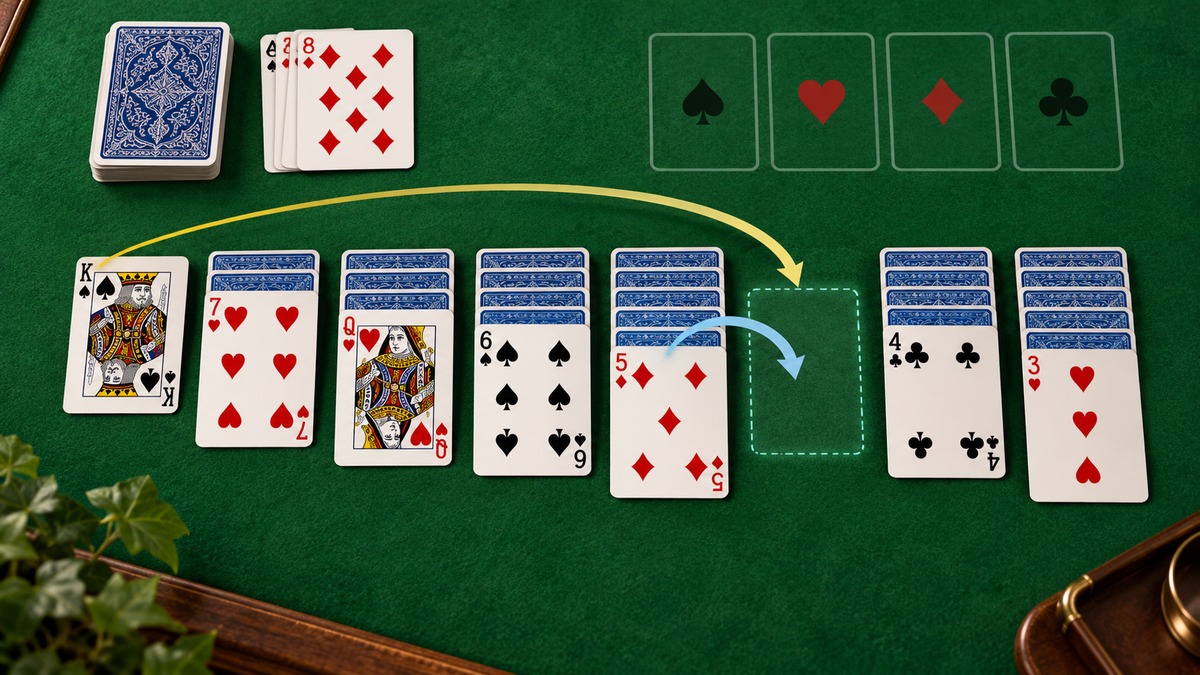
A five-second transfer routine
1. Look at the destination and list what it could receive next.
2. Look at the source and identify the card or space the move exposes.
3. Check whether an empty column is being created or spent.
4. Compare the move with one alternative that reveals information.
5. Make the transfer only when its next job is clear.
The routine is short enough for a casual game, but it changes the feel of the whole tableau. You stop moving cards because they fit and start moving them because they open something.
Make the board easier to read, not merely fuller
A strong Solitaire tableau does not always look balanced. One column may be short, another may hold a long sequence, and an empty lane may remain untouched for several moves. That unevenness can be useful if it protects access to hidden cards.
After each major transfer, pause and scan again. Did the move expose a card that changes your priorities? Is a new color pair available? Did the destination become a dead end? A good plan can become outdated after one reveal, so the board deserves a fresh read.
The best Solitaire tableau transfer is not the one that makes the most visible progress. It is the one that leaves you with more information and more than one way to use it. When a stack can move, give it a job before you give it a destination.