



Solitaire foundation timing is one of those small skills that sounds too picky until it saves a deal. The move is legal. The ace is waiting. The two fits perfectly on top of it. So you move the card up and feel tidy for about three seconds.
Then the tableau needs that card back.
That little regret is familiar to anyone who plays classic solitaire for more than a few rounds. The foundation is the goal, but that does not mean every foundation move is good the moment it appears. In Klondike solitaire, timing matters because cards do more than finish suits. They also unlock hidden cards, hold columns together, and create space for future moves.
If you play solitaire on Easy Daily Puzzle , this is a good single-skill article to test today: before moving a card to the foundation, ask what job it is still doing on the board.
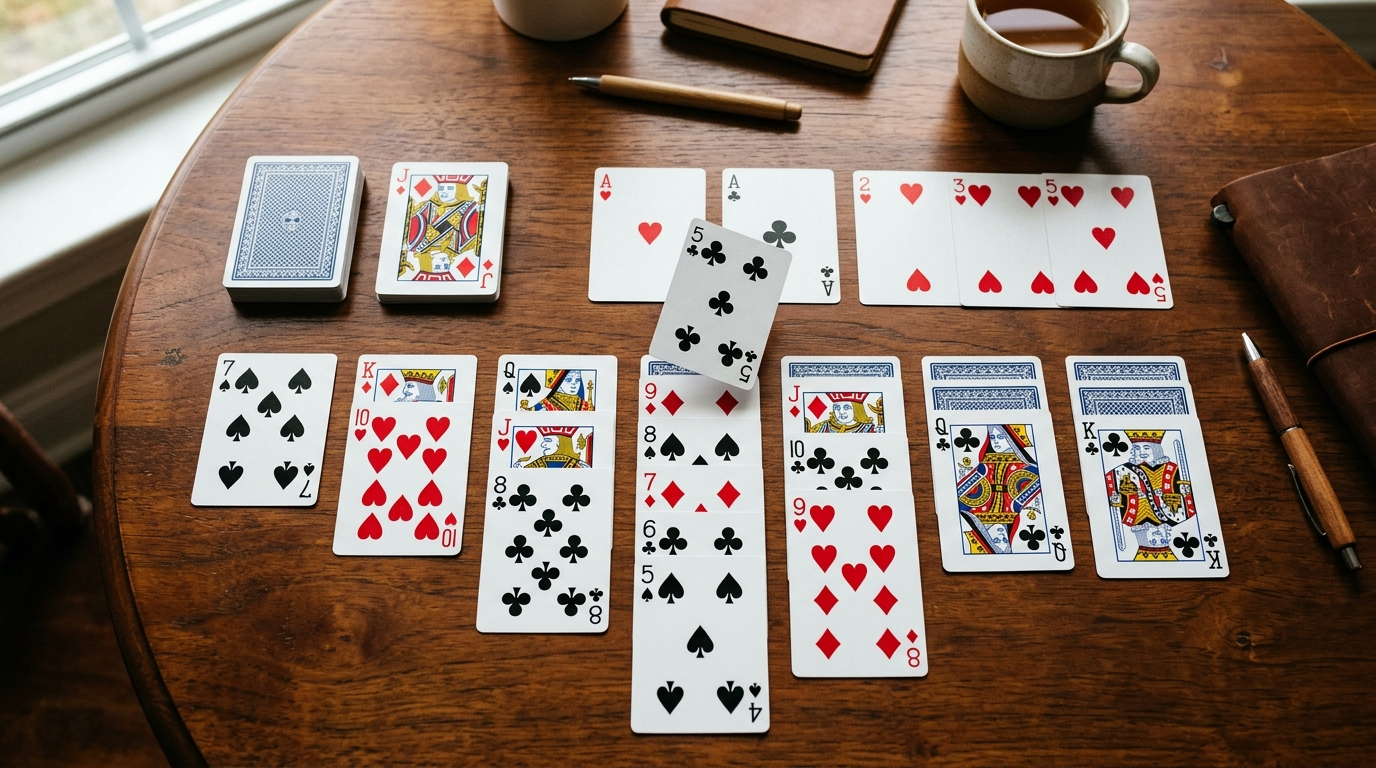
What solitaire foundation timing really means
Bicycle Cards describes the object of solitaire as building each foundation by suit from ace through king. That is the destination. The road there is the tableau.
The tableau is where hidden cards get revealed. It is where red and black sequences give you room to move. It is where an empty column can become useful or useless depending on which king you place there.
Solitaire foundation timing means you do not treat the foundation as a vacuum that should swallow every available card. You treat it as a finish line that cards reach when they are no longer needed below.
That sounds slower, but it is often safer.
The worst solitaire mistake is not always a huge blunder. Sometimes it is a neat move made too early.
The one-question rule
Before moving a card to the foundation, ask:
Would this card help uncover or move something if I kept it in the tableau?
If the answer is yes, wait.
That is the whole rule. It is not perfect, but it catches many bad moves.
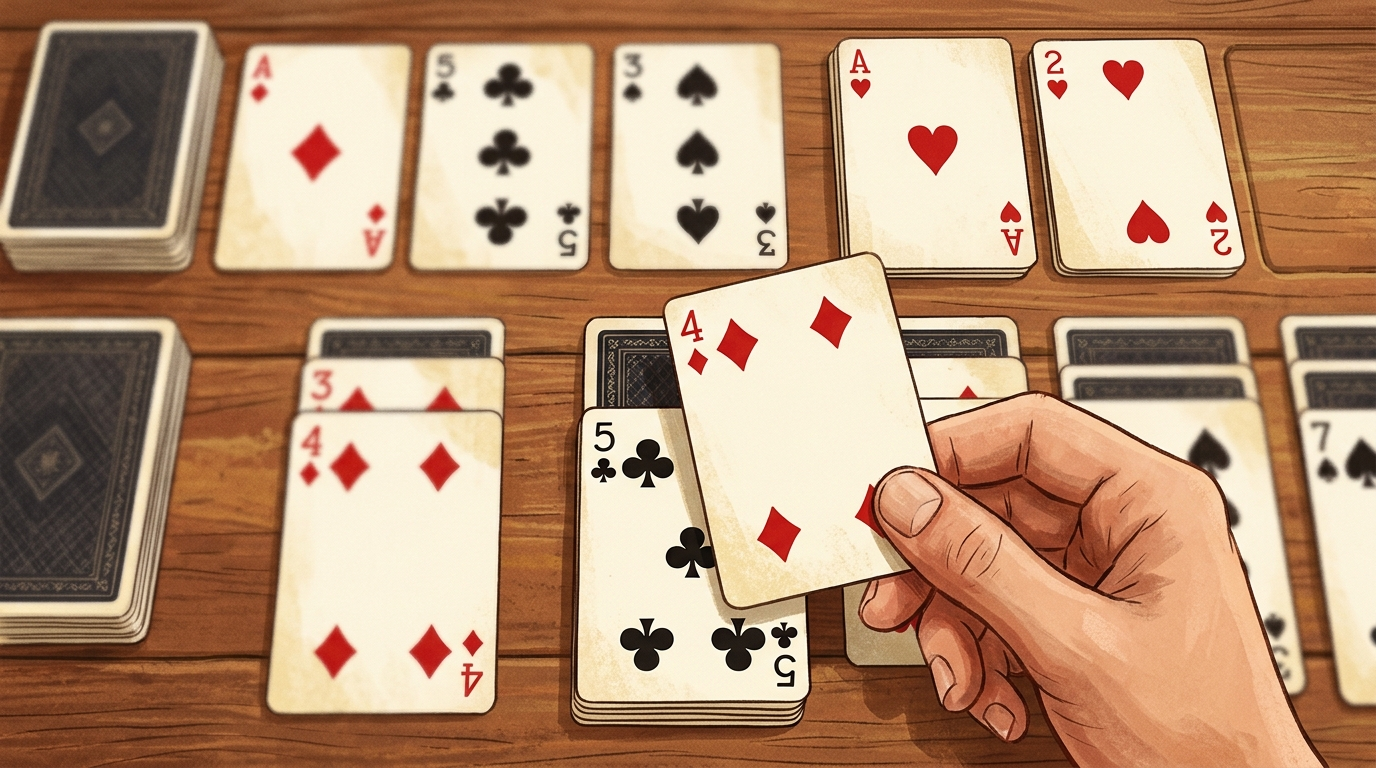
For example, imagine a red 4 sitting on a black 5. A black 3 is buried somewhere you have not seen yet. If you move the red 4 to the foundation too early, you may later reveal that black 3 and have fewer ways to use it. The board loses flexibility.
Now imagine the same red 4 is blocking a face-down card, and moving it to the foundation reveals that card. In that case, the move has a job. It opens information.
This is why context matters. The card is the same. The timing is not.
Cards that are usually safe to move
Some foundation moves are almost always fine.
Aces are usually safe because they start foundation piles and rarely help build tableau sequences. Twos are often safe too, especially when the matching ace is already up and the two is not holding a useful sequence in place.
Low cards become riskier when they are supporting other cards in the tableau. A red 5 under a black 4 may still be doing work. A black 6 under a red 5 may be holding together a sequence that can move later.
Solitaire Palace makes a useful point in its foundation lesson : revealing face-down cards is central to solving the game. That is a good priority to keep in mind. A foundation move is strongest when it reveals a hidden card, frees a column, or removes a blocker that no longer has tableau value.
If the move only makes the top of the screen look cleaner, be suspicious.
Clean is nice. Useful is better.
Cards that often need to wait
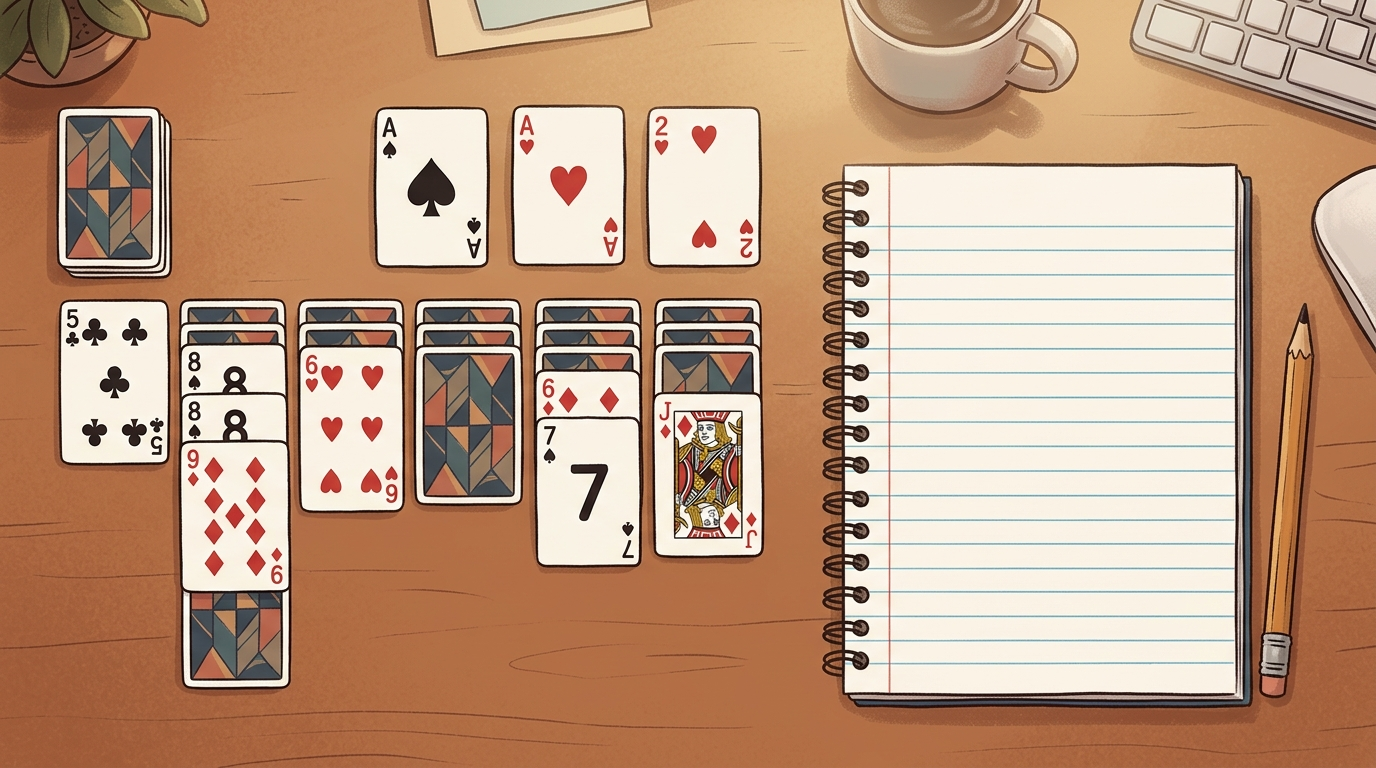
Middle cards are the ones to watch. Fours through sevens can be surprisingly important because they connect low cards to higher stacks.
A 6 may look ready for the foundation, but it might be the only place for a 5 that is about to appear from the waste pile. A 7 may be needed to move a stack that reveals a hidden card. An 8 might be holding a column together long enough for a king space to matter.
This is especially true in draw-three solitaire, where the waste pile order makes every card feel temporary. A card that is available now may not come around again for a while. Moving a support card to the foundation too soon can make the next pass through the stock more awkward.
That does not mean you should never move middle cards up. It means you should give them one small trial before you do.
Ask what they are supporting.
If they support nothing, move them. If they hold a useful sequence, wait. If you are not sure, check whether moving them reveals information. Solitaire rewards information more than neatness.
A quick drill for today
Play one deal with a simple restriction: do not move any card higher than a 3 to the foundation unless it reveals a hidden card or clears a column.
This will feel strange at first. Good. It makes the habit visible.
You will start noticing how many foundation moves are automatic. You will also see how many cards still have work to do in the tableau. The drill is not a permanent rule. It is a training exercise for better solitaire foundation timing.
After one deal, go back to normal play. But keep the question.
What does this card still do?
That question is small enough to use without slowing the game too much. It is also strong enough to prevent a lot of self-inflicted stuck boards.
When moving to the foundation is exactly right
Waiting is not the point. Better timing is the point.
Move cards to the foundation when they are blocking a face-down card. Move them when they clear a column for a king that opens more cards. Move them when the matching lower cards are already safely placed and the tableau no longer needs that rank or color.
The foundation should grow steadily. It just should not grow blindly.
One of the satisfying things about solitaire is how often a deal turns on one patient decision. You wait on a 5. Two moves later, that same 5 catches a 4 from the waste pile. The 4 moves a 3. A hidden card turns over. Suddenly the board has air again.
That is not luck exactly. It is room.
Good solitaire foundation timing protects room.
Try it on your next deal
Open a solitaire game on Easy Daily Puzzle and play the first five minutes with the one-question rule.
Before every foundation move, ask whether the card still helps below. If it does, wait. If it reveals, clears, or no longer supports anything, move it.
For a second round, browse more solitaire games on Easy Daily Puzzle and use the same rule again. You do not need to win both deals to learn from them. Just notice where you used to move too quickly.
The trick is tiny, but it changes the feel of the game. Solitaire becomes less about clearing cards as fast as possible and more about keeping the board alive until the foundations are ready.
That is the whole difference.