



Puzzle book margin notes start as a practical compromise. The answer is not ready, the page is too small for a full explanation, and the pencil is already in your hand. You write one letter, a question mark, or a tiny circle beside the clue. A few minutes later, that mark tells you where the solve paused and what still needs attention.
That is one reason a printed puzzle feels different from an endless stream of browser games. A book gives you one visible page, a finite set of problems, and a physical edge where uncertainty can wait without disappearing.
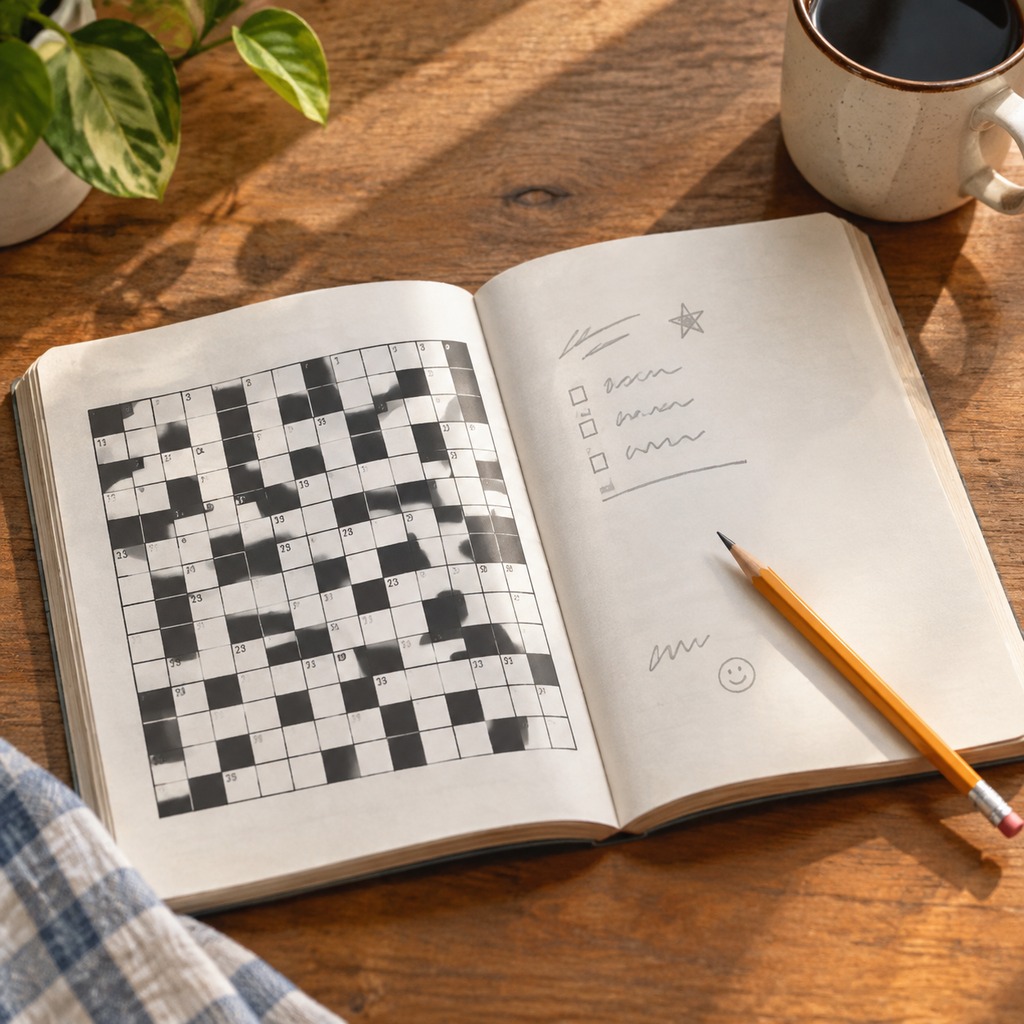
Puzzle book margin notes are part of the workspace
The blank space around a puzzle looks passive until the solve becomes difficult. Then it becomes a second board.
For Sudoku, the margin can hold a short list of digits that keep appearing in one box. For a crossword, it can hold an alternate spelling or a clue that needs one more crossing. For a jigsaw, a quick label such as “warm window” or “dark edge” can keep a small visual group from being mixed back into the main pile. In a card puzzle, a note can record the move that opened a column or the stock position worth checking again.
The point is not to cover the page with commentary. The best note is small and temporary. It protects a useful thought while leaving the puzzle readable.
This physical relationship between puzzle and page has a long history. The [Library of Congress puzzle collection](https://blogs.loc.gov/headlinesandheroes/2021/11/free-puzzles-word-cross-crosswords-and-acrostics/) shows how newspaper puzzles lived alongside the rest of a reader's routine. A puzzle was not a separate app waiting to be opened. It shared a page with headlines, features, and the next thing to read. A margin note fit that environment because the page was already a personal workspace.
Four jobs for a useful margin note
Not every mark deserves to stay. A quick test is to give the margin one clear job at a time.
**Park uncertainty.** If a clue, cell, or piece group has two plausible options, write both lightly instead of forcing one. This prevents a guess from becoming invisible fact.
**Record a crossing.** In a crossword, a short note beside a clue can show which letter is still missing from the crossing answer. In Sudoku, it can show that a number has been ruled out by a particular row or box. The note stores the reason, not only the result.
**Name a visual group.** Jigsaw pieces with a similar color are easy to lose. A small label for a window, sign, face, shoreline, or shadow gives the group an identity that is more useful than “blue pieces.”
**Leave a restart point.** When you stop for the day, circle the next promising clue or mark the unfinished section. Coming back is easier when the page tells you where your attention should begin.
These jobs work because they reduce the cost of returning. A puzzle does not have to be solved in one heroic sitting. The page can hold a little continuity for you.
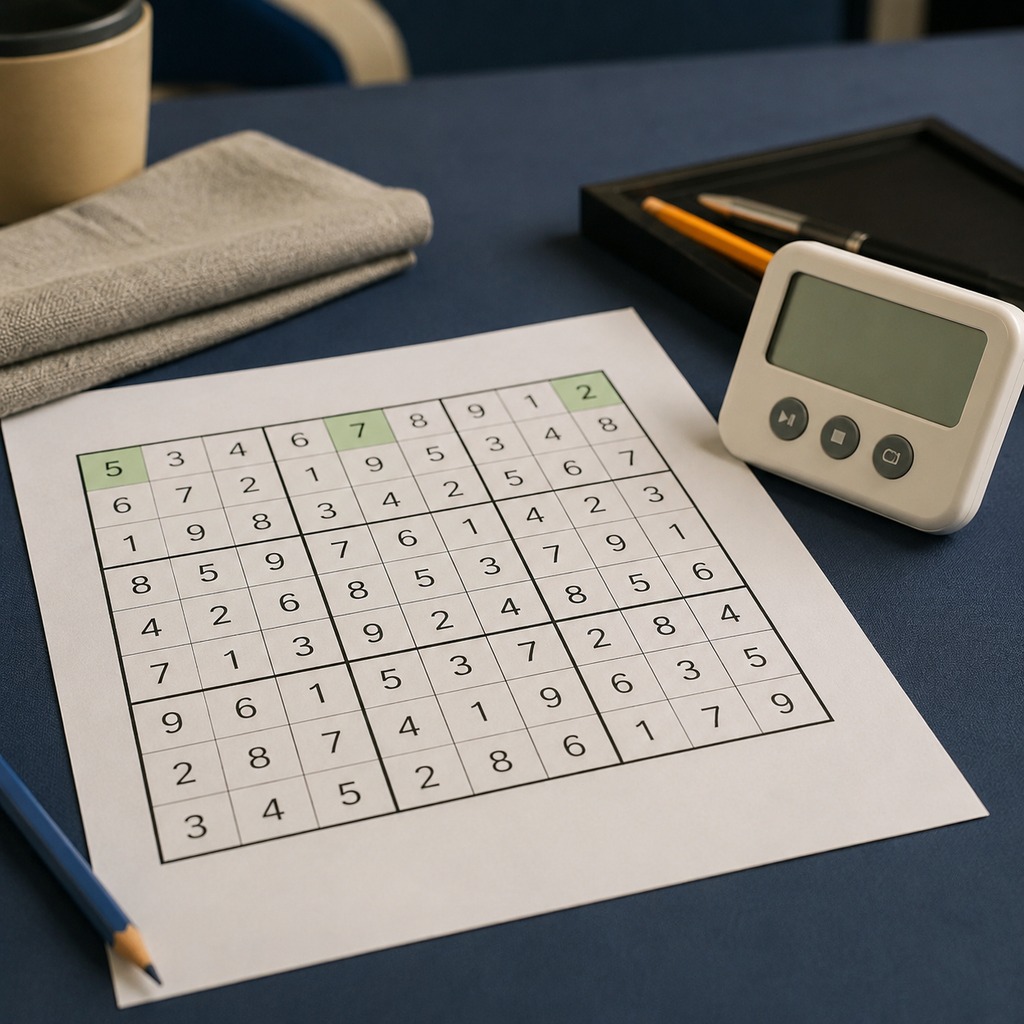
A five-step method for puzzle book margin notes
Try this routine on the next printed or printable puzzle.
**1. Date the page or write the puzzle number.** This sounds unnecessary until several half-finished pages are on the table. A date turns a loose note into a small record.
**2. Mark only uncertainty.** Do not copy every obvious answer into the margin. Save the space for a choice, a blocked route, or a group that needs checking.
**3. Add one reason when the choice matters.** “Could be A or E” is useful. “Could be A or E because the crossing gives the vowel” is better. The second note tells you how to test it later.
**4. Use a return symbol.** A small dot, triangle, or open circle can mean “recheck this.” Choose one symbol and use it consistently. A private shorthand is faster than a paragraph.
**5. Clean the page after a confirmed move.** Cross out notes that no longer apply. A crowded margin can become a second source of confusion, especially in Sudoku where old candidates look authoritative.
The routine is deliberately modest. It keeps the page useful without turning a relaxing puzzle into paperwork.
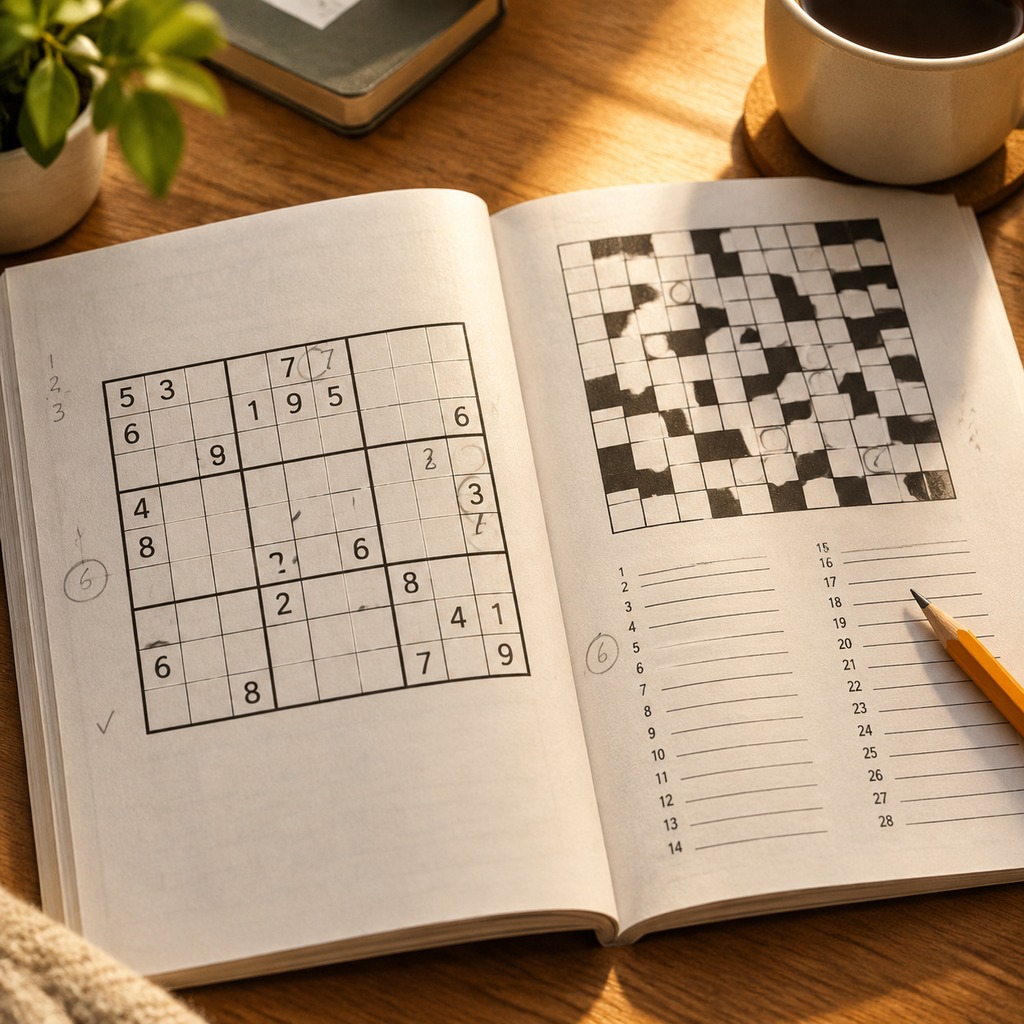
Why a book changes the rhythm of solving
Online puzzles are excellent when you want quick access, automatic checking, or a choice of difficulty. A book offers a different kind of resistance. You see the same page when you pause. There is no infinite scroll asking what to do next. The limit can be helpful.
That limit also changes how readers judge progress. Filling one corner of a page, circling one clue, or finishing one small section feels visible. The physical page gives the session a beginning and an end, even when the puzzle itself is unfinished.
The [Nikoli history of Sudoku](https://www.nikoli.co.jp/en/puzzles/sudoku/) is a useful reminder that puzzle formats are shaped by how they are published. A compact grid, short rules, and a repeatable page made the puzzle easy to return to. The same principle applies to modern play: the format works best when the reader can understand where to begin and what counts as enough for today.
Use the same habit online without pretending the screen is paper
You do not need to force a digital game to behave like a book. Instead, borrow the useful part of the margin: preserve one unresolved thought.
Before closing a browser puzzle, remember the next clue, note the digit pattern, or take a quick screenshot only when the platform's rules and your own privacy preferences allow it. Better still, keep a small notebook beside the device for a single line such as “lower middle box, 4 or 8.” The notebook becomes the margin without cluttering the game screen.
The [Easy Daily Puzzle library](https://easydailypuzzle.com/) is useful for this kind of short routine. You can stay with one [daily Sudoku search](https://easydailypuzzle.com/?s=sudoku) or switch to a word or visual puzzle when the same type of attention starts to feel tired.
The page remembers what the solver was thinking
Puzzle book margin notes are not a replacement for solving skill. They are a way to keep good uncertainty from turning into a guess, and to make tomorrow's first move easier than today's last one.
The next time a puzzle stalls, leave a small mark at the edge. Record the choice, the reason, or the place to return. A blank margin is not wasted space. Used carefully, it is where the puzzle stays open while you step away.