



Number Place to Sudoku is a story about a puzzle that changed names before it changed the way people spent quiet time. The grid stayed familiar. The language around it changed, and each new name helped the puzzle travel to a different audience.
You can still see the appeal in a small daily game. There are no trivia clues to remember, no special vocabulary to learn, and no timer unless you choose one. A few printed numbers invite you in. The empty squares make the invitation last.
Number Place to Sudoku starts with a magazine puzzle
Before readers called it Sudoku, the modern puzzle appeared as Number Place in an American puzzle magazine. Historical research usually credits Howard Garns, an architect from Indianapolis, with creating the familiar 9 by 9 form. Conceptis summarizes the magazine trail and identifies the first known publication as the May 1979 issue of Dell Pencil Puzzles and Word Games.
That first setting matters. Number Place was not introduced as a grand mathematical system. It was a magazine puzzle, designed to be printed, pencilled, erased, and solved in a short sitting. The page did not need a long explanation. Each row, column, and 3 by 3 box had to contain the digits 1 through 9.
The puzzle also arrived with a useful kind of restraint. It asked for numbers, but it did not ask the player to calculate. A solver could work entirely by placing, comparing, and eliminating. That made the grid feel more like a visual logic problem than a school exercise.
The [Oxford history of Sudoku](https://academic.oup.com/book/7009/chapter/151347786) places the modern puzzle in this same Number Place line and connects it to older Latin-square ideas without treating the older mathematics as the finished newspaper game. That distinction is worth keeping. Many ideas can lead toward a puzzle without being the puzzle people recognize today.
Why the Japanese name changed the puzzle's identity
Nikoli found Number Place in an American magazine and introduced it to Japanese readers in 1984. Its first Japanese title was a longer phrase, "Suuji wa dokushin ni kagiru," which Nikoli translates as the idea that the number is limited to a single occurrence. The title was shortened to Sudoku.
The shorter name did more than save space on a cover. It gave the puzzle a compact identity that could sit beside other Nikoli puzzles. The name sounded distinctive, while the rules remained easy to explain. A reader could meet an unfamiliar word and understand the game within a minute.
Nikoli also changed the way the puzzle was prepared. In 1986, the publisher adopted a rule that the clues should be arranged symmetrically. That choice was not necessary for a solution. It was a design decision about how a finished puzzle should look and feel before the first number was written.
The [Nikoli Sudoku history page](https://www.nikoli.co.jp/en/puzzles/sudoku/) describes both steps: the move from the American Number Place puzzle to Japanese publication, and the later use of symmetrical clue arrangements. The page also notes that Sudoku is a Nikoli trademark in Japan, which is why other companies there may continue to use the name Number Place.
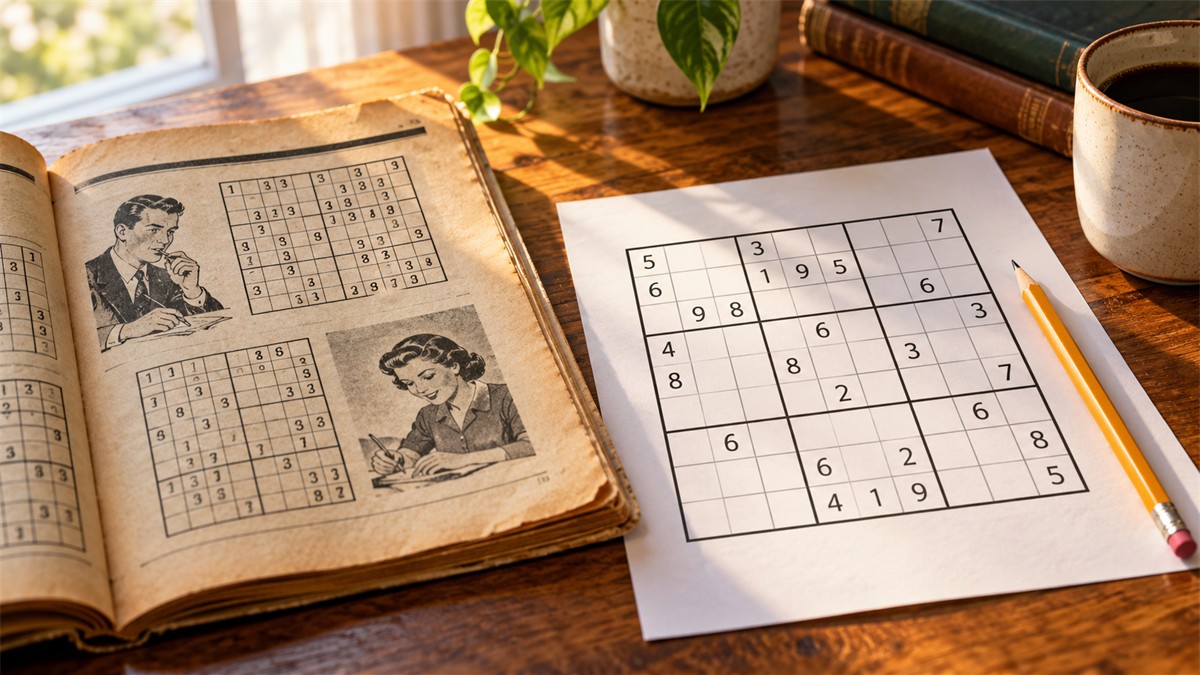
Number Place to Sudoku is a change in framing
The rules did not become harder when the name changed. The frame around the rules became more memorable.
Number Place sounds like an instruction. Sudoku sounds like the name of a game. That difference can affect whether a reader thinks of the puzzle as a magazine exercise, a Japanese logic tradition, or a daily habit with its own culture.
It also helped that the puzzle was visually self-contained. A crossword brings a language into the room. A jigsaw brings a picture. Sudoku brings a clean grid and a set of digits that many readers already recognize. The puzzle could move between countries without carrying a long list of translated clue conventions.
That does not mean the puzzle is culture-free. The publication style, the difficulty labels, the symmetry preference, and the care taken with construction all shape the experience. The grid travels easily, but the people who publish it still decide what kind of conversation the grid offers.
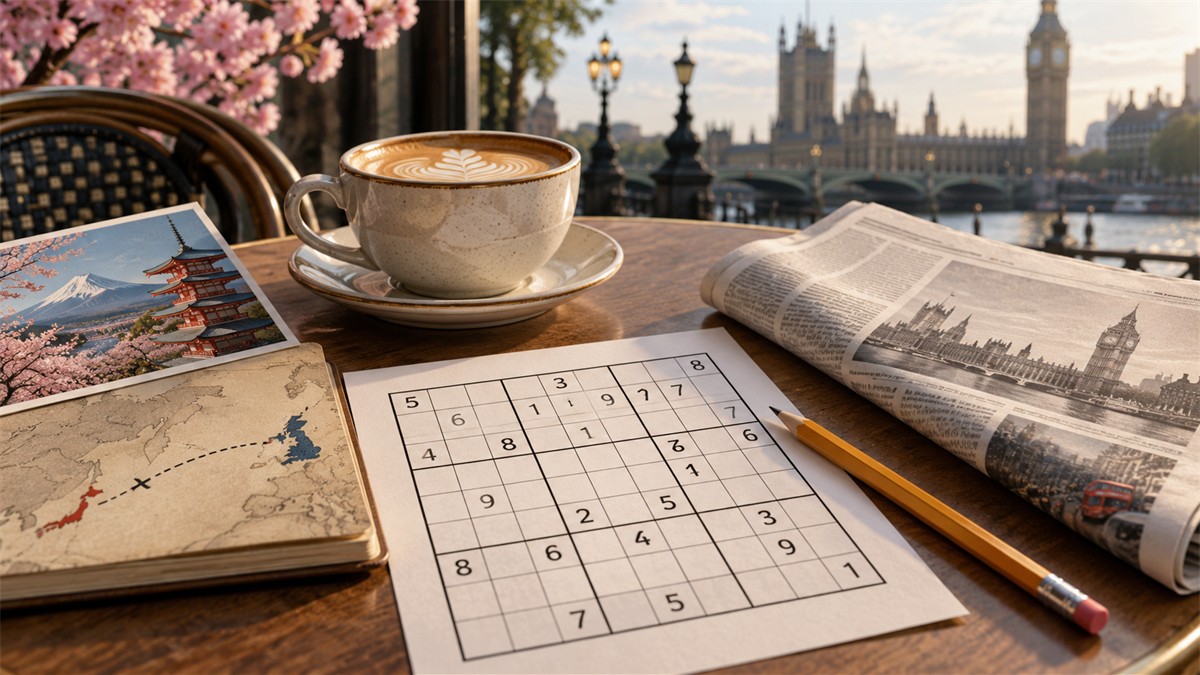
From Japanese magazines to British newspapers
The next part of the journey involved another change of medium. Wayne Gould encountered Sudoku in Japan in 1997 and later developed software that could generate puzzles and rate their difficulty. TIME's account of Gould's work describes how The Times in London began publishing Sudoku in November 2004.
The newspaper was a natural home. A daily paper already had a space for puzzles, a regular audience, and a habit of returning to the same page. Sudoku could be printed in a neat rectangle beside other features, then solved at breakfast, on a train, or during a quiet break.
Conceptis records the launch of The Times puzzle on November 12, 2004. The date is useful because it shows the speed of the handoff. A puzzle that had been a Japanese magazine feature became part of a British newspaper routine, then moved onward through books, websites, and apps.
For readers today, that history is visible every time a Sudoku grid loads in a browser. The screen is different, but the basic promise has not changed. The puzzle gives you a small, quiet problem that can be finished without learning a new world first.
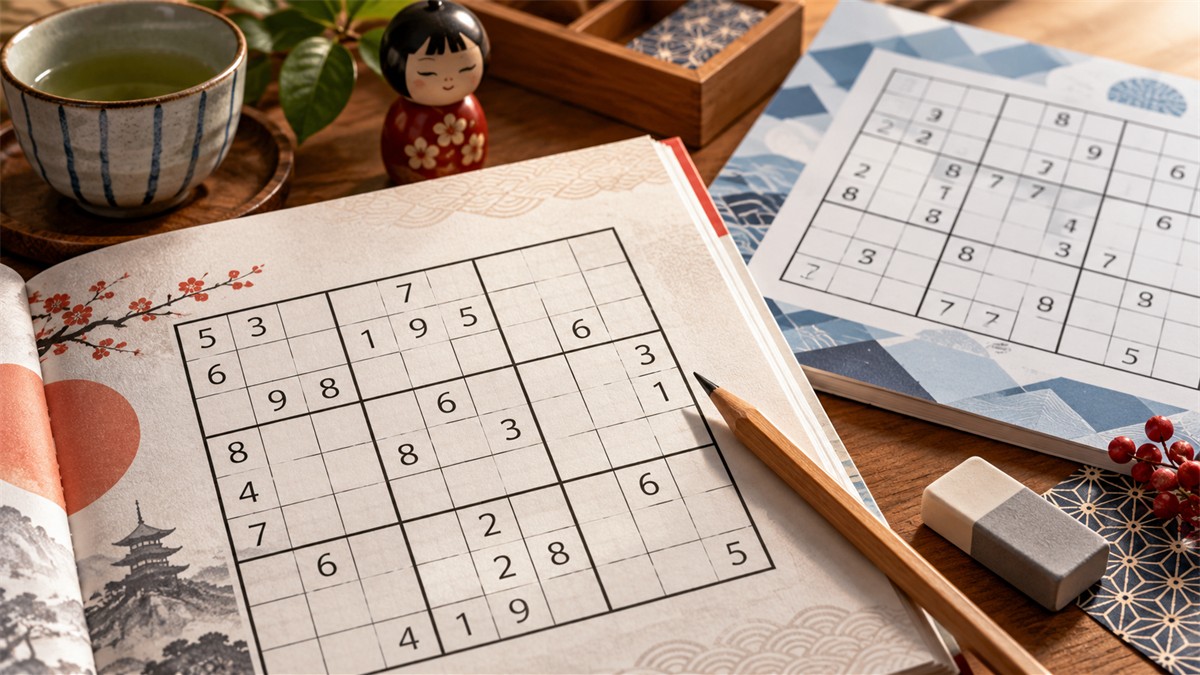
What the journey teaches a modern Sudoku player
The history suggests a practical way to start. Do not judge a puzzle only by how many clues it gives you. Look at how those clues are arranged and which area of the grid they make easiest to read.
Begin with a row, column, or box that already has several digits. Check one number at a time. If a box can accept a missing digit in only one cell, place it and scan the affected row and column again. This is the same kind of slow visual conversation that made the original page work.
If you are new to the game, try the [Sudoku puzzles on Easy Daily Puzzle](https://easydailypuzzle.com/?s=sudoku). If you want to move between different puzzle types after a grid, the [Easy Daily Puzzle game library](https://easydailypuzzle.com/) keeps the next choice close by.
The first grid was called Number Place. Nikoli gave it a shorter name, a publishing style, and a design language. Newspapers gave it a daily appointment. Screens gave it an endless supply.
The squares themselves barely changed. That is the part worth remembering when you sit down to solve one.