



Medium sudoku strategy starts to matter when easy grids stop teaching you much. The rules are still simple, but the puzzle no longer hands you every next number. You have to read the board more carefully.
That is the useful part of medium Sudoku. It is not hard just for the sake of being hard. It shows you which habits are helping and which habits are quietly creating mistakes.
If you want to practice on a live board, start with Play Medium Sudoku . You can also browse more Sudoku articles on Sudoku Medium when you want another solving angle.
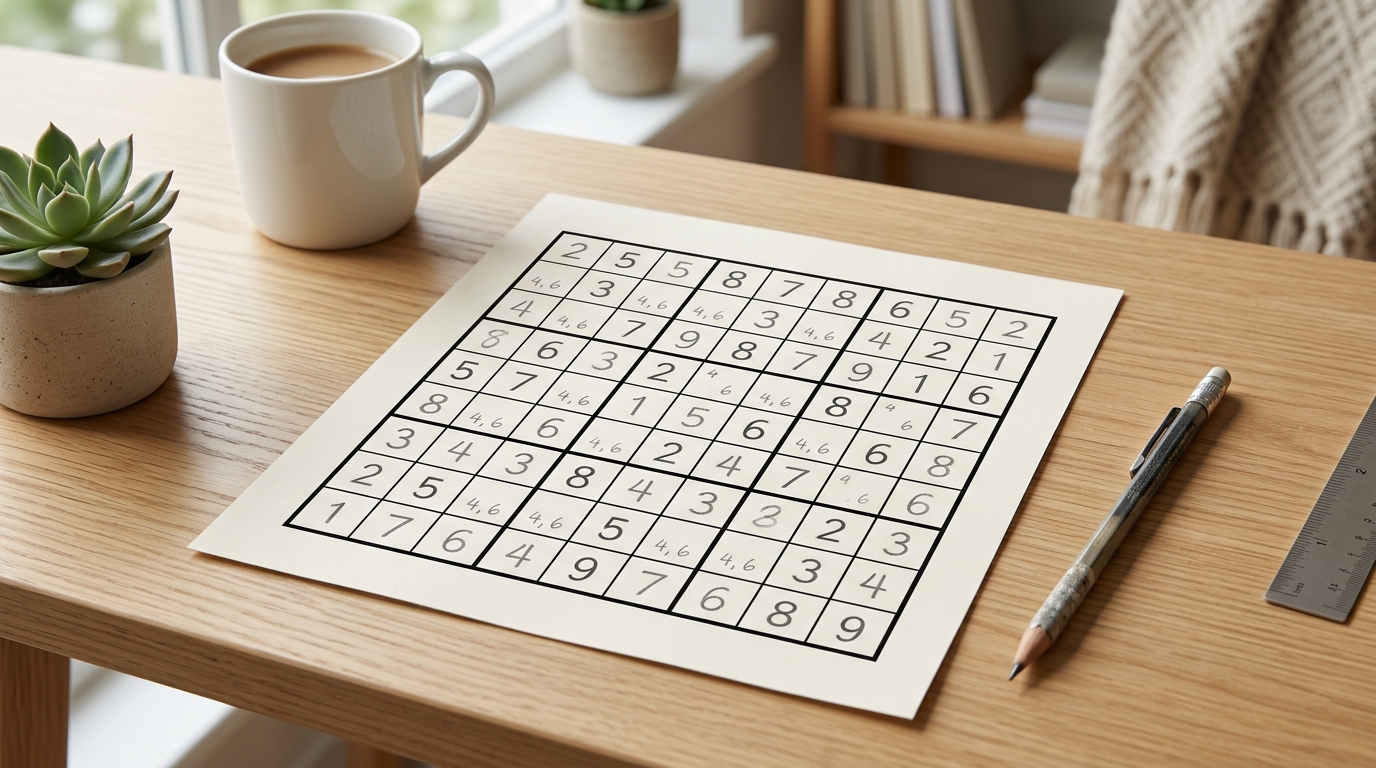
Medium sudoku strategy begins with the whole board
The first mistake is staring at one empty square too early. A medium puzzle usually opens faster when you scan the whole grid first.
Look for rows with many numbers already placed. Check boxes that have only three or four empty spaces. Notice columns where one missing number is becoming obvious.
This wider scan keeps the board calmer. You are not begging one square to solve itself. You are asking where the grid already has the most information.
That is the heart of a good medium sudoku strategy. Read first. Write second.
Use rows, columns, and boxes at the same time
Everyone knows the basic rule: each row, column, and 3x3 box needs the numbers 1 through 9. The problem is that many players check only one part before making a move.
A number may look possible in a row but fail in the column. It may fit the box but create trouble somewhere else. Medium grids punish that shortcut.
Before placing a number, do the three-part check. Row. Column. Box. If the number survives all three, you have a real reason to write it down.
This is not a fancy technique. It is just careful reading. It prevents the kind of small mistake that ruins a puzzle ten moves later.
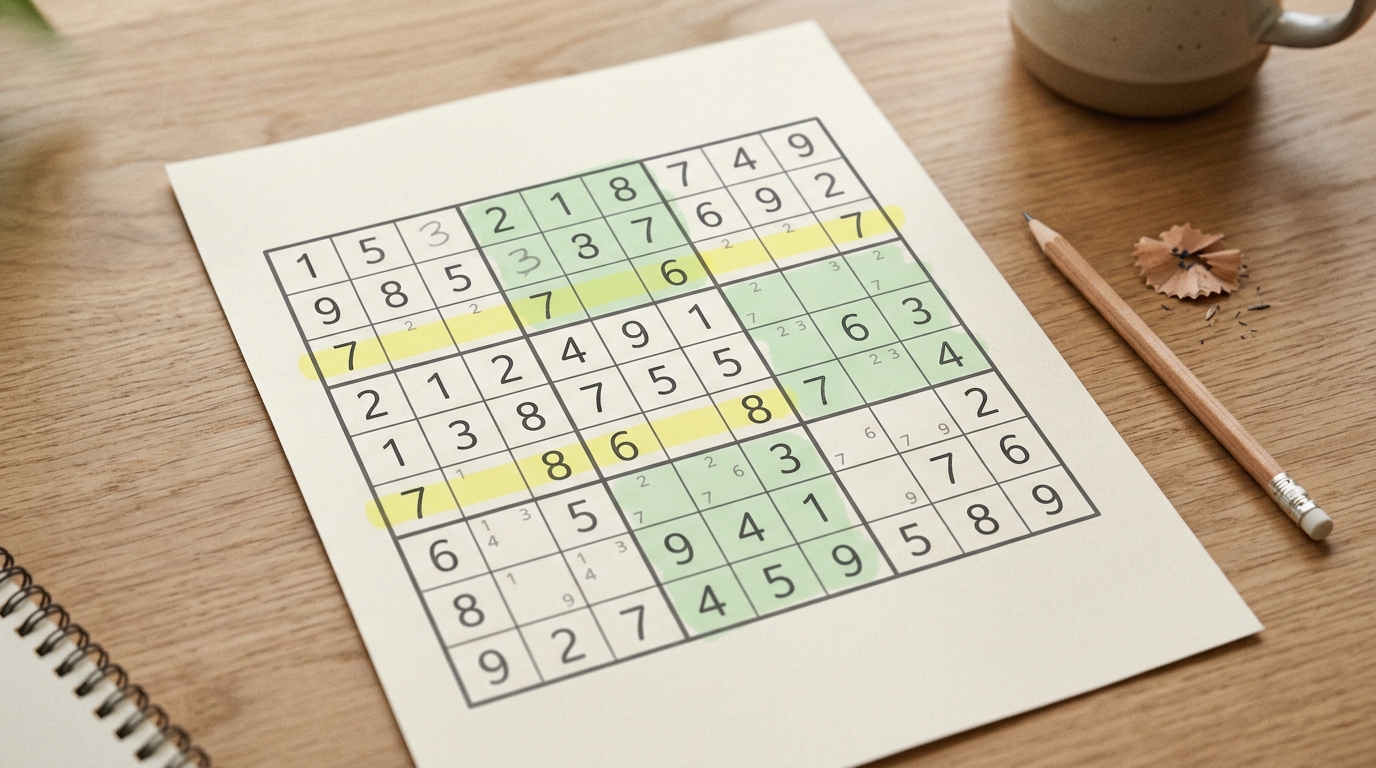
Notes should reduce noise, not add it
Pencil marks are useful, but only when they make the board clearer. If every empty square fills with tiny candidates, the puzzle can become harder to see.
Use notes where the board actually branches. A box with two possible places for a number deserves a mark. A square where five numbers might work probably needs more scanning first.
Then clean your notes as soon as the board changes. A new number should remove old possibilities. If your notes never shrink, they are not helping much.
Selective notes are one of the simplest medium sudoku strategy habits. They keep uncertainty visible without turning the grid into clutter.
Stop trusting "almost certain"
Medium Sudoku is where "almost certain" starts getting expensive. A number can feel right because nothing looks wrong at first glance. That is not proof.
Before you commit, ask one more question: is this number forced, or is it only convenient?
That small pause saves time. It may feel slower in the moment, but it prevents the worst kind of solve: the one where the board breaks and you cannot find the first bad move.
Good solvers are not always faster because they think faster. Often, they are faster because they make fewer repairs.
Move away from the stuck area
When a section looks impossible, do not stare at it until it gives in. Medium puzzles often reopen from somewhere quieter.
A side box may have two missing numbers. A column may be one placement away from revealing a single. A row you ignored earlier may now be ready.
Moving away is not giving up. It is letting the rest of the grid create new information. Many stuck spots solve themselves after another part of the board changes.
This habit also makes the puzzle feel less tense. You are not fighting one corner. You are following the chain reaction.
Medium sudoku strategy improves with one habit at a time
Trying to learn every technique at once can make Sudoku feel like homework. That is not necessary.
For the next game, change one thing. Maybe scan before writing. Maybe use fewer notes. Maybe refuse every "almost certain" move until it has proof.
If the board feels cleaner, keep that habit. If it does not help, try another.
For background on how Sudoku became such a durable puzzle format, see Nikoli's Sudoku page and the Conceptis Sudoku history overview . The history is interesting, but the reason people keep playing is simple: a good grid rewards patience right away.
Medium Sudoku is the right place to build that patience. It is hard enough to expose weak habits, but fair enough to show improvement. Once the board starts feeling readable, the whole game changes.