



A five-minute puzzle break sounds simple until the wrong puzzle lands in front of you. You have a short gap before a meeting, a bus stop, or the next task. You open a game that needs a long quiet stretch, get interrupted twice, and return to find that the break has become another unfinished job.
The fix is not to play faster. It is to match the puzzle to the attention you actually have.
Sudoku, crosswords, jigsaw puzzles, Spider Solitaire, and classic Solitaire all ask for different kinds of focus. Some reward a clean scan. Some need a word to appear after a few crossings. Some are easy to pause. Others become harder when you lose the shape of the position. Choosing well at the start makes a short session feel complete, even when you do not finish the board.
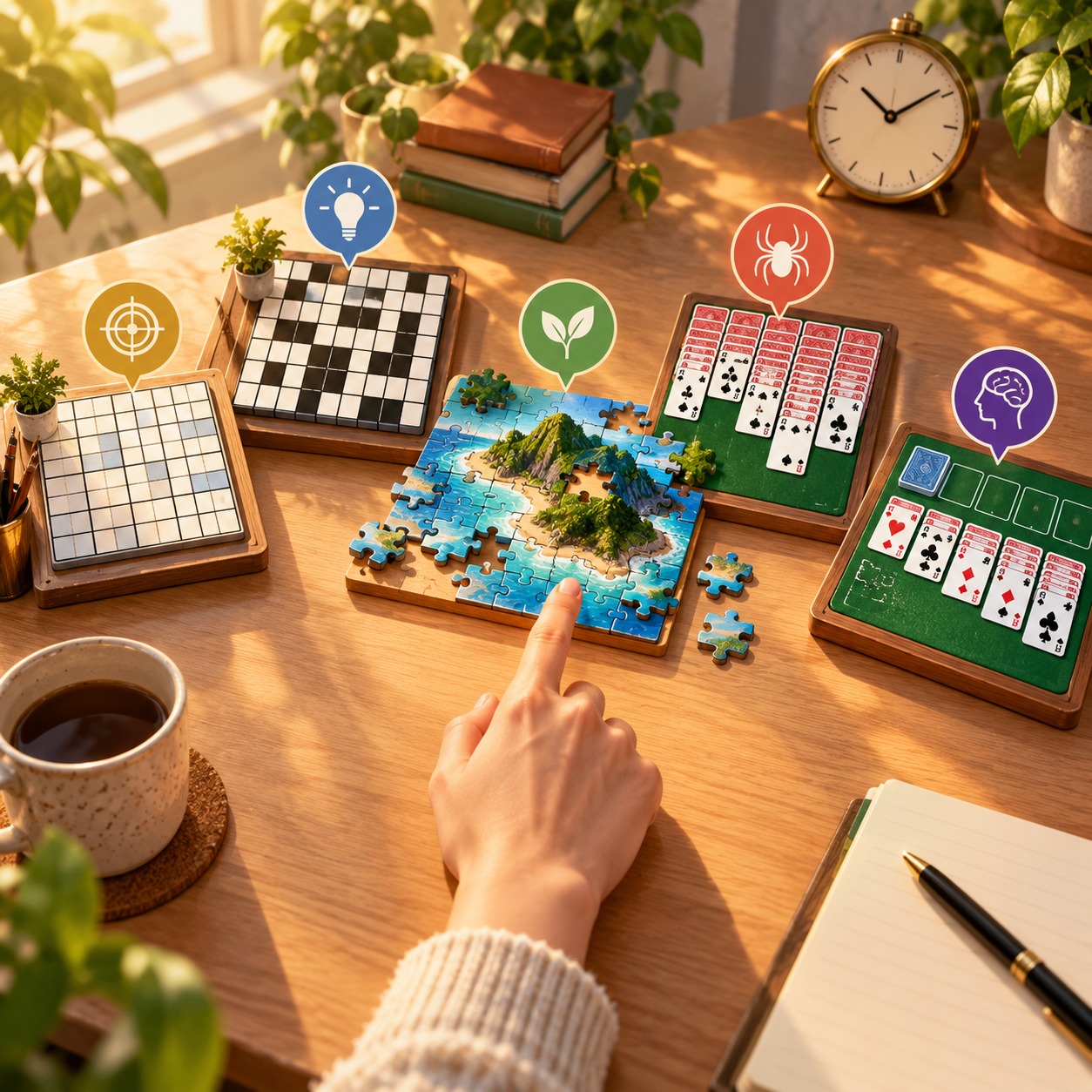
Five-minute puzzle break starts with four quick questions
Before opening a game, ask four practical questions.
How long is the gap? A real five minutes is different from an open-ended half hour. If the time is uncertain, choose a puzzle that can be paused without losing a chain of thought.
How likely is an interruption? A quiet desk supports deeper logic. A waiting room, train platform, or busy kitchen favors a game where the current position remains easy to read after you look away.
Do you want a finish or a foothold? A small crossword corner can feel satisfying even when the grid is incomplete. A short Solitaire sequence can create a clear stopping point. A large jigsaw may be better when the pleasure is in building a small visual island rather than completing the picture.
What kind of attention feels available? You may have enough patience for elimination but not enough energy for word retrieval. On another day, numbers may feel tiring while a visual task feels easy. The best choice changes with the person and the moment.
Choose Sudoku when you want a quiet scan
Sudoku is a good fit when you want the break to feel orderly. The basic rules are stable: each row, column, and 3 by 3 box must contain the digits one through nine without repeats. Nikoli's [Sudoku rules and history page](https://www.nikoli.co.jp/en/puzzles/sudoku/) is a useful reference for the original format and its familiar constraints.
For a short session, do not begin by filling every square with notes. Scan one box, one row, or one column. Look for a number that has only one legal home, make the placement, and stop after the next clean deduction if time is nearly gone.
Sudoku works well for an uninterrupted five-minute puzzle break because the grid remembers your logic. If you are interrupted, you can return to the last confirmed number and continue from there. The session may be small, but it still has a shape.
Choose a crossword when language feels available
A crossword is different. It asks you to retrieve words, notice clue grammar, and let crossing letters correct your first idea. Choose it when you feel curious about language rather than when you want every move to follow from a visible rule.
In five minutes, collect footholds instead of attacking the whole grid. Fill a short answer you know, check one crossing, and leave an uncertain answer light. A clue that looks obvious can still be wrong if its tense, part of speech, or number does not match the entry.
The [American Crossword Puzzle Tournament archive](https://www.crosswordtournament.com/) shows how competitive solving turns this balance between speed and accuracy into a formal event. A casual player does not need tournament pressure, but the lesson transfers well: a fast guess is useful only when the crossings can defend it.
Choose a jigsaw when you want visual breathing room
Jigsaw play suits a break where you want to look closely without chasing a single answer. The task is open-ended. You can sort a few pieces, build a small landmark, or connect two colors without needing to finish the whole image.
The best short-session target is a small island with strong evidence: a window line, a face, a bright sign, or a sharp change in color. Avoid opening with a huge pile of similar sky or grass unless that repeated texture is exactly what you want to study.
The [World Jigsaw Puzzle Federation](https://worldjigsawpuzzle.org/about) provides useful context for the organized side of jigsaw play, where piece handling, image reading, and time all matter. At home, you can borrow the first principle without turning the break into a race: place pieces that have evidence, and keep doubtful pieces available for later.
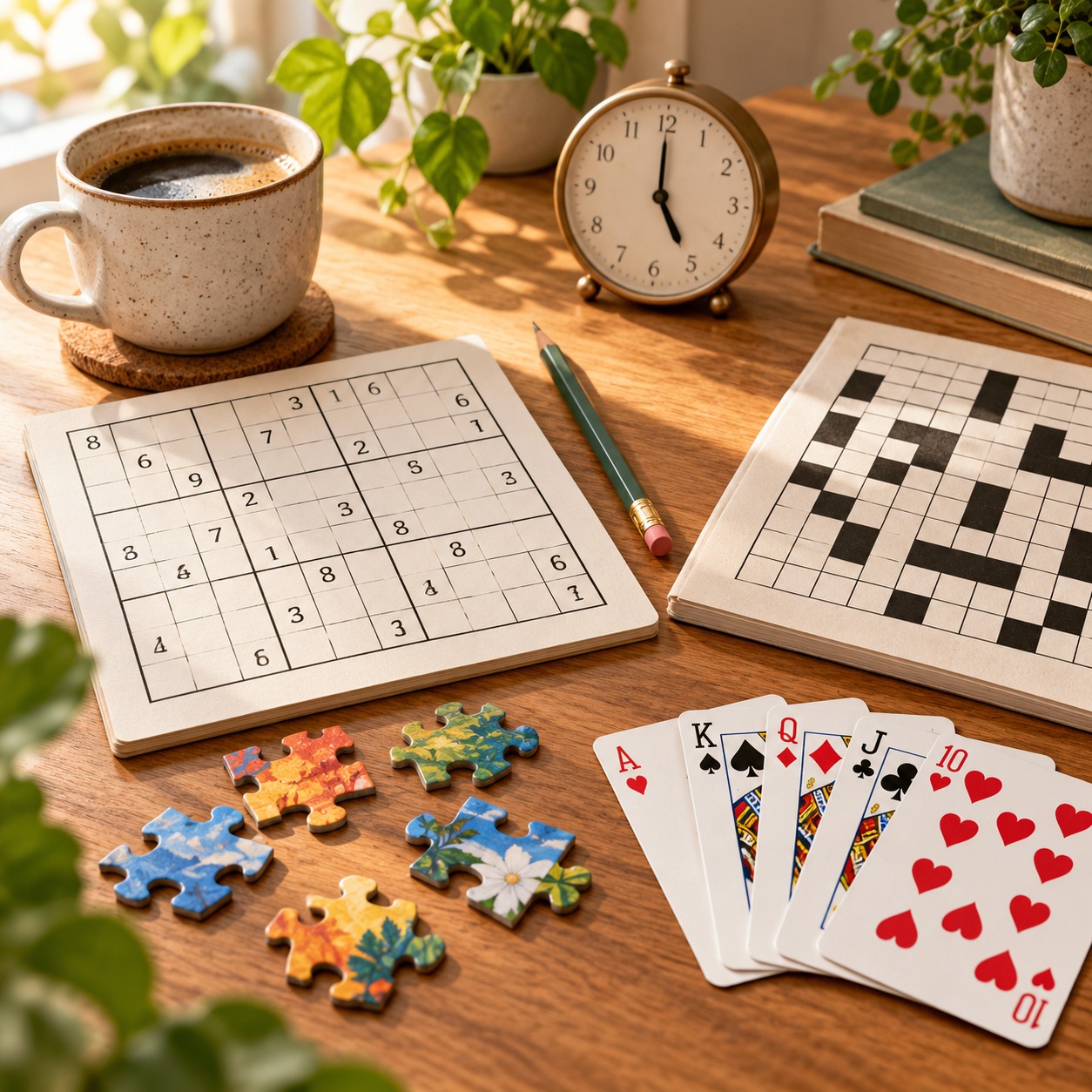
Choose Spider Solitaire when you want layered planning
Spider Solitaire is a good match for a break that can stretch a little beyond five minutes. The visible move may be legal, but the better question is what it exposes. Moving a stack can uncover a hidden card, protect an empty column, or create a cleaner run. It can also bury the only useful sequence under a long mixed-suit pile.
If your attention is scattered, play one deliberate move and pause. Notice which card became available and whether the tableau gained or lost working space. This makes the session feel active without forcing a full solve.
Choose classic Solitaire when you want a clear next move
Classic Solitaire, often called Klondike, works well when you want a compact decision loop. Bicycle's [Klondike rules](https://bicyclecards.com/how-to-play/klondike) describe the tableau, stock, waste pile, and foundation structure that most browser versions use.
In a short break, look for a move that either reveals a face-down card or improves future access. Do not move a card to the foundation only because the move looks tidy. Sometimes a card is more useful in the tableau while it helps build a sequence or uncover another card.
A simple five-minute puzzle break routine
Use this routine when you cannot decide:
1. Name the time limit before you start.
2. Pick the game that matches your available attention, not the game you feel you should be good at.
3. Set one small target: one Sudoku deduction, three crossword footholds, one jigsaw island, one Spider reveal, or one useful Solitaire move.
4. Stop at the target if the break is ending. A clean stopping point counts.
The [Easy Daily Puzzle library](https://easydailypuzzle.com/) makes that choice easy to repeat, while the [daily puzzle search](https://easydailypuzzle.com/?s=daily+puzzle) gives you a quick way to find a new entry point without committing to one format.
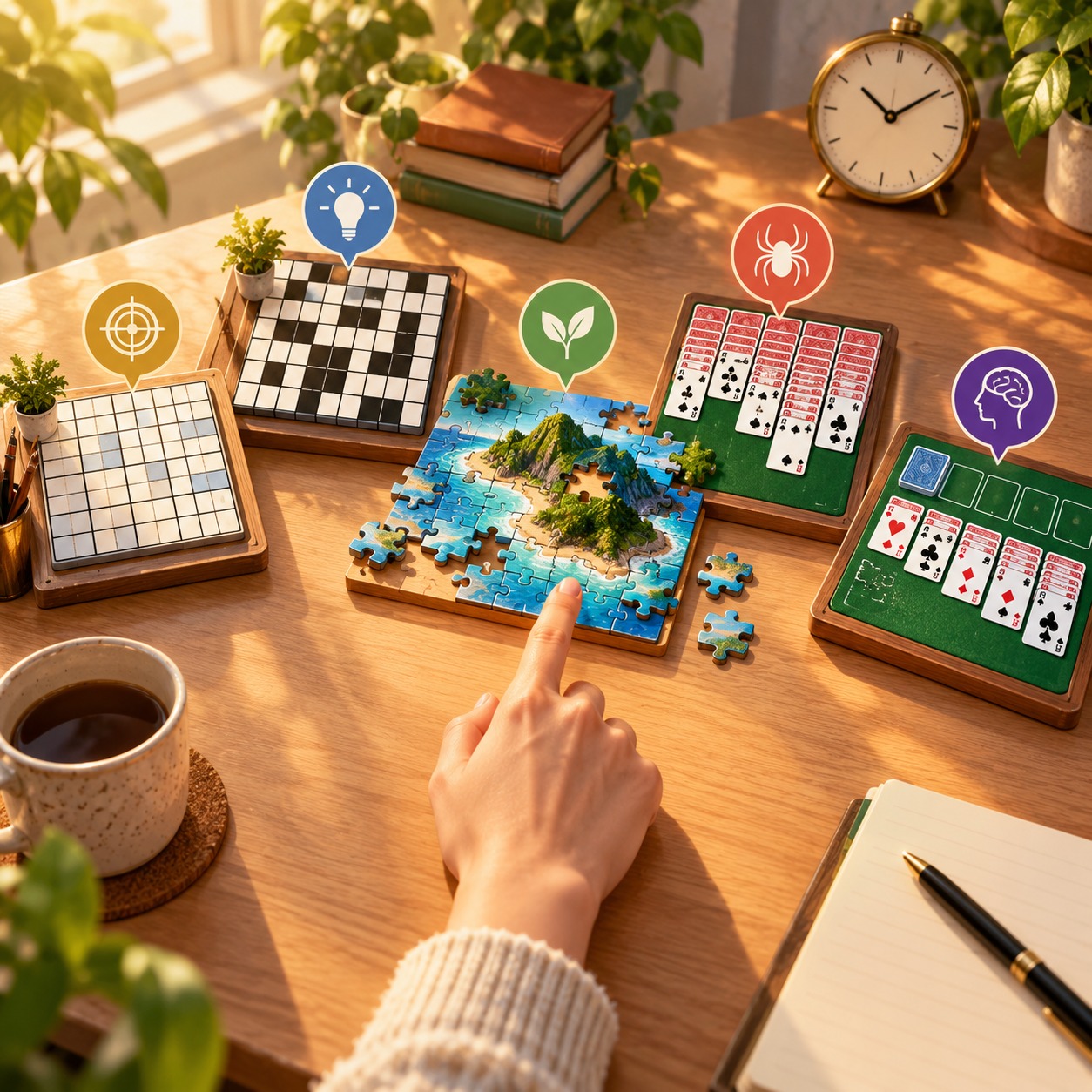
Pick the puzzle you can leave in a good place
A five-minute puzzle break does not need a dramatic finish. It needs a beginning that fits the moment and a position you can understand when the moment ends. Sudoku gives you a logical thread. A crossword gives you a few words to carry forward. A jigsaw gives you a visible patch of progress. Spider Solitaire and classic Solitaire offer a next move with a consequence.