



A daily puzzle rotation is what you build when one favorite game starts to feel a little too familiar. You still like it. You still open it. But your hands are moving before your attention catches up, and suddenly the puzzle is less a break than a reflex.
That is not a failure. It is just a sign that your puzzle shelf needs more than one flavor.
Easy Daily Puzzle works best as a small game table rather than a single habit. You can start with the main puzzle library , choose what fits the day, and let the mix do some of the work. The trick is not to play everything at once. The trick is to give each puzzle a job.
Why a daily puzzle rotation keeps play fresh
Most casual players do not get bored because a game is bad. They get bored because they ask the same game to do every job.
Sudoku is great for order. Crossword is great for language. Jigsaw is great for visual patience. Solitaire is great for quiet card planning. Spider solitaire is great for players who want the card table to push back a little.
That variety matters. A puzzle that feels perfect at breakfast may feel wrong at 10 p.m. A crossword clue can be fun when your mind wants words, but annoying when your eyes are already tired from reading. A jigsaw puzzle can feel slow in the morning and perfect after dinner.
A daily puzzle rotation solves that problem without turning the habit into a schedule you have to obey.
Think of it as a menu.
Give each puzzle a role
Start with sudoku when you want clean logic. Sudoku has a beautiful bargain: the rules are tiny, but the board still makes you think. Nikoli's sudoku background page is a useful reminder that the puzzle became popular because the grid itself is simple to understand. The depth comes from deduction, not from a long rulebook.
Use crossword when you want a sharper, wordier break. Crossword history is full of newspaper culture, daily rituals, and clue writers trying to be just tricky enough. Smithsonian Magazine notes Arthur Wynne's role in the early American-style crossword story, and that old newspaper feeling still carries into quick online solving. Browse crossword puzzles on Easy Daily Puzzle when you want clues that make you grin a little when they finally click.
Use jigsaw puzzles when your brain wants shape and color instead of words. The Strong National Museum of Play traces jigsaw puzzles back to cut maps used for education. That origin still shows. A jigsaw asks you to learn the picture by handling small pieces of it. Browse jigsaw puzzles on Easy Daily Puzzle when you want a slower visual session.
Use solitaire when you want a short card problem with a clear finish. Bicycle Cards explains the classic solitaire goal as building foundations by suit from ace through king. That simple goal gives each deal a clean direction. Browse solitaire games on Easy Daily Puzzle when you want something familiar but still uncertain.
Use spider solitaire when standard solitaire feels too light. Spider solitaire is less forgiving because empty columns, suit order, and stock timing can make or break the game. It is a good choice when you want a puzzle break with a little bite.
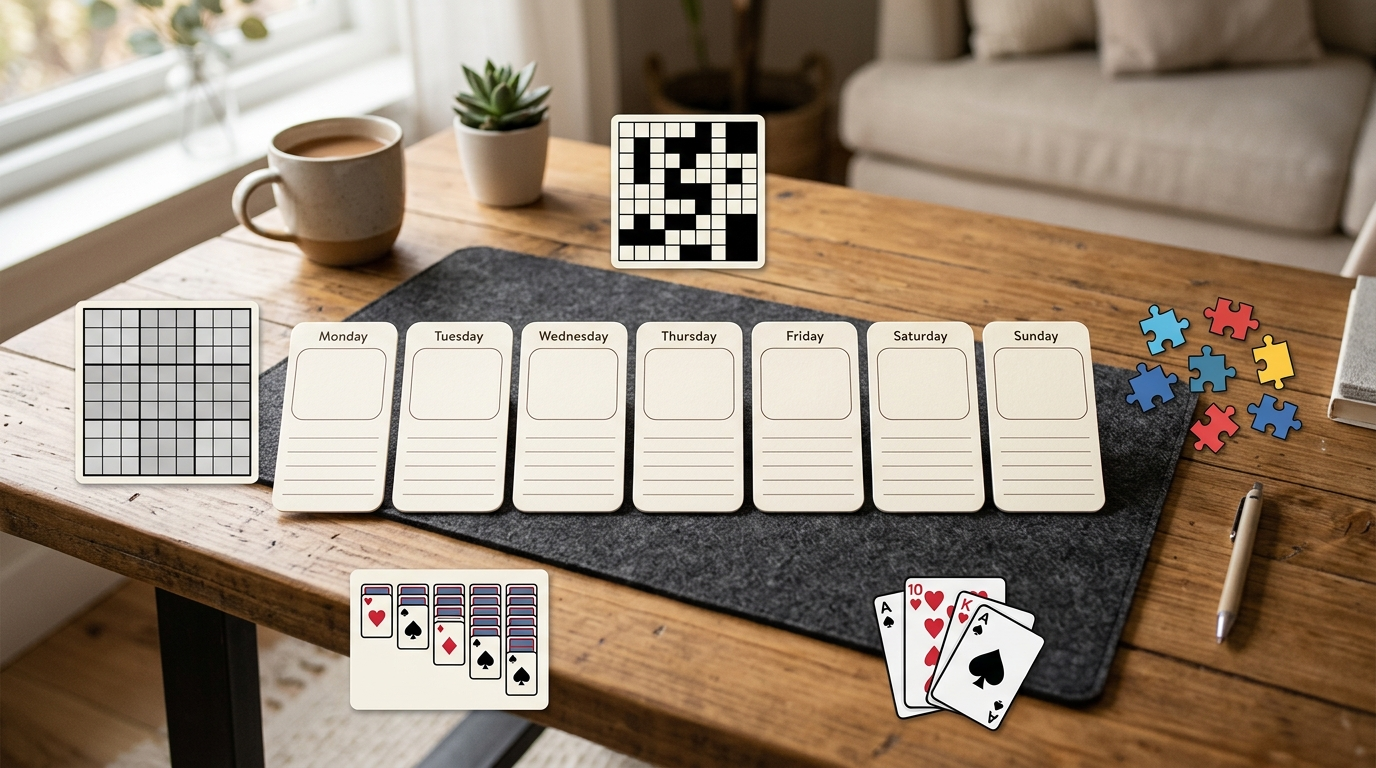
A weekly daily puzzle rotation that actually feels playable
You do not need a complicated plan. Try this for one week:
- Monday: sudoku for a clean start.
- Tuesday: crossword for language and clues.
- Wednesday: jigsaw for a slower visual reset.
- Thursday: solitaire for a quick card-table break.
- Friday: spider solitaire for a tougher finish.
- Saturday: replay the one you wanted more of.
- Sunday: play whatever feels least like effort.
The Sunday rule is the important one. A rotation should help the habit breathe. If it starts feeling strict, loosen it.
You can also rotate by time instead of weekday. A five-minute break works well for a mini crossword or one solitaire deal. A ten-minute break fits sudoku or spider solitaire. A longer quiet stretch is where jigsaw puzzles get comfortable.
The point is to stop asking, "What should I play?" and start asking, "What kind of break do I need?"
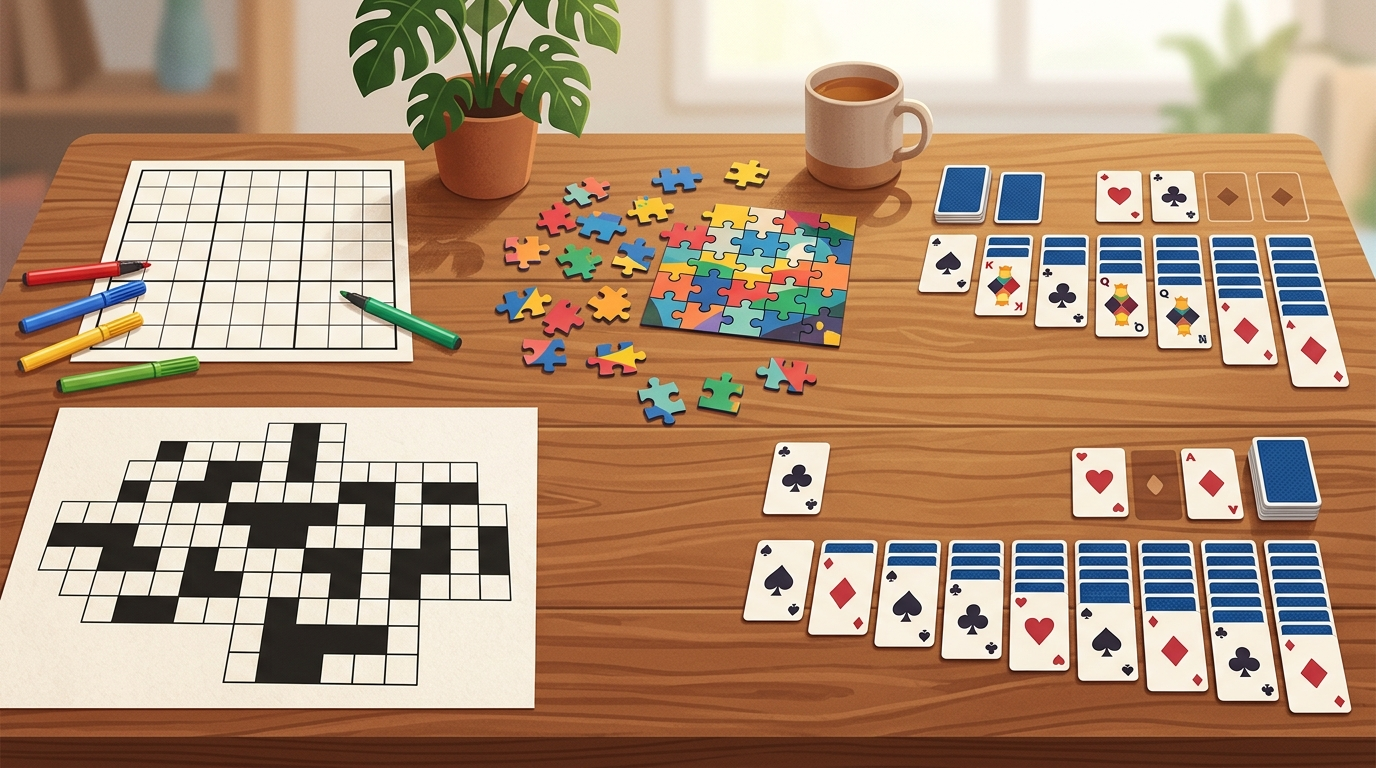
How to avoid turning the rotation into homework
A puzzle rotation can go wrong if you over-measure it. Streaks are fun until they become the whole reason you open the game. Difficulty levels are useful until they make an easy puzzle feel like a guilty choice.
Keep the rules soft.
If you miss a day, nothing happened. If you play sudoku three days in a row because that is what felt good, the rotation is still working. If a jigsaw puzzle takes longer than expected, leave it unfinished and come back later.
One good trick is to give every session a tiny finish line:
- In sudoku, finish one box.
- In crossword, solve one corner.
- In jigsaw, build one color group.
- In solitaire, play one deal.
- In spider solitaire, reveal five hidden cards or finish one full run.
That kind of finish line makes the session satisfying even when the whole puzzle is not done.
Match the game to your mood
Here is the simplest version of the daily puzzle rotation:
Play sudoku when you want order.
Play crossword when you want wit.
Play jigsaw when you want quiet.
Play solitaire when you want something familiar.
Play spider solitaire when you want a fight you can walk away from.
It sounds almost too obvious, but that is why it works. You are not choosing a game because a schedule told you to. You are choosing the right kind of attention for the moment you are in.
That is also why a main puzzle site should feel easy to wander through. Start at Easy Daily Puzzle , try one game, and let the next choice stay flexible.
Some days the best puzzle is the one you know well. Some days it is the one you have been avoiding because it makes you think differently. A good rotation gives you both.

Try a seven-day experiment
For the next seven days, play one puzzle a day and write down only one thing after each session: "Would I play this again tomorrow?"
Do not grade yourself. Do not track win rates unless that is fun for you. Just notice which games leave you calmer, sharper, or more awake.
By the end of the week, you will probably know your real rotation. Maybe sudoku belongs in the morning. Maybe jigsaw belongs after dinner. Maybe solitaire is your lunch break game. Maybe spider solitaire is only fun on days when you have enough patience left to spend.
That is useful information.
A daily puzzle rotation is not about playing more. It is about making each small session feel chosen. When the game matches the moment, the habit lasts longer, and the puzzle gets to stay what it was supposed to be: a good break.