



The daily puzzle newspaper slot is a small piece of real estate with an outsized effect. It sits between headlines, weather, comics, and the next page, asking for just enough attention to make a reader return tomorrow.
That fixed place changed the way many people met puzzles. A crossword or Sudoku did not have to announce itself as a major hobby. It could be waiting beside breakfast. The page gave the reader a start, a few minutes of quiet, and a reason to keep the newspaper within reach.
The daily puzzle newspaper slot has a long memory
The first modern crossword puzzle is commonly connected with Arthur Wynne's "Word-Cross" puzzle, published in the New York World in December 1913. The [Smithsonian's account of crossword history](https://www.smithsonianmag.com/history/brief-history-crossword-puzzle-180960191/) describes the early newspaper setting and the quick change in the puzzle's name and public appeal.
That setting matters because a newspaper is built around repetition. Readers already know where to look for the weather and the sports results. A puzzle placed in a regular section can borrow the same habit. It does not need a new marketing campaign every morning. The page itself becomes the reminder.
Sudoku followed a different path before becoming a newspaper regular. It began as Number Place in an American puzzle magazine, took the name Sudoku in Japan, and later spread through British newspaper pages. [Nikoli's Sudoku history](https://www.nikoli.co.jp/en/puzzles/sudoku/) explains the Japanese publishing stage, while [Conceptis traces the Number Place and newspaper history](https://www.conceptispuzzles.com/index.aspx?uri=puzzle/sudoku/history).
These histories are different, but the publishing lesson is similar. A puzzle travels further when readers know when and where to meet it. The newspaper page supplied both answers.
Why a fixed space changes puzzle design
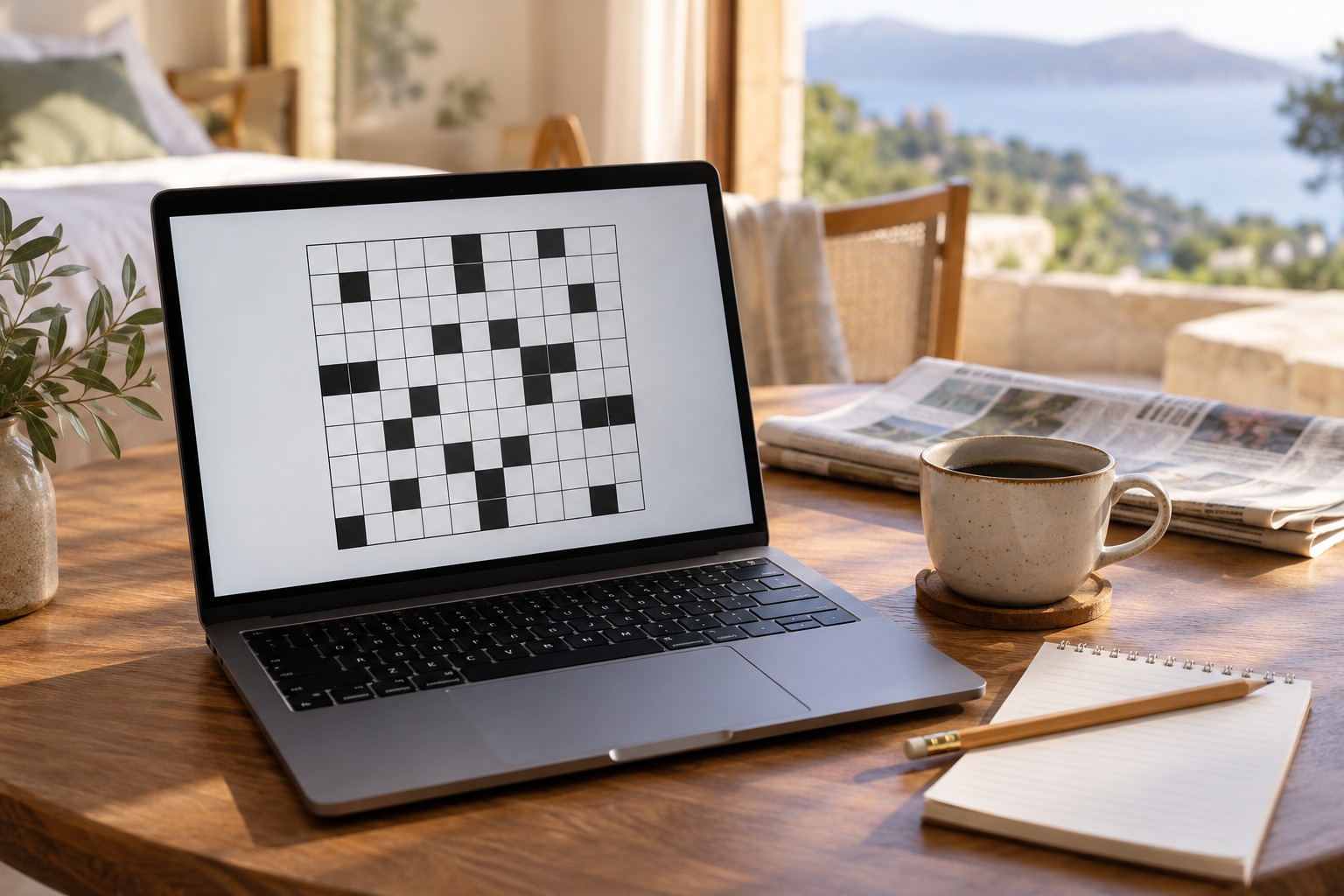
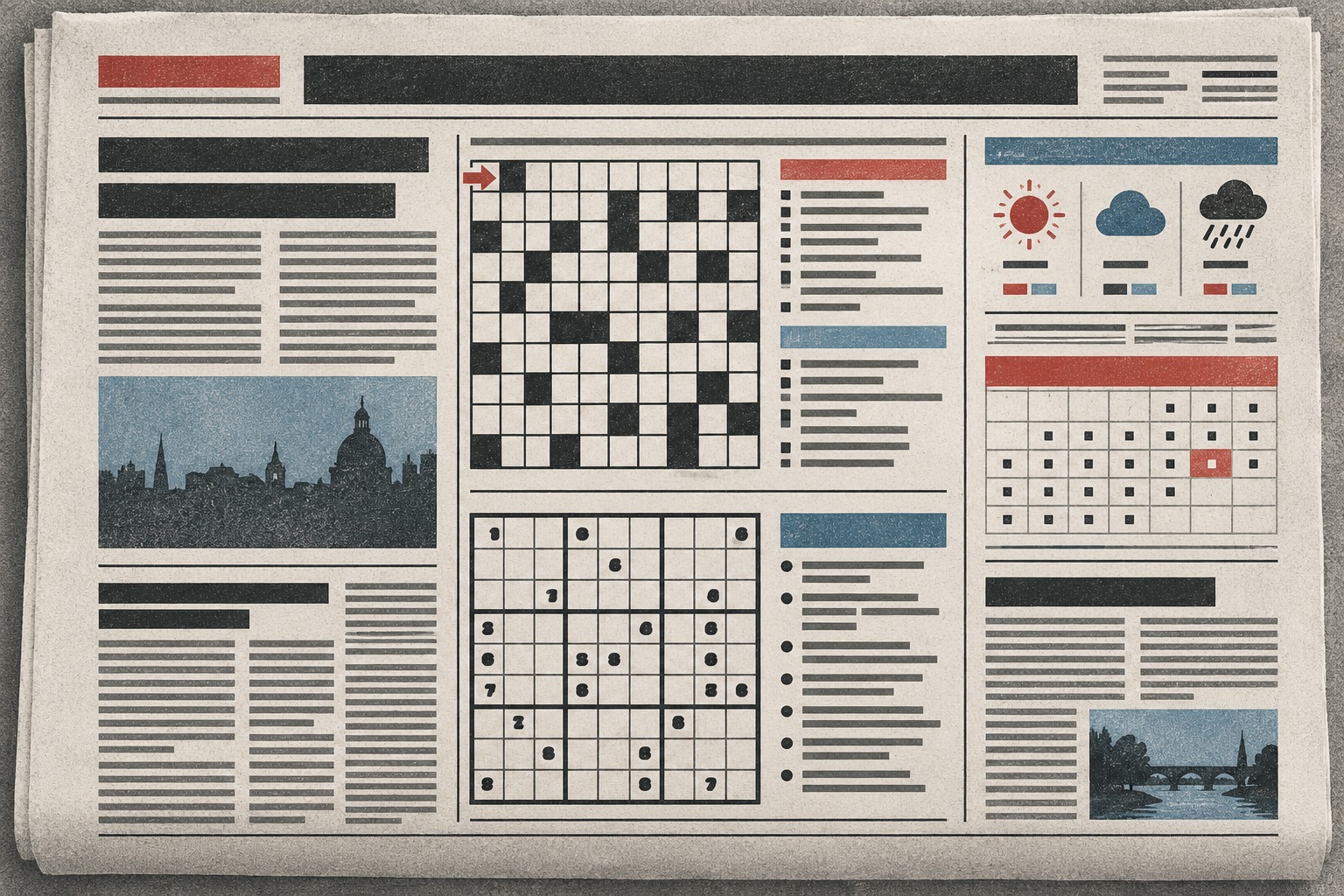
A newspaper puzzle has physical limits. The editor knows how much room the section can spare. The reader knows how large the printed cells will be. The puzzle has to work without a long tutorial, a button for a hint, or an animation that explains what to do next.
That pressure encourages clear design. A crossword needs enough white and black squares to look readable at a glance. The clue list needs to fit beside or below the grid. A Sudoku needs a clean set of givens and enough empty space for a pencil point. The page cannot ask the reader to pinch, scroll, or open a settings menu before the first move.
The result is a quiet kind of usability. The layout tells you where the puzzle starts. The title tells you what kind of attention it expects. The grid shows progress as soon as one square changes. Even before a reader becomes good at the puzzle, the page makes the activity understandable.
This is why the newspaper format is more than a container. It sets the scale, the rhythm, and the amount of explanation a puzzle can carry.
A small page creates a repeatable rhythm
The appeal of a daily puzzle newspaper slot is partly practical. A reader may have five minutes before work, a train ride, or a quiet corner after lunch. The puzzle is small enough to begin without a commitment to finish a whole book.
That rhythm also changes how difficulty feels. If yesterday's crossword was quick, today's harder clue can become a pleasant interruption rather than a test of identity. If a Sudoku takes longer, the unfinished page can wait beside the coffee cup. The fixed slot makes room for an incomplete solve without making the reader feel that the hobby has failed.
The daily rhythm has another benefit: it teaches return. A player learns that one stuck clue is not the end of the activity. Put the pencil down, come back later, and the same grid may look different. The medium supplies a natural pause before anyone has to explain the value of patience.
Print, books, websites, and phones do different jobs
Books offer volume. A puzzle book can collect a theme, a difficulty range, or a particular constructor's style. Websites offer search, instant loading, and a large choice of formats. Phones make the puzzle portable and can track time or mistakes.
Print offers something simpler: a visible appointment. The page stays in the room. It does not disappear under another browser tab or compete with a notification. You can see the puzzle even when you are not solving it, which is a small but useful reminder.
That does not make one medium superior. It explains why the same puzzle family can live comfortably in all of them. The rules remain stable while the surrounding ritual changes. A newspaper supplies routine. A website supplies choice. A phone supplies convenience. A book supplies a longer shelf life.
For a site such as Easy Daily Puzzle, the useful lesson is not to imitate a newspaper page exactly. It is to keep the entry point clear. Let readers see what they can play, how long a session might take, and where to find another puzzle when the first one is finished.
Choose your own daily puzzle slot
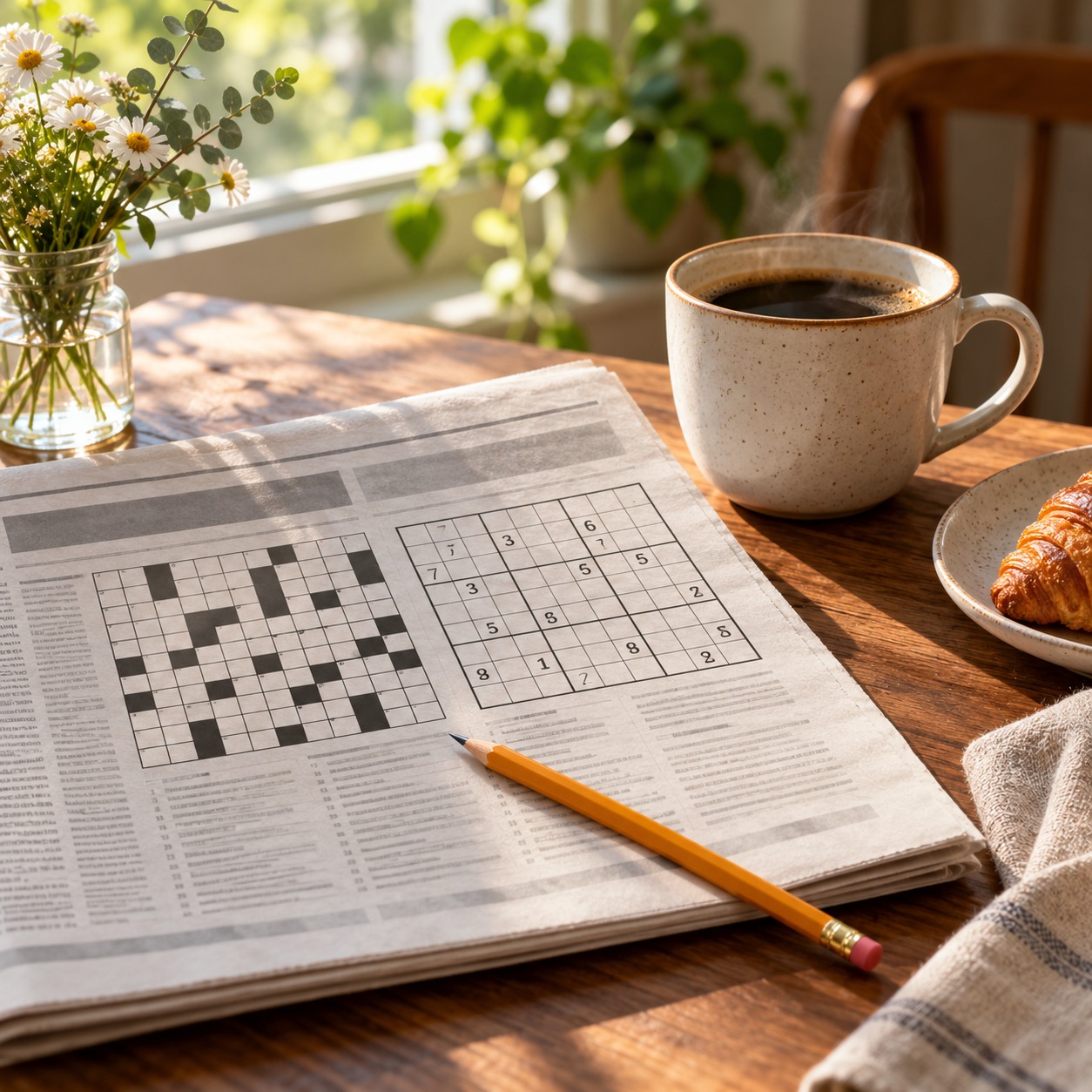
You can borrow the newspaper habit without owning a newspaper. Choose a regular time and a small promise. Ten minutes is enough. Pick a puzzle that matches the attention you have today rather than choosing the hardest option automatically.
For a short logic session, start with the [Sudoku puzzles on Easy Daily Puzzle](https://easydailypuzzle.com/?s=sudoku). If words feel better than numbers, try the [crossword guides and games](https://easydailypuzzle.com/?s=crossword). The [Easy Daily Puzzle game library](https://easydailypuzzle.com/) keeps jigsaw and solitaire choices close when you want a change of pace.
The important part is the repeatable slot. It can be a browser tab after breakfast, a puzzle before bed, or a short break between tasks. The ritual works because it is small enough to keep.
The daily puzzle newspaper slot gave puzzles a place in ordinary life. Digital screens changed the delivery, but the idea still works: make the first step obvious, keep the challenge self-contained, and leave the reader with a reason to come back tomorrow.