



Crossword tournament accuracy becomes visible in the quiet just before a round begins. Pencils move, pages turn, and the clock becomes part of the furniture. A solver who knows a difficult word may still lose time by writing it too early. A solver who pauses to confirm a small crossing can keep the whole grid alive.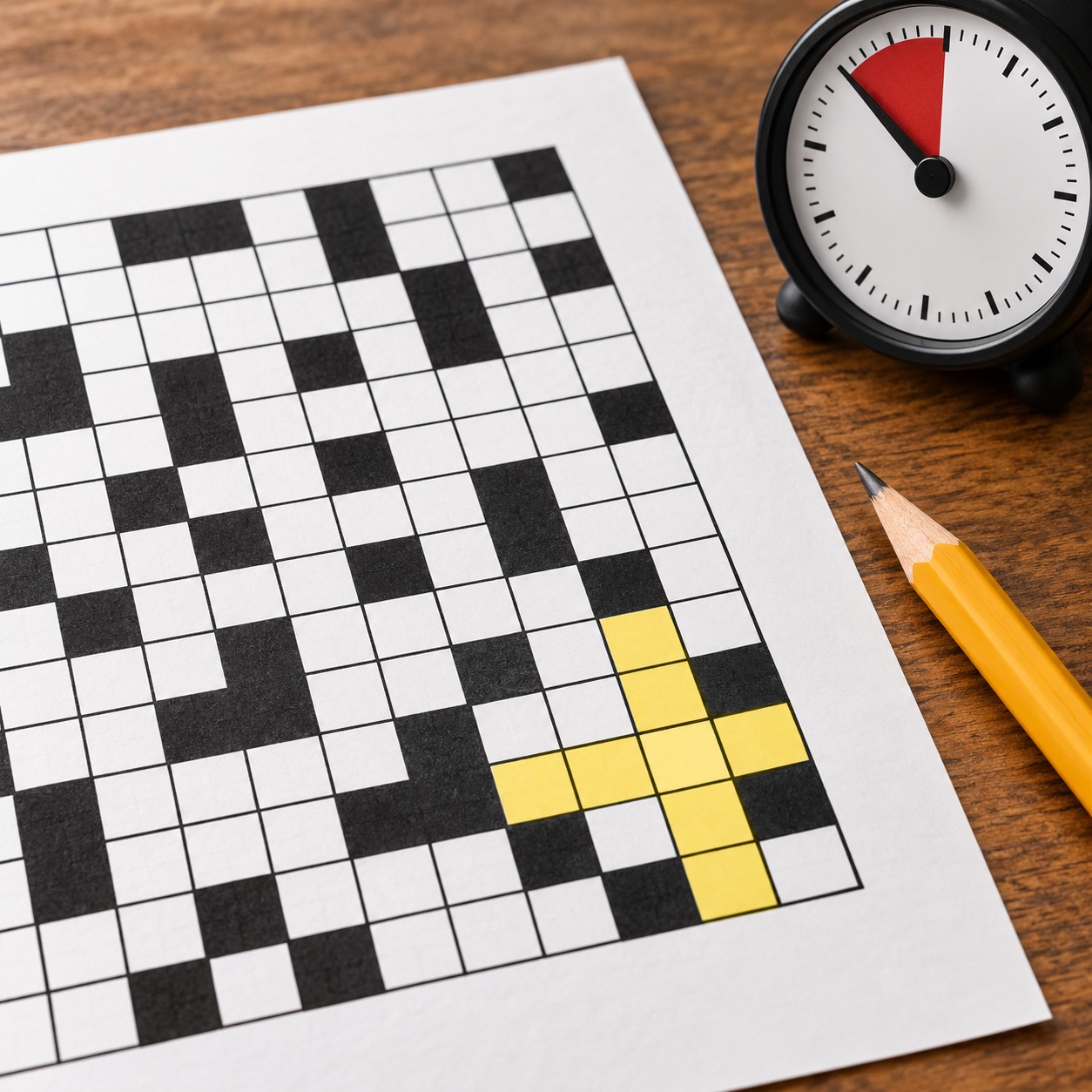
That is the useful lesson behind crossword tournament accuracy. It is not a command to solve slowly. It is a way to spend speed where speed is safe, and to spend attention where one wrong letter can damage an entire corner.
The American Crossword Puzzle Tournament gives the idea a clear public stage. Its official site describes a competition built around original crosswords, with results based on both accuracy and speed. The 2026 tournament page also lists Erik Agard as champion and a grand prize of $7,500. Those details make the event interesting, but the scoring logic is even more useful for someone playing at home.
Crossword tournament accuracy starts before the clock feels urgent
In a normal daily crossword, it is easy to mistake a fast first pass for a good first pass. You fill a familiar abbreviation, recognize a phrase, and move on. Then a crossing refuses to work. The answer looked right because the clue was familiar, not because the grid had confirmed it.
Tournament solving exposes that weakness quickly. The official [American Crossword Puzzle Tournament scoring information](https://crosswordtournament.com/info/brochurev.htm) awards points for correct words and adds time bonuses, but errors reduce the value of finishing early. A complete solution can also earn a separate bonus. In other words, the clock rewards a finished, correct grid more generously than a fast-looking page full of repairs.
You do not need to copy the tournament system at home. Borrow the question it forces you to ask: is this entry fast because it is certain, or fast because it is tempting?
Separate a fast answer from a safe answer
A safe answer has support from more than one direction. The clue grammar fits. The answer length fits. At least one crossing agrees, and the word does not make a nearby clue look impossible. A fast answer may have only one of those protections.
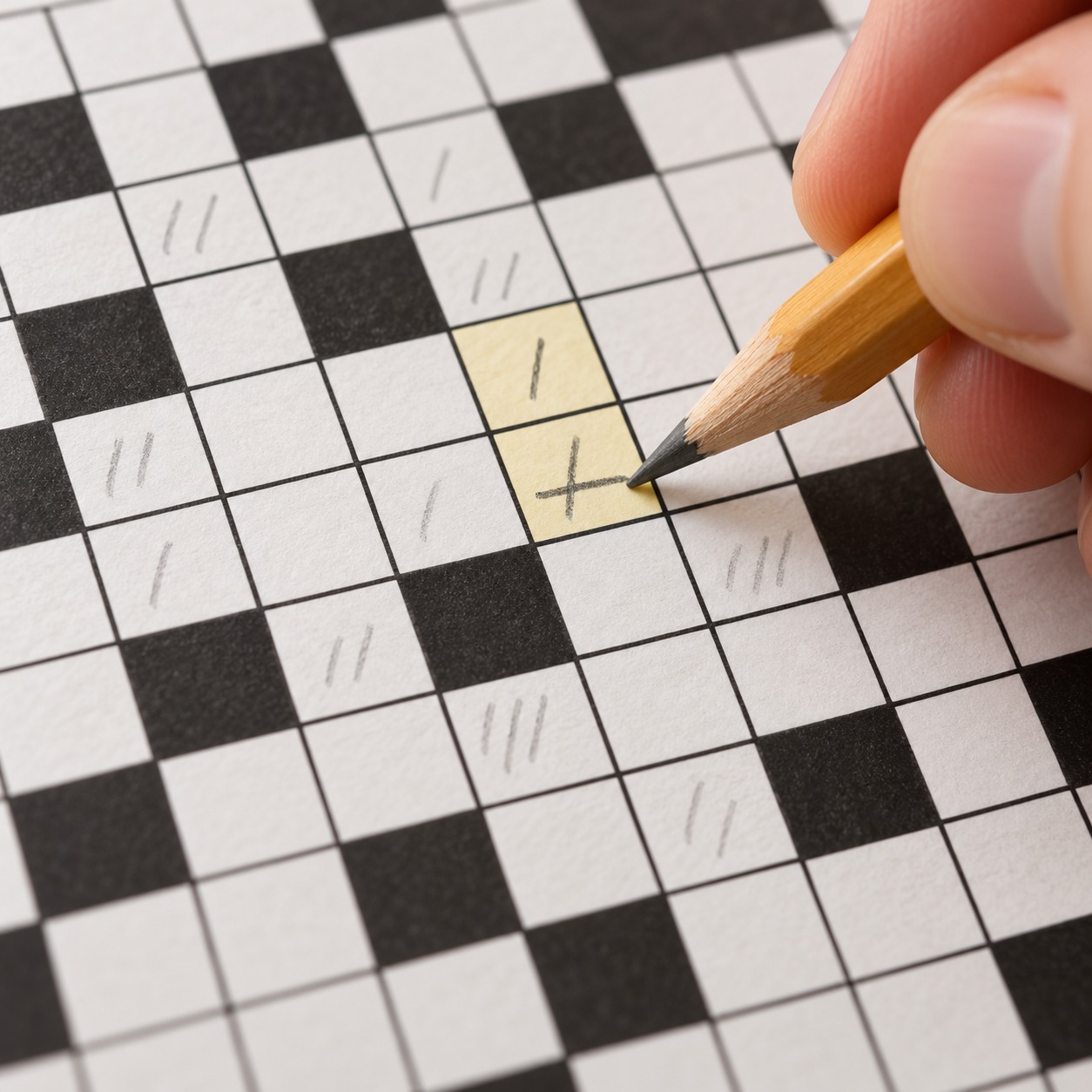
Try marking uncertain entries lightly in your head, or with a small pencil note if you are solving on paper. The mark is not a confession that you are stuck. It is a reminder not to build three more answers on top of a guess.
This is especially useful with short entries. Three-letter words often look easy because the answer space is small. In practice, they can be the most dangerous squares in a corner because several familiar words may fit the clue surface. Let the crossing letters do their quiet work before you decide that the first answer is the answer.
For a daily session, the [crossword games and guides on Easy Daily Puzzle](https://easydailypuzzle.com/?s=crossword) give you a simple place to practise this habit. Choose one puzzle and measure the number of corrections, not only the finish time.
The first pass should collect certainty, not prove talent
Strong competitive solvers are not required to solve every clue in order. They collect the entries that are easiest to defend, then use those letters to open the harder areas. That can look slower for the first few seconds because the solver is leaving clues blank on purpose.
Use a three-part first pass:
1. Fill answers that fit the clue, length, and ordinary grammar.
2. Skip clues that need a special interpretation until the grid gives you help.
3. Return to the skipped clues with at least one new crossing whenever possible.
The second step matters. Skipping is not lost time if it prevents a bad answer from spreading. A wrong letter can create a fake crossing, and a fake crossing can make the next clue seem harder than it is. A clean blank is more useful than a confident mistake.
Crossword tournament accuracy lives in the crossings
Crossings are the crossword's built-in fact check. One crossing can confirm a likely answer. Two crossings can reveal that the likely answer was only a phrase you happened to remember. Three crossings usually tell you whether the clue and the grid are speaking about the same thing.
When a word feels almost right, do not ask only, “Can this be an answer?” Ask three smaller questions:
- Does the clue's part of speech match the entry?
- Does the singular, plural, or tense make sense?
- Do the crossing letters agree without special pleading?
That last phrase is important. Solvers often protect an answer they like by explaining away one awkward letter. The grid is usually warning them to let it go.
The [Smithsonian history of the crossword puzzle](https://www.smithsonianmag.com/history/brief-history-crossword-puzzle-180960191/) is a useful reminder that the crossword has always been a grid of relationships, not a list of independent trivia questions. A clue can be brilliant on its own, but its final test is still the set of letters around it.
When to spend the extra ten seconds
The best time for a check is just before a commitment. You are about to write a word that will affect several open clues. You have a nearly complete corner. You are ready to submit a digital puzzle. That is when a short pause has the most value.
Run a final corner check rather than rereading the entire grid. Look for:
1. A short answer with only one crossing.
2. A clue whose tense or number does not match its entry.
3. A word that was entered from memory but never confirmed.
4. A letter that makes two nearby clues sound unnatural.
This check is not meant to turn a casual solve into paperwork. It should take less than a minute. It simply moves the most expensive mistakes to the front of your attention.
Use tournament discipline without making play feel like work
Crossword tournament accuracy is valuable even if you never enter a tournament. It changes the goal from “finish as quickly as possible” to “make the next answer easier to trust.” That shift can make a daily puzzle more enjoyable because you spend less time repairing a corner that looked solved five minutes ago.
Try one timed puzzle this week, but record two numbers: your finish time and the number of changed letters. If the time improves while the corrections rise sharply, the speed is probably borrowing from accuracy. If the time stays similar and the corrections fall, your process is getting stronger.
When you want a different kind of short break, return to the [Easy Daily Puzzle library](https://easydailypuzzle.com/). The good solve is not always the fastest one. Sometimes it is the one that leaves the grid quiet, complete, and free of a word you had to defend.