



Crossword crossing letters are the puzzle's built-in fact check. A clue may suggest a familiar word, and the answer may even sound perfect when you say it aloud. Then one letter meets a Down entry and refuses to cooperate. That small collision is not an annoyance. It is evidence.
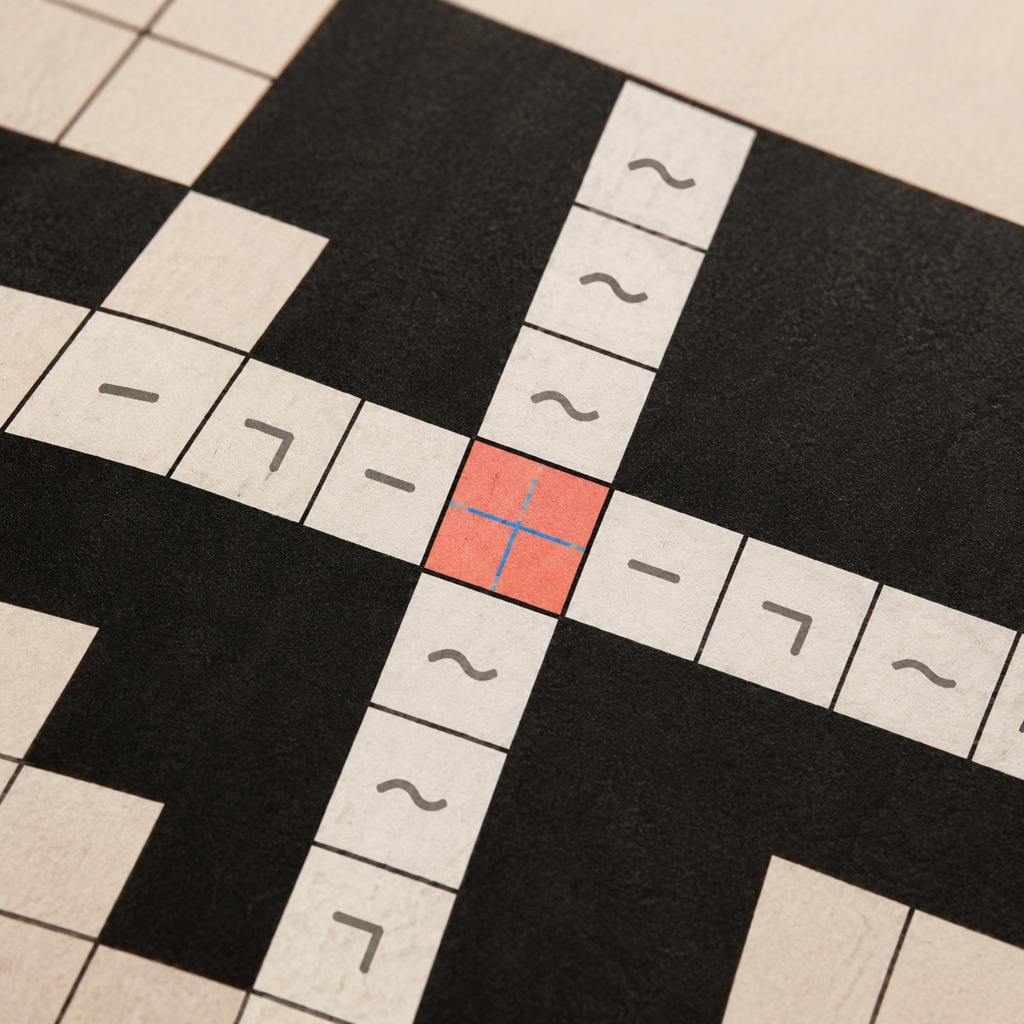
In a standard crossword, an Across answer and a Down answer share a cell. The shared letter has to work in both directions. [The crossword overview on Wikipedia](https://en.wikipedia.org/wiki/Crossword) describes these entries as words or phrases that cross horizontally and vertically, with checked letters belonging to both answers.
That structure gives everyday solvers a useful habit: treat a new answer as provisional until its crossings support it. You can practise the routine on [Easy Daily Puzzle](https://easydailypuzzle.com/) and then browse [more crossword puzzles and articles](https://easydailypuzzle.com/?s=crossword) when you want another grid.
Crossword crossing letters should test, not merely decorate
Imagine a four-letter clue that seems to answer to “STAR.” You enter it because the clue wording feels familiar. The first crossing produces S, the second produces T, and the third produces A. Everything looks comfortable.
Then the final crossing demands E.
You now have STAR with an incompatible final letter. The problem is not that the Down clue is being difficult. One of the two answers is wrong, and the crossing has done its job.
A crossing is strongest when it comes from an answer you already trust. If both entries are guesses, the shared letter can create a false sense of agreement. Two uncertain words can support the same wrong letter by accident.
So the practical question is not “Do I have a crossing?” It is “How reliable is the crossing I have?” A known plural, a clear abbreviation, a direct definition, or a short answer with several confirmed letters carries more weight than a long, half-remembered entry.
How to use Crossword crossing letters one at a time
When a clue gives you a possible answer, write it lightly in your mental ledger. Then check the earliest crossing you can trust.
If the letter agrees, keep the answer provisional and look for a second crossing. If the letter disagrees, do not immediately change the Down answer. Re-read both clues. Check length, tense, singular or plural form, and whether one clue is asking for a name, abbreviation, or phrase.
This order matters because one confirmed letter rarely proves an entire word. It only says that one part of the answer is compatible with the grid.
After the second or third crossing agrees, the answer becomes much safer. You can then use its letters to open another clue. The grid begins to work like a chain of small checks rather than a collection of isolated trivia questions.
The American Crossword Puzzle Tournament makes the same broad point under pressure. Its published rules describe scoring based on both accuracy and speed, and the [official tournament site](https://www.crosswordtournament.com/) makes clear that an incorrect letter costs more than a slow but correct solve. For a casual player, the lesson is simple: speed is useful only after the answer survives its crossings.
The almost-right answer is the dangerous one
A blank is easy to question. An answer with three correct-looking letters is harder to remove because it feels like progress.
That is where crossing letters earn their keep. They expose answers that fit the clue's general idea but not its exact form.
Maybe the clue wants a verb in the past tense and you entered the present tense. Maybe the answer is plural. Maybe the clue's apparent definition is actually a pun. Maybe one letter has been shifted because you remembered a phrase from outside the puzzle.
Do not defend an answer because it is familiar. Defend it because the clue and the crossings agree.
One useful rule is to mark the disputed letter instead of erasing the whole entry at once. If a long answer has one problem, inspect the crossing clue that supplied that letter. You may discover that the crossing is the weak guess. Or you may find that the long entry has been carrying a mistake through an entire corner.
This keeps the repair calm. You are not starting over. You are locating the first unsupported assumption.
Read the clue and the grid together
Crossword solving gets harder when the clue is treated as the only source of truth. The grid supplies information too.
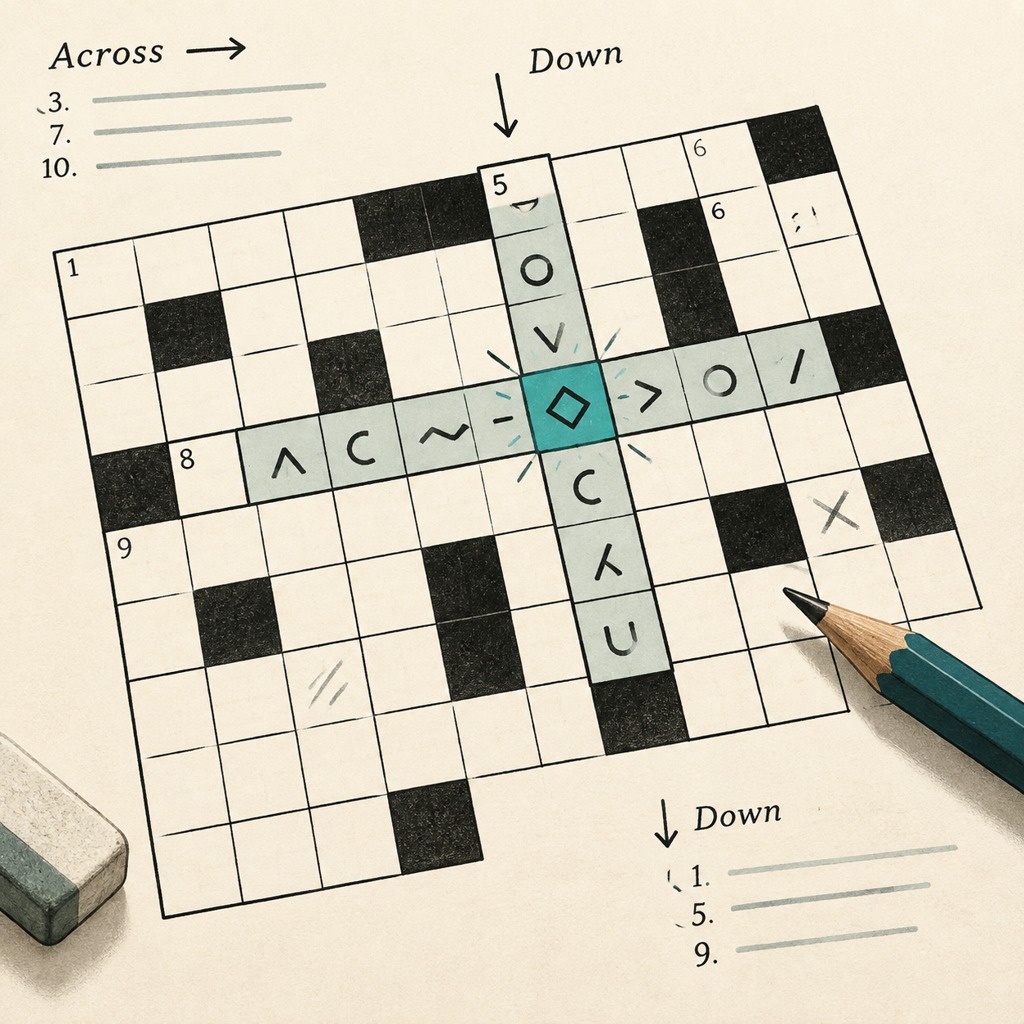
Answer length is the first check. A five-letter idea cannot go into a four-letter slot, no matter how well the clue seems to fit. Grammar comes next. A clue written as a plural usually wants a plural answer. A past-tense clue may need an answer ending in -ED. A question mark can signal a joke or a sideways reading rather than a plain definition.
Then come the crossing letters. They are not just confirmation at the end. They help you reinterpret the clue while you are still solving it.
Suppose a clue seems to ask for a common object, but the pattern is _ A _ E and the Down letters refuse every obvious noun. The answer may be a verb, a name, a phrase, or a less direct sense of the clue. The pattern does not give the answer, but it tells you where your first reading is too narrow.
That is why strong solvers move back and forth. They read a clue, test a candidate, inspect a crossing, then return to the clue with a better pattern.
Three crossing mistakes worth catching early
The first mistake is accepting a single matching letter as proof. One letter is a foothold, not a finished answer.
The second is keeping a word because it makes several weak crossings look possible. If an entry forces awkward letters into three clues, it may be the source of the trouble. Do not let one stubborn answer rewrite the whole corner.
The third is forgetting that every cell has a direction. An Across answer and a Down answer do not share a general topic. They share one exact letter in one exact position. A word that feels related to the clue but shifts that letter by one space is still wrong.
When you get stuck, choose the most questionable entry in the area and remove it temporarily. Look at the crossing pattern underneath. A clean set of blanks often produces a better answer than a crowded set of almost-right letters.
A five-step crossing check
Use this routine when a clue answer feels promising but not certain.
1. Confirm the entry length.
2. Read the clue again for grammar, tense, number, and tone.
3. Check one crossing supplied by a strong answer.
4. Check a second crossing from a different direction.
5. If the letters disagree, soften the guess and revisit the clue before forcing a repair.
The fifth step is the one people skip. They see a conflict and change the crossing because the original answer feels clever. Sometimes that is correct, but the grid should decide, not attachment to a word.
The best crossword moments often arrive after an answer is removed. A blank corner gives the clue room to speak again, and a new letter turns a vague clue into a narrow pattern. The puzzle becomes less about remembering a word and more about proving where it belongs.
Crossword crossing letters do not make every clue easy. They make uncertainty visible. Use them early, trust strong evidence more than familiarity, and let the grid correct you before a small mistake grows into a whole page of repairs.
Supporting image idea: a clean crossword corner showing one Across answer and one Down answer sharing a highlighted square, with the shared letter clearly aligned in both directions.