



Crossword answer length is more than a number printed beside a clue. It is part of the clue's contract with the solver. The spaces tell you how much room the answer has, whether it contains more than one word, and which ideas can be ruled out before you search the whole dictionary in your head.
When a clue feels vague, start with the squares. A four-letter answer behaves differently from a nine-letter answer. A two-part entry may need a space or hyphen in the clue list, even if the grid does not show it. The length will not solve every clue, but it can stop you from falling in love with an answer that almost fits.
You can test the method on the [daily games at Easy Daily Puzzle](https://easydailypuzzle.com/), then [browse more crossword puzzles](https://easydailypuzzle.com/?s=crossword) when you want a fresh grid.
Why Crossword answer length changes the clue
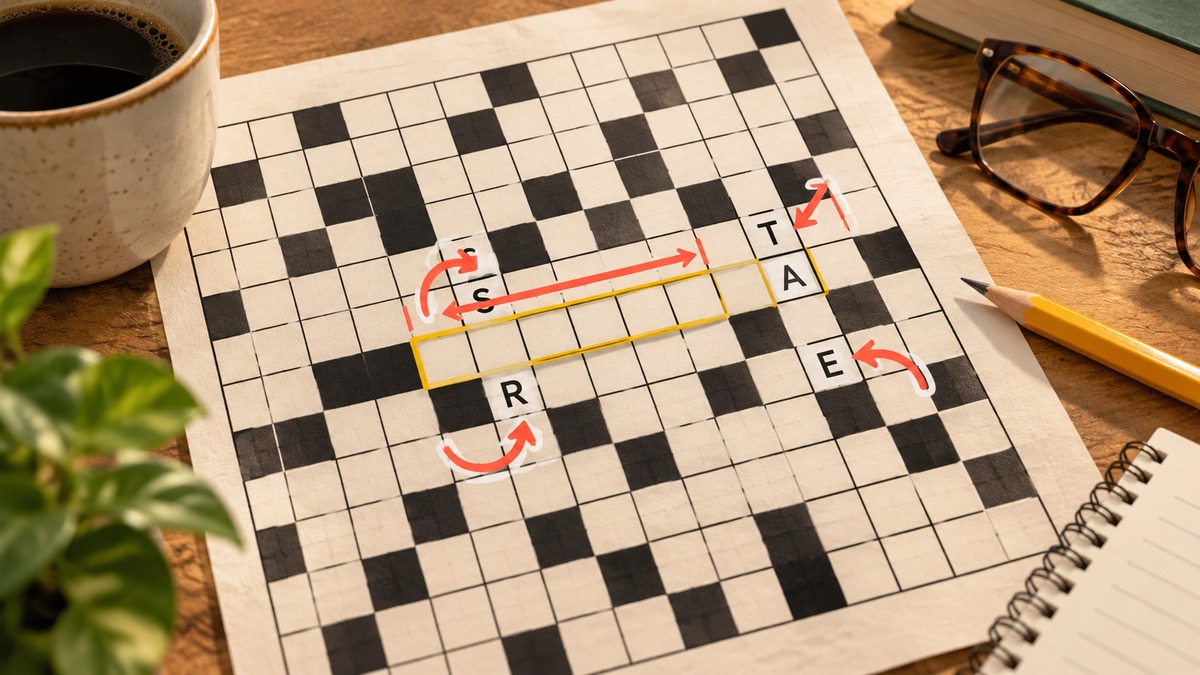
Imagine a clue such as "Quick look". A short grid might accept "peek". A longer entry could be "glance" or "brief look" depending on the puzzle's conventions. The clue has not changed, but the answer length changes the set of reasonable candidates.
This is why experienced solvers check enumeration before building a theory around a clue. If you write a five-letter answer into a six-letter space, the problem is not your vocabulary. The problem is that the answer has already failed the most basic test.
Length also tells you how much flexibility a phrase may have. A clue for a person's name, a place, or a title can point toward several possibilities. The number of squares gives you a first filter. It cannot tell you which candidate is correct, but it can tell you which candidates are not worth carrying forward.
The same idea applies to a long answer with a word break. If the clue list shows a pattern such as 4, 3, the grid may look like seven connected cells, but the answer is built from two words. Treating it as one ordinary seven-letter word can lead you away from the intended phrase.
Use the squares before you use the dictionary
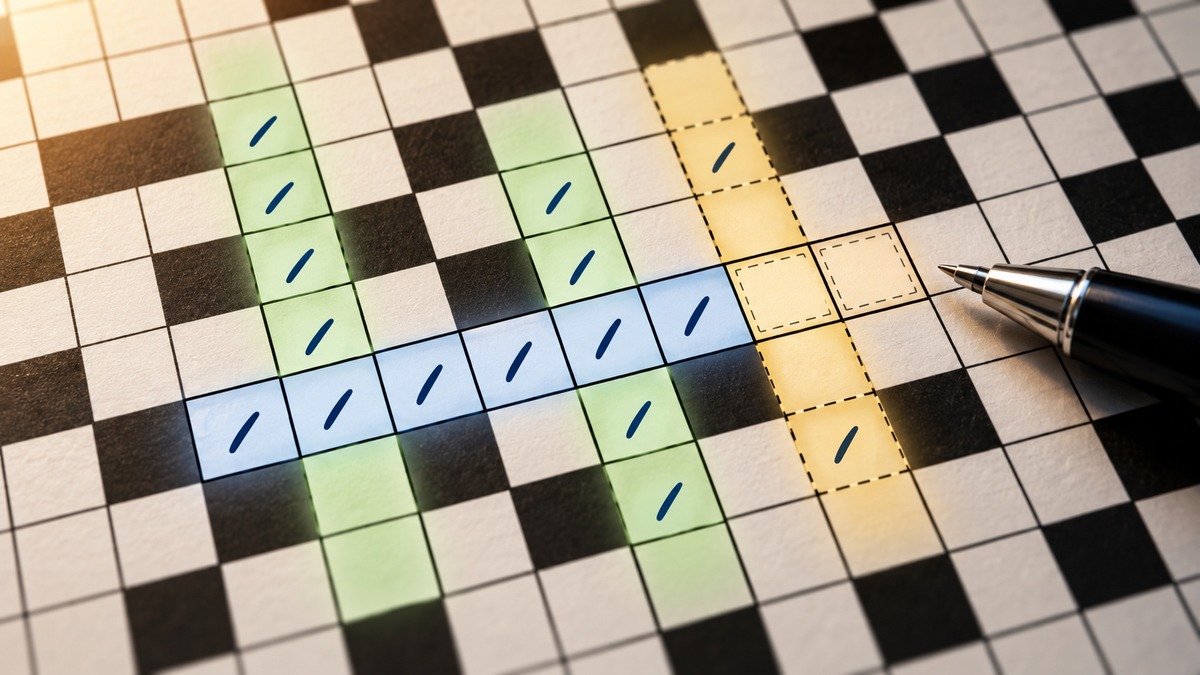
When you reach a difficult clue, write down the pattern you actually have. If the entry is seven letters and the crossings give you `A _ _ E _ S _`, do not ask, "What seven-letter word means this?" Ask, "What answers match this pattern and the clue's grammar?"
That small change keeps the search practical. The known letters are not decoration. They are evidence. A pattern can reveal a common ending, a plural, a verb tense, or the middle of a familiar phrase. Even one crossing letter may remove dozens of possible answers.
Keep the pattern honest. If a crossing letter is uncertain, mark it as uncertain rather than treating it as fixed. A wrong letter can make a good answer look impossible. This is especially important in a compact crossword, where one early guess may affect many short entries.
The [American Crossword Puzzle Tournament](https://www.crosswordtournament.com/) is a useful place to see how competitive solving treats speed and accuracy together. Fast solving is not just fast typing. It is the ability to use every available constraint without giving weak guesses too much authority.
Crossword answer length and clue grammar
Length works best when paired with grammar. A clue that asks for a plural answer needs a plural form. A clue in the past tense usually points to a past-tense answer. A clue with a question mark may be playful, but the answer still has to fit the entry.
Suppose the clue is "Runs quickly" and the grid has five spaces. A word such as "dashes" may match the meaning, but it has six letters and does not fit. A word such as "races" fits both the length and the grammar. The first answer may be close in meaning, but it is not a crossword answer.
Watch small clue signals too. Abbreviations may be indicated by a shortened clue or a phrase such as "briefly." A foreign expression may be signaled by the wording or by the puzzle's style. Names, initials, and informal forms often need support from crossings because several versions may sound plausible.
Do not use length to force a bad grammatical match. If the only answer you can find fits the squares but not the clue's number, tense, or part of speech, leave it open. A correct length is necessary, not sufficient.
Let crossing letters confirm the answer
The strongest use of Crossword answer length is not finding a word in isolation. It is confirming a word through crossings. Once you have a candidate, check every letter that touches a completed or nearly completed entry.
Read the answer one letter at a time. Does the first crossing produce a normal word? Does the middle letter create an impossible plural or an unlikely verb ending? If the answer needs a spelling variant, do the crossings support that exact variant?
This process protects you from the almost-right answer. A clue may suggest "actor," but the grid may require "actress." A clue may suggest a singular noun, but the crossings may reveal that the entry is plural. A familiar phrase may be spelled differently from the version you first remembered.
When a candidate fails, erase the candidate rather than patching it. Changing one letter to rescue an answer usually creates a new problem somewhere else. Crosswords reward clean revision. A small white space is healthier than a chain of guesses that all depend on each other.
A five-step check for a stubborn entry
1. Count the spaces and record any word break or special marking.
2. Copy only the crossing letters you trust.
3. Match the clue's part of speech, tense, number, and tone.
4. Test the candidate against every crossing, not just the first one.
5. If one letter fails, keep the entry open and solve around it.
This routine is simple enough for a quick daily puzzle. It also scales to a larger weekend grid, where a wrong assumption can hide for much longer.
When the answer length is not enough
Some clues are intentionally broad. A name, abbreviation, sound effect, or themed entry may have several possible answers with the same length. In those moments, the clue needs help from the surrounding grid.
Look for entries that cross the uncertain answer at more than one point. Solve a nearby clue with clearer wording. Short answers can be useful because they often provide the letter that distinguishes two longer candidates. If the puzzle has a theme, ask whether the answer might belong to the same group as other unusual entries.
Avoid searching for a perfect answer too early. A crossword is a network, not a row of separate riddles. One answer becomes easier when another answer supplies the right letter, and the correct length tells you how many letters the network must share.
A better daily practice
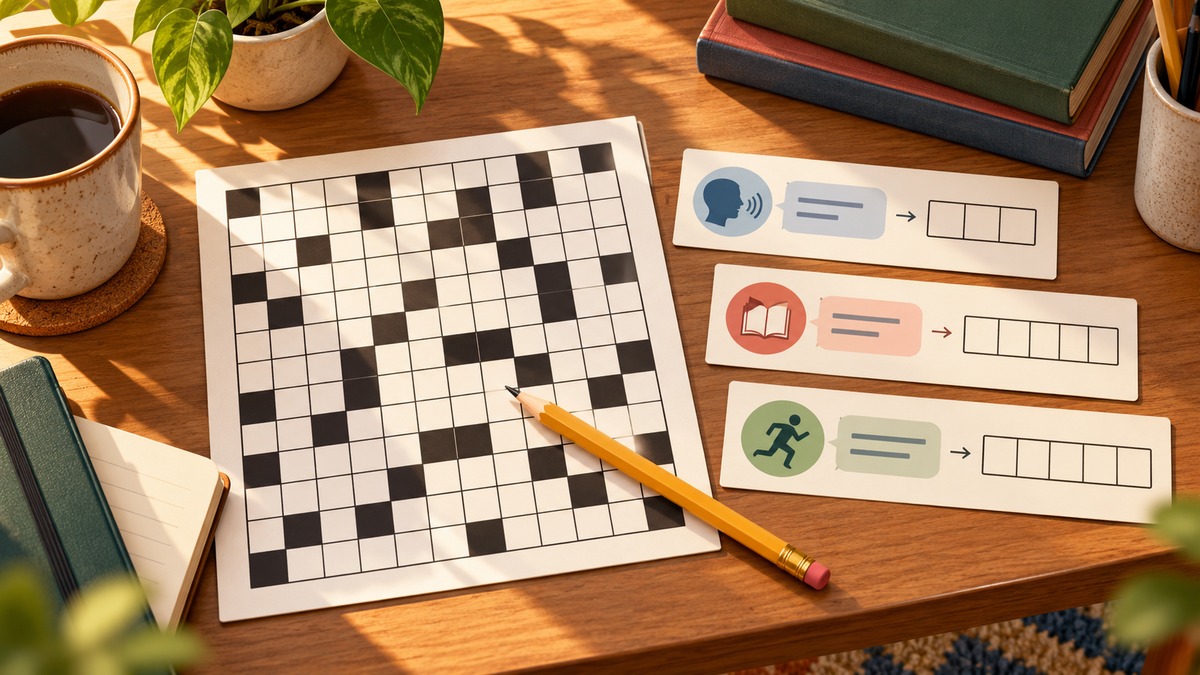
For your next crossword, delay the urge to fill every blank. First scan the grid for entries with several crossings. Then use Crossword answer length to turn vague clues into smaller questions. Is this a short verb, a plural noun, a two-word phrase, or a proper name?
If you get stuck, move to an easier section and return later. The answer may look obvious after two new crossing letters appear. This is not avoiding the clue. It is using the structure of the puzzle as intended.
The best answer is not simply the word that sounds right. It is the word that fits the length, the clue, the grammar, and every crossing at the same time. Once those four checks agree, write it in with confidence.