



Crossword anagram clues have a funny way of looking both generous and suspicious. The letters may be sitting right there in the clue. You can see the raw material. You know something needs to be rearranged. And still, the answer refuses to behave.
That is why anagrams are such a good doorway into better clue reading. They teach you to stop treating the clue as a sentence and start treating it as a small machine.
If you enjoy word puzzles on Easy Daily Puzzle, learning how crossword anagram clues work can make both standard crosswords and cryptic-style clues feel less slippery. You can also browse more word-game ideas through Easy Daily Puzzle crossword articles when you want another clue habit for a quick break.
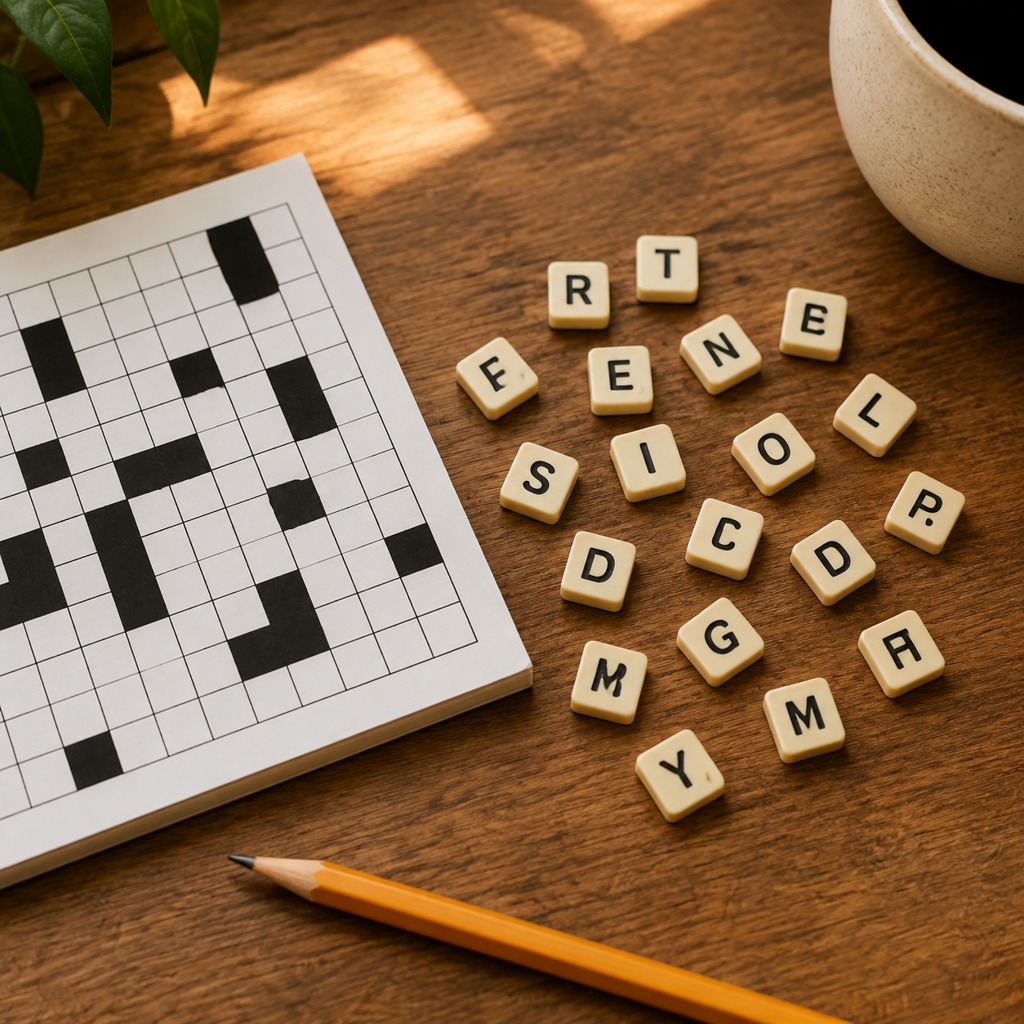
Crossword anagram clues start with a mess of letters
An anagram is made by rearranging letters into a different word or phrase. Crossword Solver's anagram guide gives the plain definition: the new word or phrase must be meaningful, not random letter soup.
In a crossword clue, that idea becomes more interesting. The clue usually gives you two things. One part gives the letters to rearrange. Another part gives the definition of the answer. A small signal word tells you that the letters are unstable.
Take a simple made-up clue:
`Mixed tone for musical pitch (4)`
"Mixed" is the signal. "tone" is the letter bank. Rearranged, it can become "note," which matches "musical pitch."
Real crossword anagram clues are often less tidy than that, but the bones are the same. Find the letters. Find the signal. Find the definition. Then let the crossings keep you honest.
The Guardian's crossword blog has written about anagrams and the question of how directly the answer material appears in a clue. That discussion points to something useful for casual solvers: an anagram can be fair and still feel sneaky.
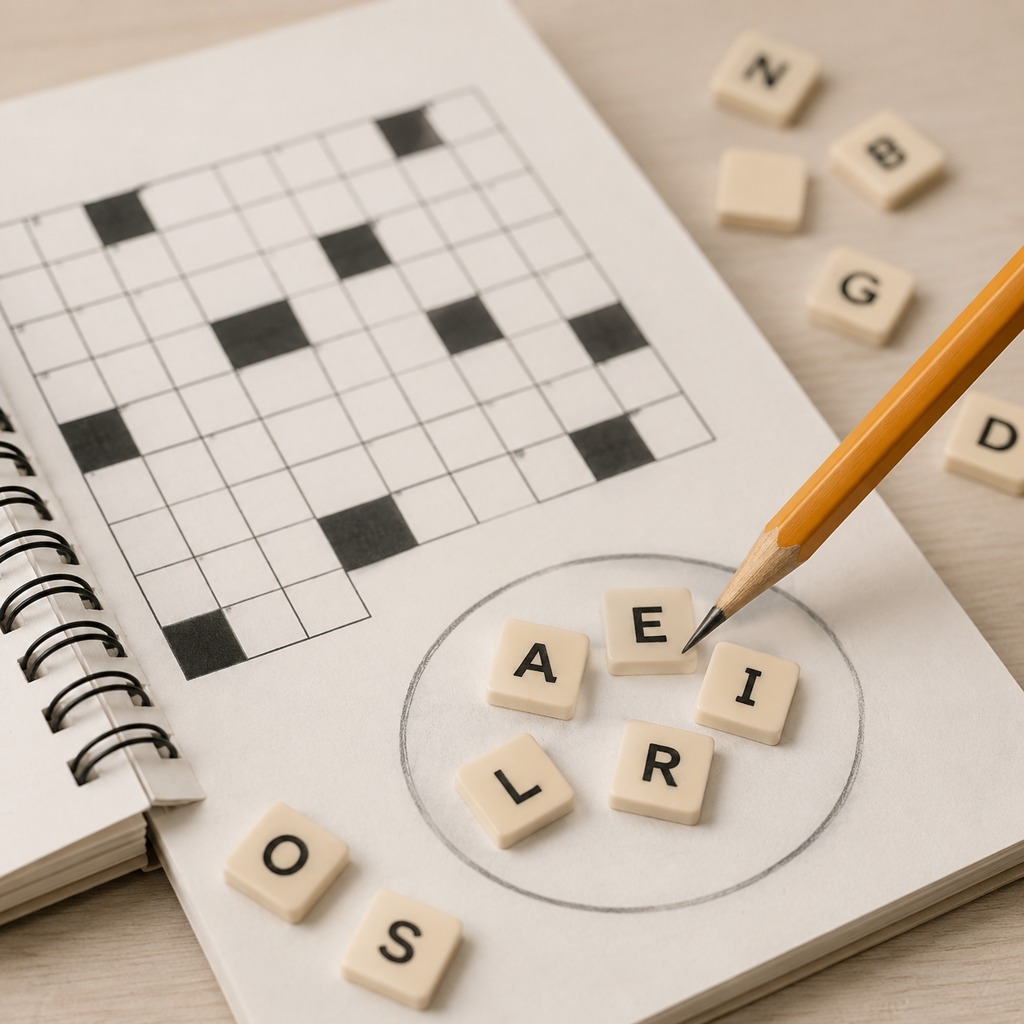
Crossword anagram clues need an indicator
The indicator is the word that gives you permission to scramble.
Common indicators include words like "mixed," "wild," "broken," "new," "strange," "cooked," "confused," "shifting," or "out." They are not always obvious. A setter can make the indicator fit the surface meaning of the clue, so the sentence still reads naturally.
That surface sentence is the trap.
If a clue says "wild actor," your brain may picture a performer behaving badly. In a cryptic clue, "wild" may simply mean that the letters in "actor" need rearranging. The clue is doing two jobs at once: telling a tiny story and giving instructions.
This is why crossword anagram clues are good training. They make you ask whether a word is part of the story or part of the mechanism.
Do not collect indicator words like flashcards forever. That gets dull fast. Instead, build a better reflex: when a clue feels oddly worded, ask whether one word is telling nearby letters to move.
The definition is usually still hiding at one end
Anagram clues can feel chaotic, but they are not supposed to be unfair. Most of the time, the definition sits at the beginning or end of the clue. That is your anchor.
If the clue is:
`Strange alert for later (5)`
"Strange" suggests an anagram. "alert" supplies five letters. "Later" could be the definition. Rearranged, "alert" becomes "later."
That example is too clean for a real puzzle, but it shows the rhythm. One side defines. One side supplies letters. One word shakes the letters loose.
Crossings matter because anagrams can produce tempting wrong answers. A six-letter letter bank may rearrange into more than one plausible word. A clue may also include extra words that make the surface smoother but do not belong in the anagram. The grid is there to keep your cleverness from running away.
The American Crossword Puzzle Tournament is not mainly about cryptic anagrams, but its public results page is a nice reminder of crossword pressure: accuracy matters. In 2026, the tournament listed Erik Agard as the winner and described speed plus precision across several puzzles and divisions. For everyday solvers, the lesson is gentle. A fast answer is only useful if the crossings agree.
How to solve crossword anagram clues without forcing them
Start by finding the answer length. The enumeration tells you how many letters you need. In a standard clue list, that may be shown in parentheses. In a grid, the open squares do the same job.
Next, scan for a possible indicator. Do not decide too early. A word that sounds like chaos may be ordinary definition language. A calm-looking word may be the actual indicator.
Then find the letter bank. It should usually match the answer length exactly. If the answer is seven letters and your suspected bank has six, something is off. If the clue has two words and together they supply seven letters, try them as a pair.
After that, use crossings before you fall in love with an answer.
A useful routine:
1. Check the answer length.
2. Look for a word that suggests rearranging.
3. Count the letters beside that indicator.
4. Hold the definition at the beginning or end.
5. Test the answer against crossings before writing it firmly.
This routine keeps the solve playful without letting it become random.
Why anagrams helped crosswords become more than definitions
The crossword started as a newspaper word puzzle, and the early history still matters. The American Crossword Puzzle Tournament site preserves a short account of Arthur Wynne's 1913 Word-Cross, the famous early puzzle that helped point toward the modern crossword habit.
Those early grids were not cryptic crosswords as many solvers know them now. But they show the basic appeal: words become spatial. A clue is not alone. It has neighbors.
Anagram clues push that idea further. The answer is not simply remembered. It is made. The solver has to notice instruction, letter shape, definition, and crossing evidence.
That is why a good anagram clue feels satisfying even when it is not hard. It gives the reader a tiny construction project. The letters were visible all along, but not in the right order.
For casual players, this can change how ordinary clues feel too. You begin to notice grammar. You notice whether a clue asks for a noun or a verb. You notice when a word in the clue seems a little too dramatic for its sentence. Even if the puzzle is not cryptic, that sharper attention helps.
The mistake is solving the scramble and ignoring the clue
The easiest anagram mistake is to make a word that fits the letters but not the clue.
Suppose the letters can make two possible words. One fits the grid. One fits the definition. The right answer needs both. If the clue defines an animal, a rearranged place name will not do unless the clue somehow supports it. If the clue asks for a verb, a noun may look close and still be wrong.
This is where crossings save time. Put the answer in lightly. Check one crossing. Check a second. If the word starts causing trouble, do not defend it. Crossword pride is expensive.
Anagrams can also tempt solvers into over-solving. Not every strange clue is an anagram. Not every word like "wild" or "broken" is an indicator. Sometimes it is just part of the surface meaning. A clue has to supply enough letters, a workable definition, and a fair signal.
If one of those pieces is missing, wait.
A better next grid with crossword anagram clues
Try this the next time a clue feels oddly worded. Do not immediately hunt your memory for a trivia answer. Look at the words as material.
Is one word telling the others to move? Does a nearby word or phrase supply the exact number of letters? Does the beginning or end define the answer? Do the crossings agree?
That little pause is the whole skill.
Crossword anagram clues are not just a cryptic crossword trick. They train a broader habit: read the clue once as a sentence, then read it again as instructions. The second reading is where the puzzle starts to grin.